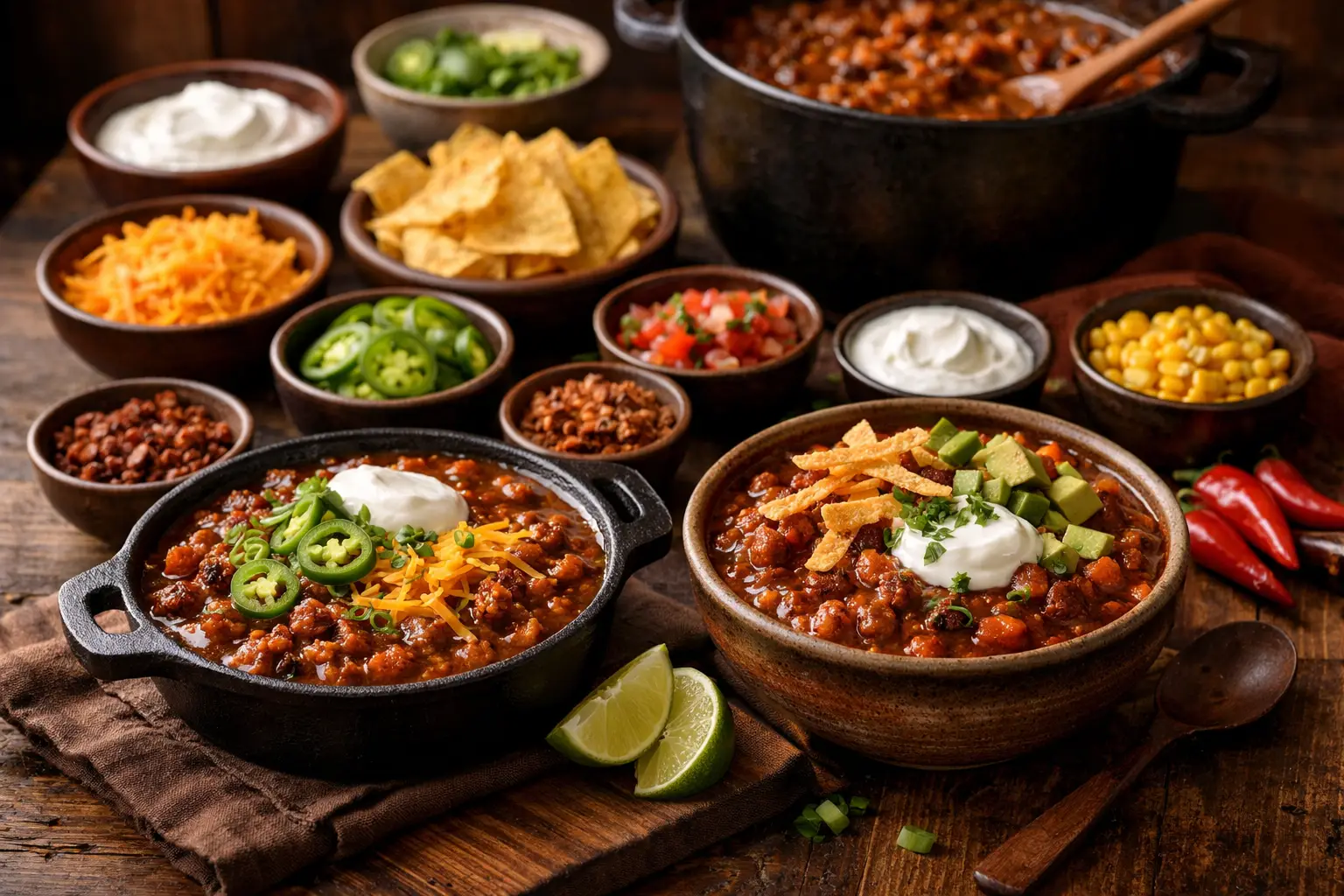
Toppings are not decoration. They are the contrast layer — cream against heat, acid against richness, crunch against a soft pot. A great base chili can still eat flat if everything on top is shredded cheddar and nothing else.
This is a sorted topping guide, not a dump-everything-on list. Red beef chili, lean turkey, smoky chipotle, and mild white chicken each want different support. Match the finish to the bowl and you get a personalized chili bar without turning dinner into a nacho pile-up.
The best chili toppings list starts with contrast
The easiest way to build a strong chili topping combo is to think in contrasts. Chili is usually rich, savory, soft, and warm. So the best toppings tend to bring one of four things - creaminess, freshness, acidity, or crunch.
Creamy toppings soften aggressive spice and round out smoky flavors. Fresh toppings brighten the bowl so it doesn’t feel heavy after a few bites. Acidic toppings cut through fat and wake up slower, deeper flavors. Crunchy toppings keep the texture from becoming one long spoonful of softness. If your chili feels flat, it usually doesn’t need more stuff piled on top. It needs the right type of contrast.
That’s also why there isn’t one universal answer to the best chili toppings list. A spicy white chicken chili wants different support than a dark, cumin-heavy beef chili. Green chili likes brightness. Cincinnati-style chili is built for a generous cheese finish — shredded cheddar on a 3-way or 4-way is the tradition (see how cooks layer it). A smoky chipotle pot might benefit from cooling dairy more than extra heat. It depends on the base, and that’s a good thing.
Best chili toppings list for classic bowls
If you want reliable crowd-pleasers, start with the all-stars. Shredded cheddar is the obvious lead-off hitter because it melts fast, adds salt, and gives a hearty bowl that extra comfort-food pull. Monterey Jack is a little milder and creamier, while pepper jack works if you want more heat without changing the chili itself.
Sour cream belongs here too. It cools down spicy chili, adds body, and makes leaner recipes taste richer. Greek yogurt can do a similar job if that’s what you keep in the fridge, though it has a tangier edge and less of that old-school diner feel.
Diced onion is a top-tier move, especially when the chili has been simmered long enough to get deep and soft. Raw onion adds snap and bite. White onion is sharp and clean, red onion is a little sweeter, and green onion lands lighter if you don’t want too much punch.
Then there are jalapenos. Fresh slices bring grassy heat and crunch, while pickled jalapenos add acidity along with spice. Pickled is usually the smarter choice for heavier, richer chili because that briny edge cuts through the bowl instead of just making it hotter.
Oyster crackers, saltines, or crushed tortilla chips give the bowl some much-needed texture. This matters more than people think. A thick chili with beans, meat, and melted cheese can get monotonous fast unless there’s something crisp in the mix.
Dairy, but make it strategic
Not every cheese plays the same role. Finely shredded cheddar melts into the bowl and becomes part of the chili. Crumbled cotija stays more distinct and salty, which makes it great for chili with Southwestern flavors. Queso fresco is softer and milder, better for green chili, turkey chili, or black bean chili where you want a lighter finish.
Cream cheese is less common as a topping, but in small dollops it can work on very spicy chili or white chicken chili. It gives you that rich, almost velvety cooling effect. The trade-off is that it can mute sharper spice notes, so it’s better for bowls leaning fiery rather than nuanced.
Crema and sour cream aren’t interchangeable in every case either. Crema is thinner, slightly looser, and especially good on chilis with roasted peppers, tomatillos, or taco-adjacent flavors. Sour cream is heavier and more familiar on classic red chili. Both are good. One just feels more tailored depending on the bowl.
Fresh toppings that wake the bowl up
Cilantro is one of the fastest ways to add lift. If your chili tastes heavy, muddy, or one-note, chopped cilantro can bring it back into focus. It’s especially strong with green chili, chicken chili, and black bean chili, but it also works on smoky beef versions if used lightly.
Diced avocado adds coolness without the tang of dairy. That makes it useful if you want to soften heat while keeping the bowl fresh. It’s richer than it looks, though, so pair it with something acidic like pickled onions or a squeeze of lime if the chili is already fatty.
Lime wedges don’t look dramatic, but they do real work. A little citrus wakes up spices that have dulled during a long simmer. It’s a finishing move that makes more sense on chili with chiles, chicken, beans, or green flavors than on a heavy Midwestern-style pot, but even then, a small squeeze can sharpen the whole bowl.
Green onions, chopped tomatoes, and fresh corn also belong in this category. They’re not always the first toppings people think of, but they add a lighter, brighter energy that keeps chili from feeling too winter-heavy.
Crunchy and savory extras worth stealing
Cornbread is less a topping than a sidekick, but plenty of people crumble it right into the bowl, and that counts. It soaks up broth, adds sweetness, and turns a thinner chili into something spoon-cozy and substantial. If your chili is already thick and rich, serve it on the side instead so you don’t lose definition.
Fritos are a classic for a reason. They bring salt, crunch, and corn flavor that works especially well with beef chili and game-day style bowls. Crushed tortilla chips do a similar job with a little less intensity. Fried onions can be surprisingly good too, especially on chili that leans casserole-adjacent or extra hearty.
Bacon is powerful but easy to overdo. A little crumbled bacon adds smoke and crunch. Too much, and it hijacks the bowl. Same goes for chorizo crumbles. Great idea in the right chili, but now you’re topping rich with richer, so balance matters.
Roasted pepitas are an underrated move. They add crunch without turning the bowl into snack food, and they fit especially well with pumpkin chili, turkey chili, or Southwestern-style recipes.
Pickled, spicy, and bold finishes
If your chili tastes good but somehow still feels sleepy, pickled toppings can fix it fast. Pickled red onions are sharp, colorful, and excellent on dark beef chili, turkey chili, and vegetarian bowls. They add that bright pop that cuts through slow-cooked depth.
Pickled jalapenos are the more classic version, but don’t overlook banana peppers or pickled serranos if you like a more pointed heat. Even a few chopped dill pickles can work in specific regional or diner-style chili situations. That sounds chaotic until you taste the salty-acid contrast against a beefy bowl.
Hot sauce is technically optional because chili is already spicy, but finishing hot sauce serves a different purpose than cooking heat. It adds a brighter top note. The key is choosing one that complements the pot. Vinegar-forward sauces perk up rich chili. Smokier sauces fit chipotle-heavy versions. Fruity pepper sauces can be great on chicken or bean chili.
Matching toppings to chili style
This is where a good best chili toppings list gets more useful than a random pile of ideas. For Texas red, keep it focused - diced onion, shredded cheddar if you want it, crackers, maybe pickled jalapenos. The chili is the star, so don’t bury it.
For white chicken chili, lean into crema or sour cream, Monterey Jack, avocado, cilantro, lime, and crushed tortilla chips. That bowl likes cool, bright, and creamy elements.
For Cincinnati chili, go classic and unapologetic. A heavy snowfall of finely shredded cheddar is part of the identity. Onion and crackers fit naturally too.
For vegetarian or bean-forward chili, texture matters even more. Add avocado, pepitas, tortilla strips, green onions, or cotija so the bowl feels layered rather than soft all the way through.
For green chili, think freshness first. Lime, cilantro, crema, queso fresco, and diced onion make more sense than heavy cheddar and bacon.
Building a toppings bar that actually works
If you’re serving a group, don’t put out fifteen toppings just because you can. Offer enough variety for customization, but keep the choices distinct. One or two cheeses, one cooling topping, one fresh herb, one onion option, one pickled item, and one crunchy element usually gets you there.
That balance keeps the table fun without turning it into topping chaos. Chili should still taste like chili, not a fridge cleanout. A smart lineup lets people tune heat, richness, and texture without losing the character of the bowl.
If you want the easiest winning combo, start with shredded cheese, sour cream, diced onion, pickled jalapenos, and something crunchy. From there, tailor the extras to the style you made. That’s the real secret - the best topping isn’t the fanciest one. It’s the one that makes this specific pot taste more like itself.
The bowl tells you what it needs. Listen for crunch, brightness, coolness, or salt, and top accordingly.