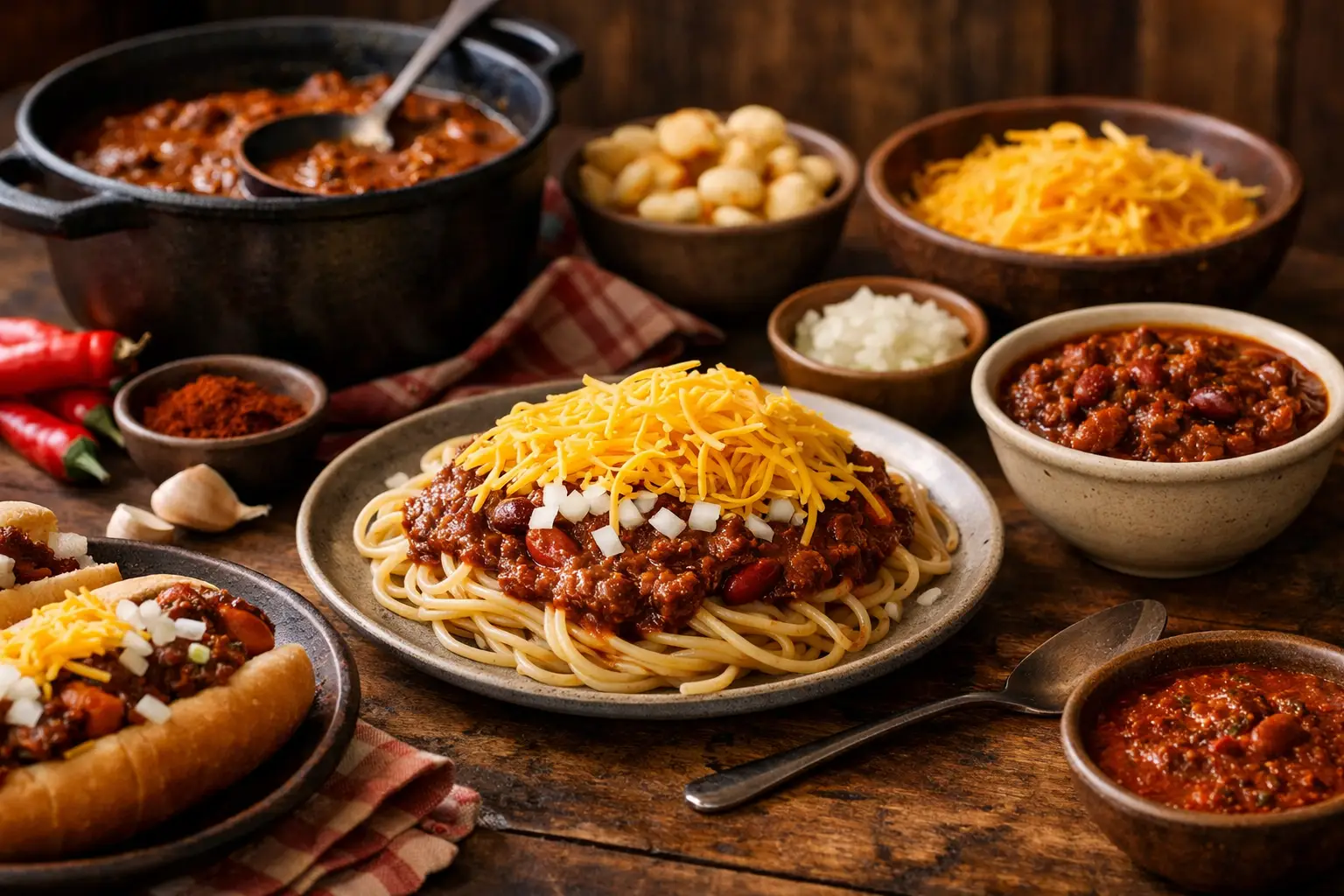
If your first bowl of Cincinnati chili arrives buried under a snowy mound of shredded cheddar and perched on spaghetti, the natural reaction is a double take. That reaction is part of the fun. What is Cincinnati chili, exactly? It is a distinct regional chili style from Cincinnati, Ohio, known for its fine-textured meat sauce, warm baking-spice profile, and signature way of serving it over spaghetti or hot dogs with very specific toppings.
This is not Texas red. It is not a chunky bean-forward game-day pot. It is its own lane, with its own rules, and once you understand what it is trying to be, it starts making perfect sense.
What Is Cincinnati Chili?
Cincinnati chili is a seasoned meat sauce built from ground beef, water or stock, tomato, and a blend of spices that often includes cinnamon, allspice, cloves, cumin, chili powder, and sometimes a little cocoa or unsweetened chocolate. The texture is looser and smoother than most people expect from chili, and that is intentional. Instead of big bites of meat and peppers, the goal is a finely broken-up sauce that drapes over spaghetti or hot dogs.
That serving style is the real tell. In Cincinnati, chili is often ordered by the "way." A three-way is spaghetti, chili, and a heavy layer of shredded cheddar. A four-way adds either onions or beans. A five-way adds both. Put the same chili on a hot dog with mustard, onions, and cheese, and you have a cheese coney, another Cincinnati classic.
So if you are asking what is Cincinnati chili compared with standard American chili, the shortest answer is this: it is a Mediterranean-influenced meat sauce with chili-house swagger, built for noodles, coneys, and fast comfort.
Why It Tastes So Different
The first surprise is the spice profile. Cincinnati chili uses spices more commonly associated with sweet or savory-sweet dishes than with Southwestern chili. Cinnamon gets the most attention, but it is rarely the only reason the flavor reads as unusual. Allspice, cloves, and sometimes nutmeg create a warm aromatic edge that sits alongside chili powder, garlic, cumin, and tomato.
That does not mean the dish tastes like dessert. Good Cincinnati chili is still savory, meaty, and tangy. The spice blend adds depth and fragrance more than overt sweetness. If a version tastes sugary or muddy, it is usually just not a great version.
The second surprise is texture. Traditional recipes often simmer the ground beef directly in liquid rather than browning it first. That technique keeps the meat very finely crumbled and prevents the chunky texture people associate with pot-style chili. The result lands somewhere between a sauce and a chili, which is exactly why it works so well on spaghetti.
A Regional Style With Immigrant Roots
Cincinnati chili did not appear out of nowhere. It is widely tied to Macedonian and other Mediterranean immigrants who adapted seasoned meat sauces to American tastes in the early 20th century. Restaurants and chili parlors helped shape the style into the local staple people know today.
That history matters because it explains why Cincinnati chili can feel familiar and foreign at the same time. The spice logic is not coming from the Texas-New Mexico chili tradition. It is drawing from a different culinary lineage, one that comfortably uses warm spices in savory meat dishes.
That is also why arguments about whether it is "real chili" tend to miss the point. Cincinnati chili is real Cincinnati chili. It is a regional dish with its own grammar, and judging it only by another chili tradition is like criticizing gumbo for not being stew enough.
The Famous Ways, Explained
Part of the appeal is how codified the ordering system is. Cincinnati chili is not just a recipe. It is a format.
A two-way is chili served over spaghetti. A three-way adds a mountain of finely shredded cheddar. A four-way includes onions or beans. A five-way includes onions and beans. There is a strong loyalty factor in how people order, and that is one reason the style inspires such devotion.
Then there are cheese coneys. These are hot dogs in buns topped with Cincinnati chili, mustard, diced onions, and heaps of shredded cheddar. If the spaghetti versions are comfort food with diner energy, the coneys are the fast, snackable side of the same tradition.
The toppings are not random. The raw onions bring bite. The beans add softness and heft. The cheese is not melted into the chili but piled on cold and finely shredded, which creates a specific texture contrast. It looks excessive. It is also kind of the point.
What Is Cincinnati Chili Not?
It helps to define the style by what it is not. Cincinnati chili is not a thick, smoky bowl loaded with chunks of chuck roast, jalapenos, and ancho paste. It is not usually served as a standalone bowl first and foremost, though it can be. It is not built around intense heat. And it is not trying to imitate Texas chili, Midwestern chili with macaroni, or chili beans from a slow cooker.
This is where expectation can make or break the experience. If you sit down wanting a spicy, chunky, pepper-forward chili, Cincinnati chili may feel offbeat. If you approach it as a regional meat sauce purpose-built for toppings, noodles, and coneys, the whole thing clicks much faster.
Why People Love It So Much
Cincinnati chili has the kind of regional identity that turns food into hometown language. For locals and transplants, it is nostalgia, ritual, and comfort all at once. For newcomers, it is memorable because it does not taste like the chili they thought they knew.
It is also incredibly weeknight-friendly. The ingredient list is pantry-friendly, the cooking process is straightforward, and the leftovers are useful. You can serve it over spaghetti one night, spoon it onto hot dogs the next, and still have enough for baked potatoes or fries after that.
There is another reason it sticks: contrast. Savory meat sauce, sharp cheddar, sweet-warm spice, soft noodles, crisp onions. Cincinnati chili is a layered experience, not just a one-note bowl of heat. That makes it polarizing for some people, but for fans, that exact balance is the hook.
Can You Make It at Home?
Absolutely, and it is a smart style for home cooks because the technique is more forgiving than it sounds. The key is resisting the urge to make it taste like your usual chili. Use a fine crumble. Let the spices bloom into the tomato base. Give it enough simmering time to mellow and unify.
The biggest judgment call is the spice balance. Some recipes lean hard into cinnamon and clove. Others keep those notes quieter and let cumin and chili powder carry more of the load. Neither approach is automatically right. It depends on whether you want the classic chili-parlor profile or a more beginner-friendly version.
Serving matters just as much as seasoning. If you want the full effect, plate it the classic way. Twirl the spaghetti, ladle on the chili, and bury it in finely shredded cheddar. The proportion of cheese should feel slightly unreasonable.
If you like comparing regional styles, this is exactly the kind of recipe category worth exploring side by side, especially on a focused platform like ChiliStation, where the context around each bowl helps the differences actually mean something.
Is Cincinnati Chili Worth Trying If You Are Skeptical?
Yes, but with the right expectations. Cincinnati chili is one of those dishes that rewards curiosity more than rigid category policing. It may not replace your favorite tailgate chili. It may not be what you crave on a cold Sunday if you want smoke, beans, and brute-force heat. But that is not a failure of the style. It just plays a different game.
If you are chili-obsessed, it is essential tasting because it expands the map. If you are a comfort-food person, it offers the kind of carb-cheese-sauce payoff that is hard to dislike. And if you are a recipe collector, it is one of the most recognizable regional chili forms in America.
Every bowl tells a story, and Cincinnati chili tells a very specific one - immigrant roots, diner culture, local pride, and a refusal to fit neatly into someone else’s definition. Try it on its own terms, and the whole style gets a lot more delicious.