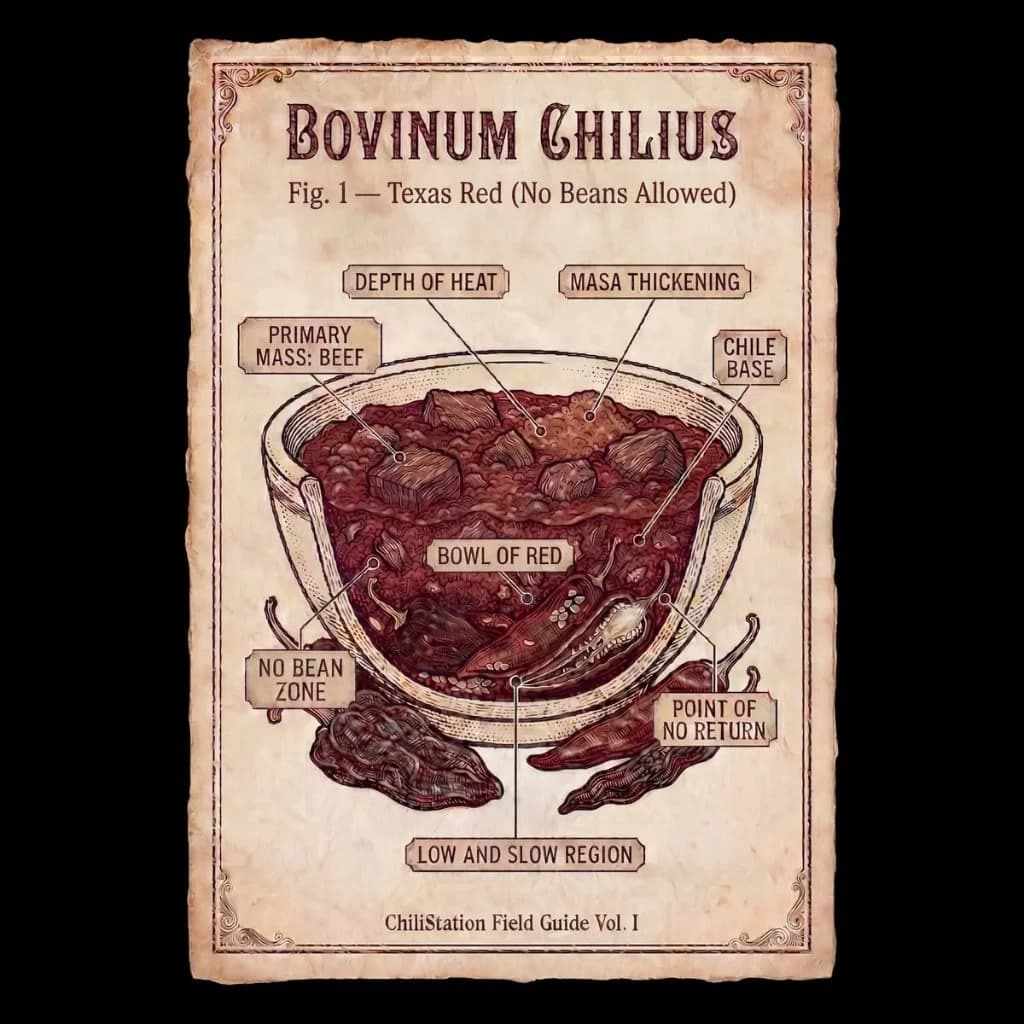
Texas Red Chili (No Beans)
No beans. No shortcuts. No apologies.
The original bowl of red: beef, dried chiles, and time. No beans. No tomatoes. No apologies.
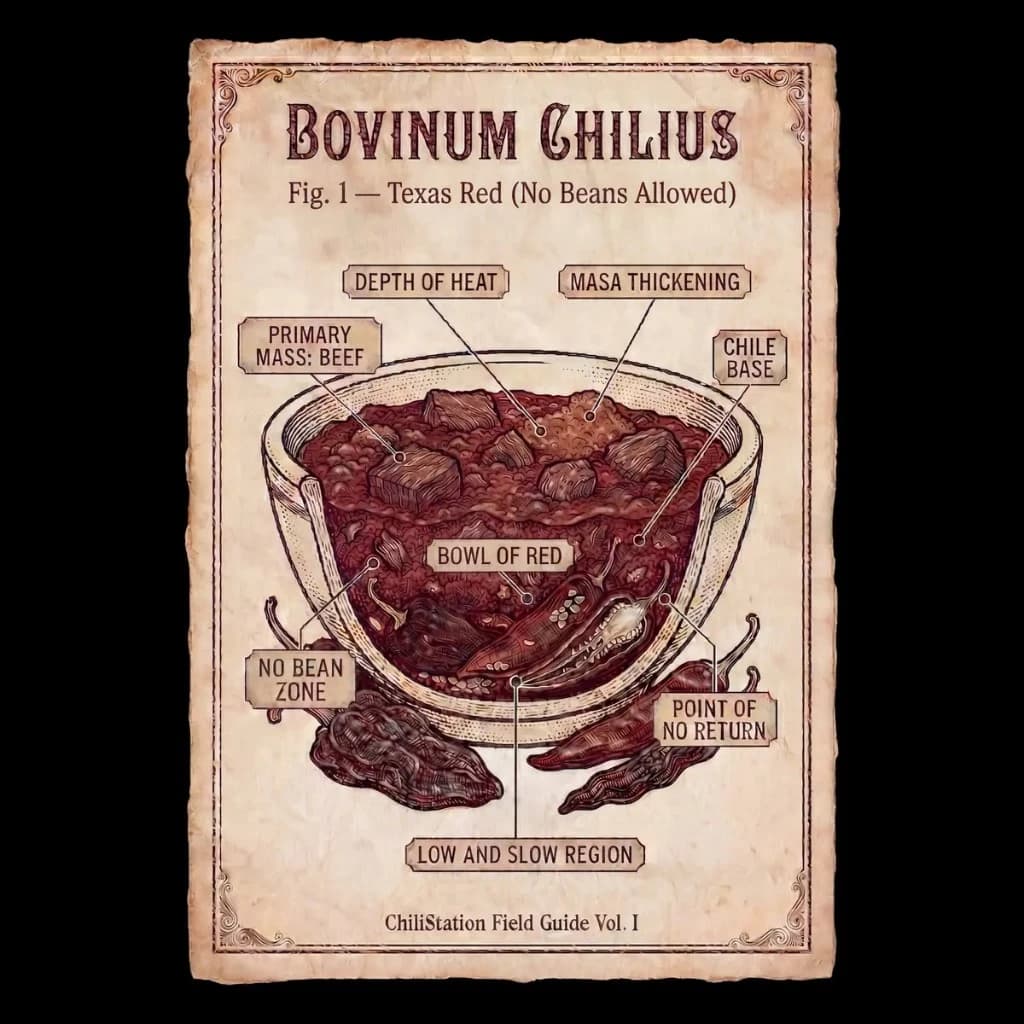
Vintage Butcher Chart T-Shirt – Bovinum Chilius
This field guide illustration breaks down Texas Red chili: the traditional no-beans style built around beef, dried chiles, and slow heat. The same artwork is available as part of the ChiliStation Field Guide shirt collection.
View the Shirt →Wear the original bowl of red.
The Style
Cubed beef (never ground, to purists) simmered in a puree of dried chiles — ancho, guajillo, pasilla — with cumin, garlic, onion, and a spoon of masa harina to thicken. No tomatoes. No beans. Ever.
The History
Chili con carne traces back to the Chili Queens of San Antonio — Mexican-American women who sold bowls from stands in Military Plaza starting in the 1860s. Their cooking went national at the 1893 World's Fair in Chicago, and from there to every lunch counter in America.
Commercial chili powder arrived in 1894, courtesy of German immigrant William Gebhardt in New Braunfels. Wolf Brand started canning in 1921. By the 1930s, chili parlors were a fixture in every small town across the South and Southwest.
Texas named it the official state dish in 1977, cementing the bean-free tradition in the statute books.
The Great Debate
Beans or no beans? In Texas, it's heresy. The International Chili Society and the Chili Appreciation Society International both ban beans from their Traditional Red categories. Outside Texas, the homestyle pot with kidney beans and tomatoes has become what most Americans mean by chili — a descendant of the original, but not the original.
As one Texas pitmaster puts it: every champagne is sparkling wine, but not every sparkling wine is champagne.
Memorable
- The Terlingua cook-offs. Two rival championships held side by side every fall since a 1970s falling-out between the Chili Appreciation Society International and the Original Terlingua International.
- The phrase bowl of red. Nobody asks for "Texas chili" in Texas. They ask for a bowl of red.
- Frito pie. The classic Terlingua-to-roadside-diner serving: a bowl of red ladled into a split-open bag of Fritos with cheese and onion on top.
Traditional building blocks
Texas Red leans on dried chiles, cumin, and beef in the spotlight — no beans in the canon. Explore the Field Guide pantry lists for context:
Ready to cook Texas Red?
Browse our curated collection of authentic Texas Red recipes — no beans allowed.
Browse Texas Red Recipes →