Somewhere between a rushed weeknight dinner and a slow-simmer Sunday project, chili earns its place as the meal that always feels like a win. If you want a beginner guide to homemade chili that actually makes the first pot less intimidating, start here: chili is less about strict rules and more about building a bowl with balance - savory depth, gentle heat, solid texture, and enough personality to make you want leftovers.
For beginners, that is very good news. You do not need a secret family recipe, a smoker, or a drawer full of obscure dried peppers. You need a clear sense of what makes chili taste like chili, where the common mistakes happen, and how to adjust the pot as you go.
What chili is really built on
At its core, homemade chili is a layered stew. Most versions pull from the same major elements: protein, aromatics, peppers or chili powder, liquid, and a long enough cook time for everything to come together. Depending on the style, you may also add beans, tomatoes, masa, beer, or a finishing hit of acid.
That broad structure is why chili has so many regional identities. Texas red leans hard into beef and chiles, often skipping beans entirely. Midwestern bowls may be tomato-forward and bean-friendly. White chicken chili heads in a creamier, lighter direction. Colorado green chili swaps red chili powder for roasted green chiles and a brighter, earthier heat. Every bowl tells a story, but the storytelling gets easier once you understand the parts.
A beginner guide to homemade chili starts with the right style
The easiest first move is choosing a lane. Many beginners try to combine every chili idea they have ever seen - beef, turkey, black beans, kidney beans, fresh jalapenos, canned green chiles, fire-roasted tomatoes, bacon, beer, chocolate, corn. Sometimes that works. More often, it creates a pot with no center.
For your first batch, keep the style simple. A classic ground beef chili with beans is the most forgiving starting point for most home cooks. It is affordable, familiar, and flexible enough to handle small mistakes. If you prefer a leaner option, turkey chili also works, though it usually needs more help from aromatics and seasoning to avoid tasting flat.
If you already know you love a specific regional style, start there. Just understand the trade-off. Texas-style chili can be incredibly rewarding, but because it relies so heavily on chile flavor and meat quality, it gives beginners less room to hide. A bean-and-tomato chili has more built-in cushion.
The ingredients that matter most
The meat sets the tone. Ground beef is the beginner MVP because it browns quickly and releases flavorful fat. An 80/20 or 85/15 blend gives you richness without turning the pot greasy. If you use turkey or chicken, plan on being more generous with onions, garlic, spices, and salt.
Onions and garlic do a lot of the quiet work. They create the savory base and help the chili taste cooked rather than assembled. Bell peppers are optional. Some cooks love the sweetness and texture; others feel they distract from the chile profile. That is a real preference call, not a law.
Then there is the chile element itself. For a beginner, chili powder is the easiest place to start, but not all blends taste the same. Some are earthy and mild, some skew sharp, and some carry cumin and oregano more heavily than others. That is why recipes with the same measurement can taste very different. If your chili powder is old and dusty, your chili will taste old and dusty too.
Cumin is common and useful, but it can take over fast. Paprika adds warmth and color. A little oregano can bring lift. Cayenne or chipotle powder can raise the heat, though chipotle also adds smoke. Beans and tomatoes bring body and familiarity, but they also shift the style. That is not bad - it just means your chili is heading toward one family of bowls and away from another.
How to build flavor without overcomplicating it
Great chili usually happens in stages. First, brown the meat properly. Not gray it, not steam it - brown it. That color equals flavor. If the pan is crowded, work in batches.
Next, cook the onions and garlic until they smell sweet and savory. Then add your dry spices and chili powder to the fat for a short bloom. This step matters because spices taste fuller and rounder when they hit heat before liquid.
After that, add your tomatoes, broth, beans if using, and any other core ingredients. Once everything is in the pot, resist the urge to keep tinkering every two minutes. Chili needs a little time to settle into itself. Early on, it often tastes sharp, thin, or oddly separate. After a simmer, it starts acting like a team.
This is where beginners usually learn the biggest chili lesson: bold flavor does not always come from adding more stuff. It often comes from cooking what you already added long enough for it to develop.
Getting the texture right
Texture is where a decent chili becomes a craveable one. Too thin, and it eats like soup. Too thick, and it can turn pasty or heavy.
The sweet spot is a spoon-coating consistency with distinct pieces of meat, beans, or vegetables suspended in a rich base. If your chili is watery, simmer it uncovered longer. If it gets too thick, add a splash of broth or water rather than dumping in more tomatoes and changing the flavor balance.
Some cooks mash a small portion of the beans to thicken the pot naturally. Others use masa harina for subtle corn flavor and body. Both are smart moves, but neither is mandatory. For a true first batch, time and evaporation may be all you need.
Heat, smoke, and balance
A lot of people think chili success is about making it hotter. It is really about making it balanced. Heat is only one lane.
If your chili tastes flat, it may need salt before it needs spice. If it tastes harsh, it may need more simmer time. If it feels heavy, a squeeze of lime or a dash of vinegar can brighten the whole pot. If it tastes muddy, you may have gone too hard on cumin or used too many competing smoky ingredients.
Sweetness also plays a role, but carefully. Tomatoes, onions, and peppers already bring some sweetness. A tiny pinch of sugar can help if the chili is aggressively acidic, but too much makes it taste like sauce instead of chili.
This is also why add-ins like cocoa powder, coffee, beer, or cinnamon are best treated as advanced moves. They can be excellent in the right recipe. They can also hijack the bowl if you do not yet know the baseline flavor you are aiming for.
Common beginner mistakes
The first mistake is underseasoning. Chili is a big-pot food, which means it can absorb a surprising amount of salt and spice before it tastes fully alive. Season in stages and taste as you go.
The second is rushing the simmer. Chili can be technically cooked in under an hour, but that does not mean it is at its best. Even a simple weeknight version improves with a little extra time.
The third is chasing every problem with more chili powder. If the flavor feels off, diagnose it first. It might need salt, acid, sweetness, or reduction. More powder is not always the fix.
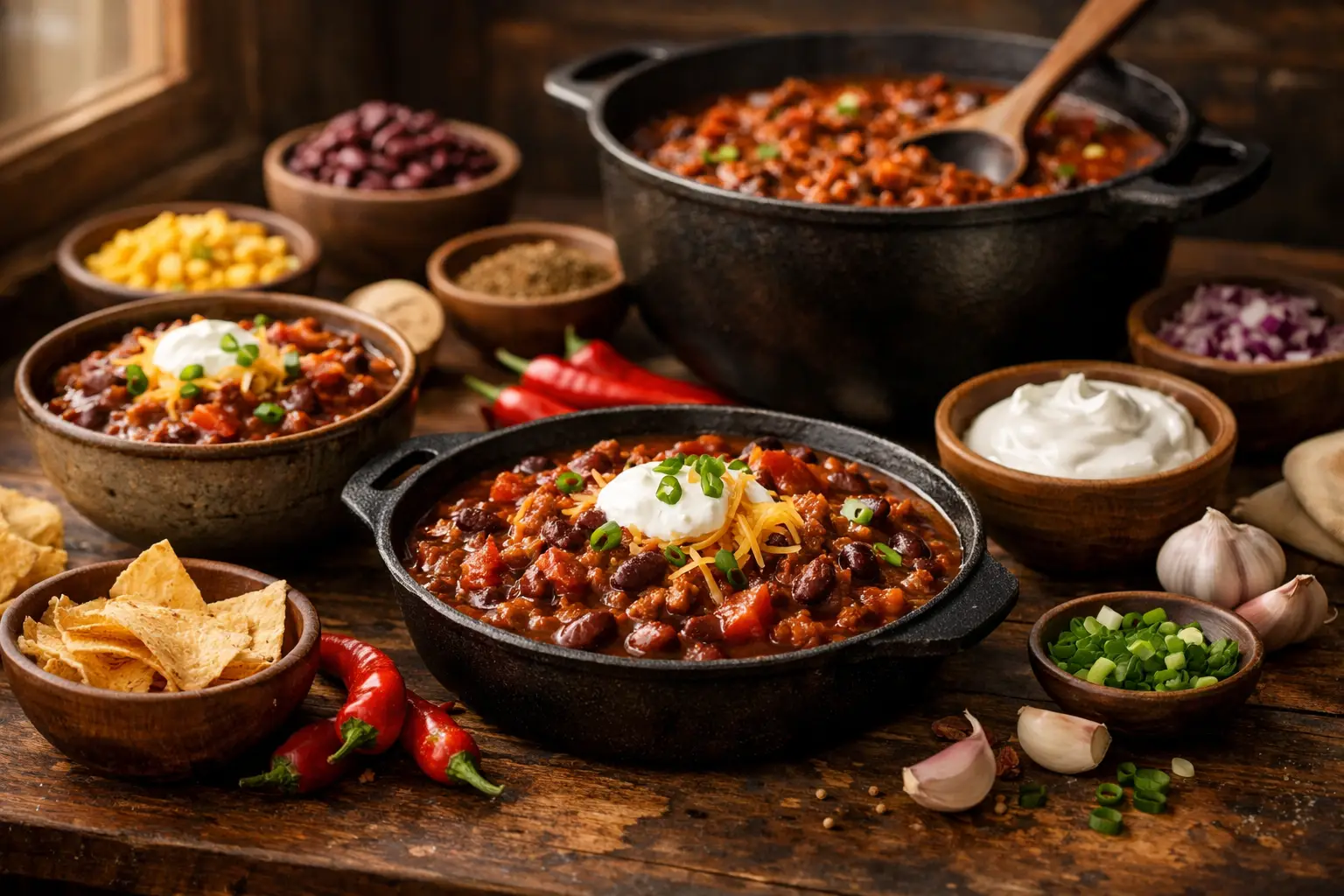
The fourth is forgetting toppings. Toppings are not decoration. They create contrast. Shredded cheese adds richness, sour cream cools the heat, scallions bring freshness, and crushed tortilla chips add crunch. A good chili plus the right topping combo often tastes more complete than a more complicated recipe eaten plain.
Your first homemade chili game plan
If you want the safest route to success, make a classic beef chili with onions, garlic, chili powder, cumin, canned tomatoes, beans, and broth. Brown the meat deeply, bloom the spices, simmer until thick, and adjust at the end with salt and a small hit of acid. That formula is dependable for a reason.
Once that version feels comfortable, start branching out. Try a bean-free Texas-style pot if you want deeper chile character. Try white chicken chili if you want something softer and creamier. Try green chili if roasted peppers are your thing. Platforms like ChiliStation make that exploration easier because the category is organized by style, heat, and protein instead of throwing every bowl into one giant recipe pile.
The best part of learning chili is that your second pot is almost always better than your first. You start noticing what you actually like - thicker or looser, smoky or bright, beefy or bean-heavy, mild enough for the whole table or hot enough to make a statement. That is when homemade chili gets fun. Not when it is perfect, but when it starts sounding like you.