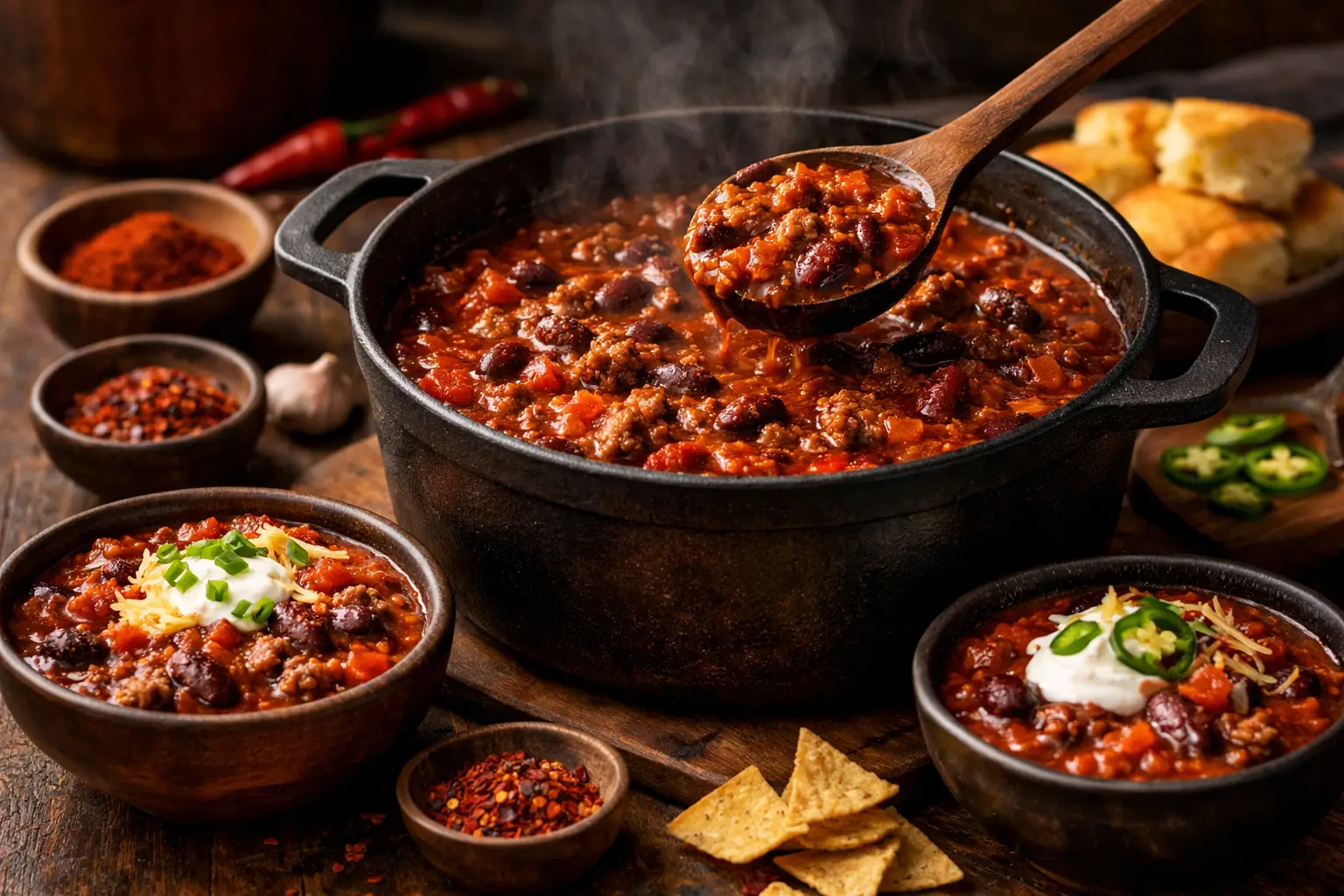
The best beef chili recipe is not the one with the longest ingredient list or the hottest pepper count. It is the one that gives you a deep, savory pot with real beef flavor, balanced heat, and a texture that feels built for a spoon, a hunk of cornbread, or a pile of shredded cheddar at the end of a long day. Every bowl tells a story, and this one should taste like it actually took care in the making.
Beef chili sits in a sweet spot for home cooks. It is familiar, forgiving, and flexible enough to go weeknight-simple or game-day dramatic. But that same flexibility is why so many versions end up flat, greasy, watery, or weirdly sweet. If you want a bowl that tastes full and grounded instead of loud and messy, a few choices matter more than the rest.
What makes the best beef chili recipe work
A great beef chili starts with a clear point of view. Are you making a bean-heavy comfort pot, a Texas-inspired bowl focused on meat and chiles, or a crowd-pleaser that lands somewhere in the middle? There is no single correct answer, but there is a difference between intentional and accidental.
For most home cooks, the best version is a balanced red chili with beef, onions, garlic, chile powder, cumin, tomato, and enough simmer time to turn separate ingredients into one cohesive thing. That sounds simple because it is. The trick is that chili rewards restraint as much as creativity.
Ground beef gives you speed and familiarity. Chuck roast or stew beef gives you bigger texture and a more substantial bite. Ground beef is usually the smarter move for a true weeknight pot, while cubed beef shines when you have time for a longer simmer. If you are choosing one for broad appeal, an 85/15 ground beef hits the mark. It has enough fat for flavor but not so much that the pot turns slick.
Then there is the spice question. More heat does not automatically mean more flavor. The best beef chili recipe builds flavor in layers: earthy chile powder, warm cumin, a little smoked paprika if you want a campfire edge, and optional cayenne or diced jalapeno for extra kick. You want the heat to ride alongside the beef, not cover it up.
The ingredient choices that matter most
The backbone is beef, onion, garlic, tomato, stock or water, and spices. Everything else is a style choice.
Tomato paste is one of the most underrated moves in chili. Cooked briefly after the aromatics, it adds concentration and helps the final pot taste deeper and less one-note. Diced tomatoes bring acidity and body, while crushed tomatoes create a smoother, more unified texture. If you like a chunkier bowl, go diced. If you want it dense and spoon-coating, lean crushed.
Beans are where chili debates get lively fast. For a broad, home-kitchen version, beans work beautifully. Kidney beans bring classic texture, pinto beans get creamier as they sit, and black beans add a slightly firmer bite. If you want the beef to stay center stage, use one can, not three. Too many beans and the pot starts reading as bean stew with beef cameos.
A small amount of something sweet or bitter can sharpen the whole batch. A pinch of brown sugar can smooth harsh tomato acidity. A square of dark chocolate or a little unsweetened cocoa can deepen the background. Coffee can add roasty complexity. None of these are mandatory, and all can be overdone. The best beef chili recipe usually succeeds because these extras stay subtle.
Best beef chili recipe
Ingredients
- 2 tablespoons neutral oil
- 2 pounds ground beef, preferably 85/15
- 1 large yellow onion, diced
- 4 garlic cloves, minced
- 3 tablespoons tomato paste
- 1 28-ounce can crushed tomatoes
- 1 15-ounce can diced tomatoes
- 1 15-ounce can kidney beans, drained and rinsed
- 2 cups beef stock
- 3 tablespoons chili powder
- 2 teaspoons ground cumin
- 1 teaspoon smoked paprika
- 1 teaspoon dried oregano
- 1/4 teaspoon cayenne, optional
- 1 1/2 teaspoons kosher salt, plus more to taste
- 1/2 teaspoon black pepper
- 1 teaspoon brown sugar, optional
Method
Heat a large Dutch oven or heavy pot over medium-high heat. Add the oil, then the beef. Brown it well, breaking it up as it cooks, but do not rush this stage. You want real color, not gray crumbles. If there is excessive grease, spoon some off, but leave enough behind to carry flavor.
Add the onion and cook until softened, about 5 minutes. Stir in the garlic and tomato paste, then cook for 1 to 2 minutes more. This is where the pot starts smelling like actual chili instead of separate parts.
Add the chili powder, cumin, smoked paprika, oregano, cayenne if using, salt, and black pepper. Stir for 30 seconds so the spices bloom in the fat. Pour in the crushed tomatoes, diced tomatoes, beans, and beef stock. Add the brown sugar if using.
Bring everything to a gentle boil, then reduce to a low simmer. Cook uncovered for 45 to 60 minutes, stirring occasionally, until thickened and rich. Taste and adjust with more salt if needed. If it gets too thick, add a splash of stock or water. If it stays too loose, give it more time.
Let it rest for 10 minutes before serving. That short pause helps the texture settle and the flavor round out.
How to make your beef chili taste deeper
Most chili problems come down to impatience or imbalance. If the flavor feels thin, the answer is usually not another random spice. It is more often one of three things: better browning, more salt, or more simmer time.
Browning matters because it creates the savory base that makes chili taste like it belongs in a cold-weather hall of fame. If you overcrowd the pan or stir nonstop, you lose that. Let the beef sit long enough to develop color.
Salt is equally important. Chili has a lot going on - beef, tomato, beans, spices - and without enough salt, everything tastes muted. Add it in stages and taste at the end before serving.
Simmer time pulls the whole thing together. Freshly mixed chili can taste sharp and slightly disjointed. Give it an hour and it starts acting like a team. Give it overnight in the fridge and it often gets even better.
Common trade-offs in the best beef chili recipe
This is where chili gets interesting. There is no free lunch in the pot.
If you use leaner beef, you get a lighter result, but you may lose richness. If you use fattier beef, the flavor improves, but you may need to skim grease. If you add more tomato, you get brightness, but too much can push the chili toward soup or pasta sauce territory. If you crank up the spice, the bowl gets exciting, but it may flatten the beef and limit who at the table wants seconds.
Beans are another trade-off. They stretch the meal, thicken the pot, and make leftovers especially satisfying. But if your ideal chili is all about meat and chile depth, beans can soften that identity. It depends on what kind of bowl you want.
That is one reason platforms like ChiliStation work so well for chili lovers. This is not one dish. It is a whole map of styles, each with its own logic.
Toppings and serving moves that actually help
A strong chili does not need a topping bar circus, but the right finish can sharpen the bowl. Shredded cheddar adds salt and comfort. Sour cream cools aggressive heat. Diced red onion brings crunch and brightness. Cilantro adds freshness if you like a greener finish.
Cornbread is the classic partner when you want something hearty and slightly sweet against the savory chili. Rice makes it stretch farther. Saltines are humble but effective. A baked potato under a ladle of beef chili is a move more people should make.
Make-ahead, leftovers, and freezer strategy
Beef chili is one of the rare comfort foods that often improves after a night in the fridge. The flavors settle, the texture tightens, and the spice feels more integrated. If you are cooking for guests, making it a day early is not cheating. It is strategy.
For leftovers, reheat gently on the stove with a splash of water or stock if needed. For freezing, cool it completely and portion it into containers. It keeps well and gives you a future dinner that feels far more generous than most freezer meals.
If you want one final rule for the best beef chili recipe, make it this: build for flavor first, not gimmicks. Brown the beef well. Season with intention. Let the pot simmer until it tastes like it means it. Then serve it the way your table loves it, because the best chili is the one people remember and ask for again.