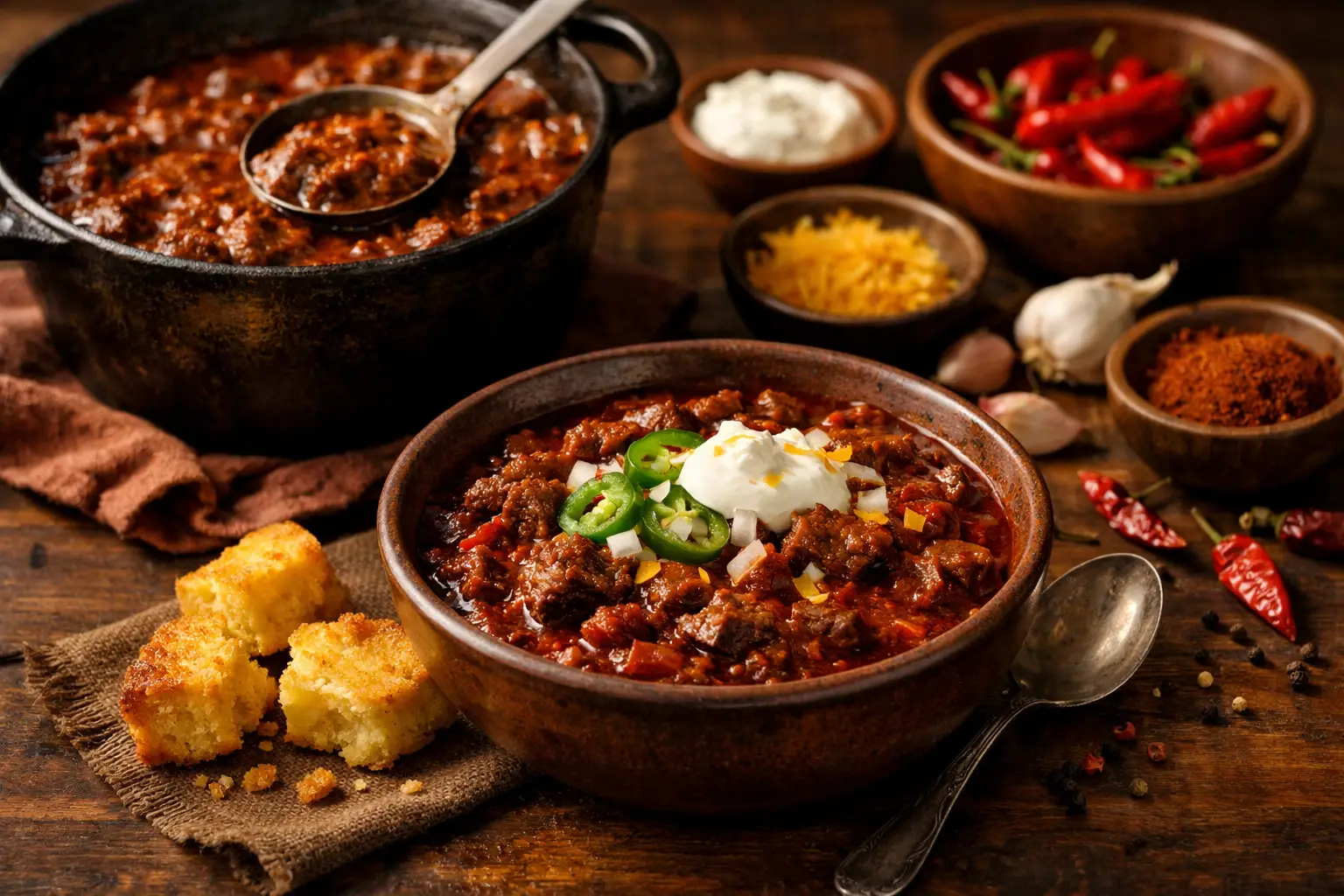
If your pot of chili starts with beans, tomatoes, and a ground beef packet, you are not making Texas chili - at least not the version Texans defend with real conviction. The best texas chili recipe is all about beef, dried chiles, patient simmering, and a texture that lands somewhere between stew and sauce. It is bold, brick-red, and deeply savory, with enough heat to keep things interesting but not so much that it flattens every other flavor.
Texas chili, often called Texas Red, has a strong point of view. No beans in the pot. No need for a long list of random add-ins. This style is built on a few essentials handled well, which is exactly why it can go wrong so easily. When the beef is too lean, the broth too thin, or the chile flavor replaced by generic chili powder, the whole thing loses its identity.
What makes the best Texas chili recipe different
A great Texas chili tastes focused. You get beef first, then the layered warmth of dried chiles, then spices that support instead of shout. It should feel rich without becoming greasy and thick without turning pasty.
The biggest difference is the chile base. Many everyday chili recipes rely on pre-mixed chili powder alone, which can work in a weeknight pinch, but it rarely gives Texas chili that dark, rounded, slightly smoky depth. Dried chiles like ancho, guajillo, and pasilla bring fruitiness, earthiness, and a more complex heat profile. That is where the flavor lives.
The meat matters just as much. Texas chili is usually made with chunks of beef instead of crumbled ground beef. Chuck roast is the usual favorite because it has enough marbling to stay tender over a long simmer. Cubed beef gives the bowl more chew and more presence. Every spoonful feels substantial.
Then there is the bean question. For Texas Red, the answer is simple: not here. Beans can make a very good chili, but they change the dish. They soften the beef-forward personality and shift the texture toward something heartier but less pointed. If you want classic Texas style, leave them out.
The core ingredients that actually matter
The best texas chili recipe does not require anything fancy, but it does reward good choices. Beef chuck is the anchor. Dried ancho chiles bring sweetness and color, while guajillo adds brightness and a cleaner, sharper edge. A little pasilla can deepen the whole thing. Some cooks add chipotle for smoke, but too much can take over fast.
Onion and garlic build the base. Cumin is common, though it should not dominate. Mexican oregano works better than standard oregano if you have it, because it adds a slightly citrusy, woodsy note that fits the chile profile. A little paprika can help round things out, but it is not the star.
Liquid is where opinions split. Some cooks use beef stock only. Others add coffee, beer, or a small amount of masa slurry at the end for body. These choices can work, but they each change the final bowl. Coffee pushes bitterness and depth. Beer can add malty sweetness. Masa thickens and gives the chili a subtle corn note. None is mandatory, which is why this recipe style rewards tasting as you go.
Best Texas Chili Recipe
Ingredients
- 3 pounds beef chuck roast, cut into 1-inch cubes
- 4 dried ancho chiles, stemmed and seeded
- 3 dried guajillo chiles, stemmed and seeded
- 1 dried pasilla chile, stemmed and seeded
- 2 cups hot water
- 2 tablespoons neutral oil or beef tallow
- 1 large yellow onion, finely chopped
- 4 garlic cloves, minced
- 2 tablespoons tomato paste
- 1 tablespoon ground cumin
- 2 teaspoons kosher salt, plus more to taste
- 1 teaspoon black pepper
- 1 teaspoon Mexican oregano
- 1-2 teaspoons cayenne or hot chile powder, optional
- 2 cups beef stock
- 1 tablespoon apple cider vinegar
- 1 tablespoon brown sugar, optional
- 2 tablespoons masa harina mixed with 1/4 cup water, optional for thickening
Method
Toast the dried chiles in a dry skillet over medium heat for about 15 to 20 seconds per side, just until fragrant. Do not let them burn or they will turn bitter. Transfer them to a bowl, cover with the hot water, and soak for 20 minutes.
While the chiles soak, pat the beef dry and season it lightly with salt and pepper. Heat the oil or tallow in a heavy Dutch oven over medium-high heat and brown the beef in batches. Do not crowd the pot. You want deep color on the edges, not gray steamed meat. Transfer the browned beef to a plate.
Lower the heat to medium and add the onion. Cook until softened and lightly golden, about 6 to 8 minutes. Stir in the garlic and tomato paste and cook for 1 more minute.
Drain the soaked chiles, reserving about 1 cup of soaking liquid. Blend the chiles with the reserved liquid until smooth. If your blender leaves the puree a little rough, strain it.
Add the cumin, oregano, and optional cayenne to the pot and stir for 30 seconds. Return the beef and any collected juices to the pot, then pour in the chile puree and beef stock. Bring to a gentle simmer.
Cover partially and cook on low for about 2 to 2 1/2 hours, stirring occasionally, until the beef is tender and the liquid has reduced into a rich, thick chili. If it looks too thin near the end, stir in the masa slurry and simmer uncovered for 10 more minutes.
Finish with the vinegar and taste. Add more salt if needed. If the chile blend tastes slightly sharp or bitter, a small spoonful of brown sugar can smooth it out, but use it carefully. Texas chili should taste savory first.
Where most Texas chili recipes go sideways
The most common mistake is underbuilding the chile flavor. If you skip dried chiles and lean entirely on chili powder, the result can still be good, but it often tastes flatter and dustier. Texas chili wants dimension, not just heat.
Another problem is rushing the browning step. Browning the beef develops the base note that makes the final bowl feel dark and meaty. If the meat goes into the pot pale, the chili has to work harder to become interesting.
Thickness is another balancing act. Too much stock and you get soup. Too much thickener and you get paste. The sweet spot is a chili that slowly settles in the bowl and clings to the beef. It should look serious.
Then there is heat. A lot of people assume Texas chili has to be brutally spicy. It can be, but that is not the goal. The better version is layered heat - enough warmth to build with each bite, enough flavor to keep you coming back.
How to tweak the recipe without losing Texas character
This style has room for variation, but not unlimited variation. If you swap cubed chuck for ground beef, add kidney beans, and pour in crushed tomatoes, you are making a different kind of chili. That may be delicious, just not Texas Red.
If you want a smokier pot, add one chipotle in adobo or a little smoked paprika. If you want more brightness, lean harder on guajillo. If you want a darker, earthier version, increase the ancho and pasilla. You can also play with the finish. Some bowls benefit from diced raw onion on top, while others are better with shredded cheddar or a few saltines on the side. Purists may object to some of that, but home cooks are feeding people, not entering a court case.
For a make-ahead batch, Texas chili is a star. The flavor settles and deepens overnight, and the texture often improves by the next day. Reheat it gently and add a splash of stock only if needed.
Serving the best Texas chili recipe
Texas chili does not need much around it, which is part of the appeal. Cornbread works. Warm flour tortillas work. A spoonful over a baked potato can work if you are stretching leftovers into another meal. What you probably do not need is a topping bar that turns the bowl into a salad.
This is also one of those recipes that fits a lot of moods. It can anchor game day, sit proudly at a cook-off, or carry a cold Sunday dinner with zero drama. Every bowl tells a story, and Texas chili tells one with a little swagger.
If you like comparing styles before you commit to a pot, that is where a focused platform like ChiliStation can help cut through the noise. Texas Red has a distinct identity, and once you taste a good version, it is hard to mistake for anything else.
The best bowl is not the one with the most ingredients. It is the one that knows exactly what it wants to be, then simmers until it gets there.