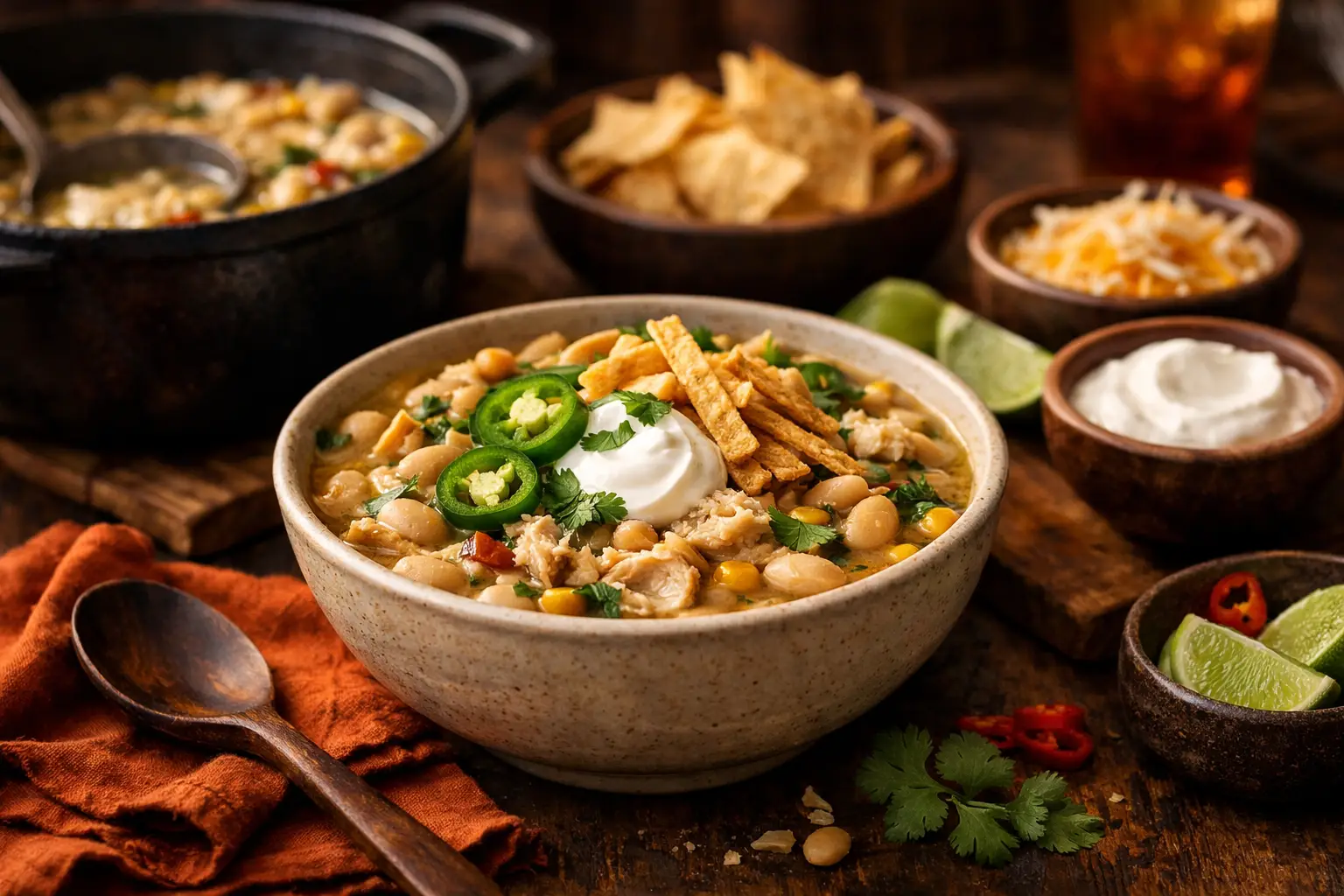
Some bowls are built for snow days. Others are built for game night, busy Tuesdays, or that moment when you want chili but not the heavy, brick-red kind. The best white chicken chili lives in that sweet spot - cozy, creamy, bright, and just punchy enough to keep you coming back for another spoonful.
What makes this style so loved is also what makes it tricky to judge. White chicken chili is not one fixed recipe. It can lean brothy or rich, mild or jalapeno-forward, bean-heavy or chicken-first. One version tastes almost like a creamy Southwest soup. Another lands closer to classic chili, just wearing a lighter color palette. If you are trying to find your personal best, the details matter.
What actually makes the best white chicken chili?
At its core, white chicken chili is a balance game. You want enough body to feel satisfying, but not so much thickness that it turns gluey. You want chili flavor, but not the deep tomato and dried red chile profile that defines Texas red or other darker styles. The signature lane here is white beans, chicken, green chiles, aromatics, and a creamy element that softens the edges without flattening the flavor.
The best bowls usually get four things right. First, the chicken still tastes like chicken. That sounds obvious, but a lot of recipes bury it under too much dairy or too many canned add-ins. Second, the beans are doing real work. They should contribute creaminess and structure, not just filler. Third, the green chile element is lively. Whether that comes from canned green chiles, poblanos, jalapenos, or Hatch chiles, there needs to be a little spark. Last, the finish matters. A squeeze of lime, a handful of cilantro, sliced scallions, or a little shredded cheese can turn a good pot into a bowl with personality.
Best white chicken chili styles, decoded
If you browse enough recipes, patterns start to appear. The category is bigger than it first looks, and knowing the style helps you choose faster.
The creamy crowd-pleaser
This is the version most people picture first. It is thick, pale, and mellow, often finished with cream cheese, sour cream, heavy cream, or a dairy-and-broth combination. It usually wins with families because it feels familiar and comforting, and it is forgiving if you are cooking for people who do not want a lot of heat.
The trade-off is that creamy white chicken chili can lose contrast if the seasoning is timid. The best versions avoid that by layering cumin, garlic, onion, and green chiles, then brightening the pot at the end. If you like soft heat and plush texture, this style is your move.
The brothy, brighter bowl
This one has a looser texture and more visible broth. It often uses less dairy or skips it entirely, letting beans, stock, and chiles carry the flavor. You get clearer definition from each ingredient, and the result feels lighter without giving up comfort.
This style is especially good if you want something that eats well year-round. It does not feel as rich as the creamy version, which makes it great for meal prep or bigger portions. If you want white chicken chili with more lift than weight, this is usually the smartest pick.
The chile-forward version
Some recipes push the pepper character much harder, using roasted poblanos, jalapenos, serranos, or Hatch chiles for a greener, deeper heat. These bowls have more edge and more identity. They are often the most memorable, especially if the peppers are roasted first.
The catch is balance. Too much chile without enough creaminess, bean starch, or salt can make the pot feel sharp instead of full. But when it works, this is the bowl for people who want white chicken chili that still behaves like chili, not just creamy soup.
The shortcut weeknight pot
Rotisserie chicken, canned beans, canned chiles, boxed stock - this version knows exactly what it is doing. It is fast, practical, and often surprisingly good. For many home cooks, this is the best white chicken chili because it actually happens on a Wednesday.
Speed does change the texture. You may get less depth than a version built from raw onion, seared chicken, and slowly simmered aromatics. Still, smart shortcuts are not a flaw. They are a feature, especially if the recipe understands where to spend effort and where not to.
Ingredients that separate a decent bowl from a repeat recipe
Chicken choice changes more than people think. Chicken thighs bring more flavor and stay tender longer, which makes them ideal for simmered chili. Chicken breast gives you a cleaner, leaner bite, but it can dry out if overcooked. Shredded rotisserie chicken delivers convenience and decent savoriness, especially in faster recipes.
Beans matter too. Great Northern beans are a classic choice because they are tender and mild. Cannellini beans are creamier and slightly meatier, which can make the chili feel fuller. Navy beans break down more easily, which helps thicken the pot but can blur texture if over-simmered. There is no single winner - it depends on whether you want distinct beans or a more velvety base.
Then there is the creamy component. Cream cheese creates a thick, rich finish that many people love, but it can dominate. Sour cream brings tang, which is useful if the recipe feels flat. Half-and-half or heavy cream gives silkiness with less tang. Some of the best white chicken chili recipes skip dairy altogether and puree part of the beans instead, which creates body without muting the peppers.
How to spot the best white chicken chili recipe before you cook it
A promising recipe usually shows restraint. If the ingredient list is loaded with every Southwest-adjacent spice in the cabinet, the flavor may end up muddy. White chicken chili tends to work better when a few notes are clear: cumin, garlic, onion, green chile, chicken, beans, and a bright finish.
Look at the method, too. Does it build flavor in stages, or does it dump everything into the pot at once? One-pot recipes can absolutely be excellent, but the better ones still create layers by sauteing aromatics, blooming spices, and timing the dairy carefully.
Toppings are another clue. A strong recipe often leaves room for contrast at the end. Tortilla strips, avocado, pepper jack, cilantro, lime, and scallions each bring something different. If the base is rich, a fresh topping matters even more.
It depends on what you want from the bowl
If your goal is pure comfort, the best white chicken chili is probably creamy, mild, and thick enough to hold a pile of toppings. If you care more about pepper flavor and a little heat, go for a chile-forward version with roasted poblanos or Hatch chiles. If you are cooking for a mixed crowd, the safest bet is a balanced middle lane: moderate creaminess, moderate heat, lots of toppings on the side.
This is where curation matters more than hype. A five-star recipe is not automatically your recipe. One person wants rich and scoopable. Another wants brothy and bright. The best white chicken chili is less about a universal champion and more about finding the version that matches your appetite, your pantry, and your tolerance for heat.
Common mistakes that flatten white chicken chili
The biggest one is over-thickening. Beans release starch, dairy tightens the texture, and shredded chicken can make the pot feel dense fast. If the chili looks perfect right off the stove, it may become too thick ten minutes later. A splash of stock at the end is often the difference between luscious and pasty.
Under-seasoning is another problem. White foods can fool cooks into thinking they are bland by nature, then the fix becomes too much salt at the very end. Better move: season in layers and taste after the beans, after the chicken, and after the creamy ingredient goes in.
The last mistake is forgetting acidity. Without lime, a touch of hot sauce, or a tangy topping, white chicken chili can feel heavy no matter how good the ingredients are.
Where this style fits in the chili universe
White chicken chili has always occupied an interesting lane. It is not trying to replace beef chili, Texas red, or a smoky bowl of brisket-and-bean Sunday chili. Its appeal is different. It offers comfort without the same weight, flexibility without losing identity, and enough room for variation that two excellent bowls can taste nothing alike.
That is exactly why it earns such loyal fans. It is adaptable without being generic. You can make it cozy, fiery, weeknight-fast, party-friendly, or freezer-ready. On a platform like ChiliStation, that range is the whole point - every bowl tells a story, and this one happens to have more versions than most people realize.
If you are chasing your favorite bowl, trust your preferences more than the internet's loudest opinion. Pick the texture you like, the heat you actually want, and the kind of recipe you will cook again. The best white chicken chili is the one that disappears first.