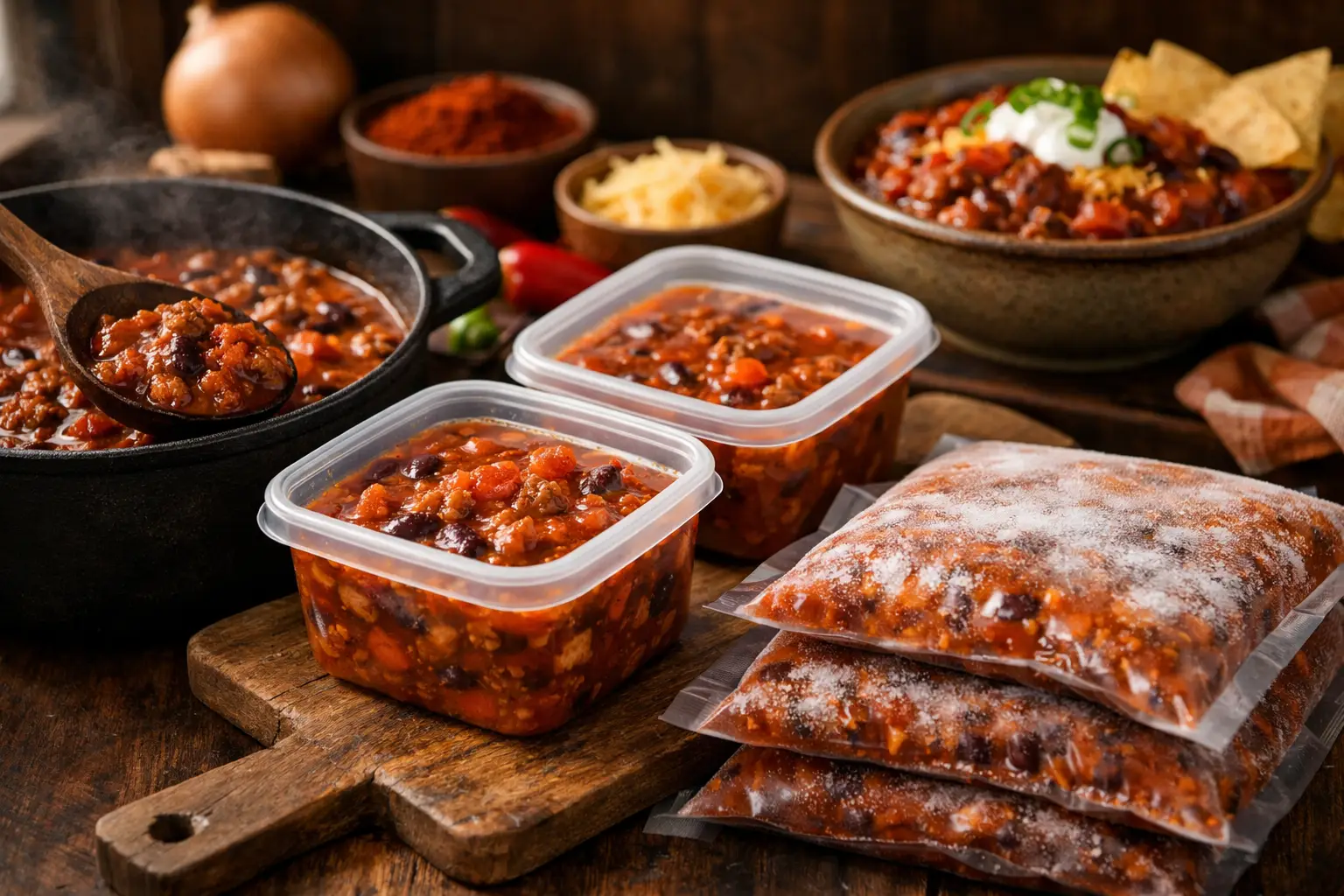
A great pot of chili almost dares you to make too much. One pound of beef turns into a Dutch oven full of smoky, saucy comfort, and suddenly you have dinner for six when you only needed two. So, can you freeze homemade chili? Absolutely - and in most cases, chili is one of the best freezer foods in the comfort-food universe.
The reason is simple: chili is built for holding up. Slow-cooked meat, beans, tomatoes, chiles, broth, and spices tend to freeze better than delicate dishes with crisp vegetables or cream-heavy sauces. In some cases, a frozen-and-reheated chili tastes even more settled and cohesive, like the spices finally got a second night to get acquainted.
Can You Freeze Homemade Chili Without Ruining It?
Yes, but the result depends on what kind of chili you made. A thick Texas-style beef chili with no beans usually freezes beautifully. A classic ground beef and bean chili also does very well. Turkey chili, white chicken chili, and vegetarian chili can all be frozen too, though their textures may shift a bit more after thawing.
What changes most often is not the flavor but the texture. Beans can soften further. Lean ground turkey can feel a little firmer or slightly grainy after reheating. Dairy-based add-ins like sour cream, cream cheese, or heavy cream can separate. That does not mean the chili is ruined. It just means some styles are more freezer-friendly than others.
If your chili has a brothier consistency, you may notice a little liquid separation after thawing. Stirring it while reheating usually brings it back together. If it was already very thick, it may tighten up even more in the freezer, which is easy to fix with a splash of broth or water.
What Kinds of Chili Freeze Best?
If you are meal-prepping for future chili nights, the freezer MVPs are red chilis with tomato bases, bean chilis, and beef-forward regional styles. These have enough body and enough seasoning to come back strong after a stint in the freezer.
Chunky beef chili freezes especially well because braised meat tends to stay tender. Ground beef chili is also reliable, especially if it is not overloaded with watery vegetables. Vegetarian chili can be excellent from frozen, particularly black bean, pinto bean, or lentil versions, but squash and zucchini-based versions may lose some structure.
White chili deserves a small asterisk. If it is built on broth, shredded chicken, white beans, and green chiles, you are in good shape. If it leans creamy, expect some separation. The flavor will still be there, but you may need to reheat it gently and stir well to smooth it out.
The Best Time to Freeze Chili
Freeze chili after it has cooled, but not after it has been lingering for hours. The sweet spot is to let it cool enough for safe storage, portion it, and get it into the freezer promptly.
That matters because texture and food safety are working together here. Hot chili should not go straight into deep containers in the freezer, since trapped heat can keep it in the temperature danger zone too long and warm up nearby foods. But waiting all evening is not ideal either.
A practical rhythm works best. Let the pot cool for a bit, divide the chili into shallow containers or freezer bags, and refrigerate briefly if needed to bring the temperature down faster. Once the portions are cool, freeze them.
How to Freeze Homemade Chili the Right Way
Portioning is where smart freezer chili starts to feel like a weeknight power move. Freeze chili in the amount you actually want to reheat later. Single servings are perfect for quick lunches. Two-cup portions work well for dinner-for-one with leftovers. Family-size portions make sense if chili night at your house moves fast.
Freezer bags are a favorite for a reason. They save space, freeze flat, and thaw relatively quickly. Just make sure the chili is cool before filling them, and leave a little room for expansion. Containers work too, especially if you prefer stackable, reusable storage, but pick ones with tight-fitting lids.
Before sealing, label each portion with the date and the type of chili. That sounds obvious until you are staring at three red frozen bricks and trying to remember which one is beef ancho and which one is spicy three-bean.
How Long Can Homemade Chili Stay in the Freezer?
Homemade chili stays at its best quality in the freezer for about three to four months. It will usually remain safe longer if continuously frozen, but quality starts to drift. Flavors flatten a bit, freezer burn becomes more likely, and the texture can get muddier.
That does not mean four-month chili is doomed. It just means your best bowl is the one you freeze well and bring back within a reasonable window. If you are the kind of cook who likes a stocked freezer, rotating older portions to the front helps keep the good stuff moving.
The Best Way to Thaw and Reheat Chili
The ideal thaw is overnight in the refrigerator. It is the easiest on texture and the lowest-stress option if you know tomorrow is chili day.
If you froze chili flat in bags, you can also thaw it more quickly under cool running water or in a bowl of cold water, changing the water as needed. For busy nights, you can reheat many chili styles straight from frozen on the stovetop over low to medium heat. It just takes a little patience.
Stovetop reheating usually gives the best result because you can control the texture. Add a splash of broth or water if it looks too thick. Stir regularly so the edges do not scorch while the center catches up. The microwave works for single servings, but stop and stir often to avoid hot spots.
If your chili contains dairy and looks slightly separated, gentle heat is your friend. Aggressive boiling can make that problem worse. Slow reheating and steady stirring usually rescue the bowl.
Common Freezer Mistakes That Hurt Chili
The biggest mistake is freezing too much at once in one giant container. That slows cooling, makes thawing a chore, and leaves you committed to a chili marathon when all you wanted was one bowl.
Another common issue is freezing chili with toppings already mixed in. Sour cream, shredded cheese, tortilla chips, avocado, raw onion, and fresh herbs are all better added after reheating. Freeze the base chili, then dress it up fresh.
Underseasoning can also show up after freezing. Cold storage can mute flavors a bit, especially salt and brightness. When reheating, taste the chili before serving. Sometimes it needs a small pinch of salt, a squeeze of lime, or a little extra chili powder to wake everything back up.
Can You Refreeze Homemade Chili?
You can, but it depends on how it was handled. If the chili was thawed safely in the refrigerator and not left sitting out, refreezing is generally acceptable from a safety standpoint. The trade-off is quality. Each freeze-thaw cycle chips away at texture.
That is why portioning matters so much. Freeze in usable amounts and you will rarely need to refreeze. It keeps the chili tasting closer to its original self, whether it is a meaty Texas red or a bean-packed weeknight batch.
When Freezing Homemade Chili Is Not the Best Move
Some chili styles are better eaten fresh. If your recipe leans heavily on cream, soft cheese, or a lot of tender vegetables you want to stay distinct, the freezer can blur those edges. A roasted corn and cream cheese chili, for example, may still be tasty later, but it will not come back exactly as it started.
The same goes for carefully layered garnishes. If the fun of the bowl is the contrast between hot chili and cool toppings, freezing the base is still fine, but the full experience depends on rebuilding those toppings fresh.
That is really the bigger truth with chili storage: the freezer is fantastic for preserving the soul of the pot, not every finishing detail.
At ChiliStation, we love any move that turns one great batch into multiple future wins. Freeze your homemade chili in the right portions, reheat it with a light hand, and you will have a ready-made bowl that still brings the heat, the depth, and the comfort when you need it most.