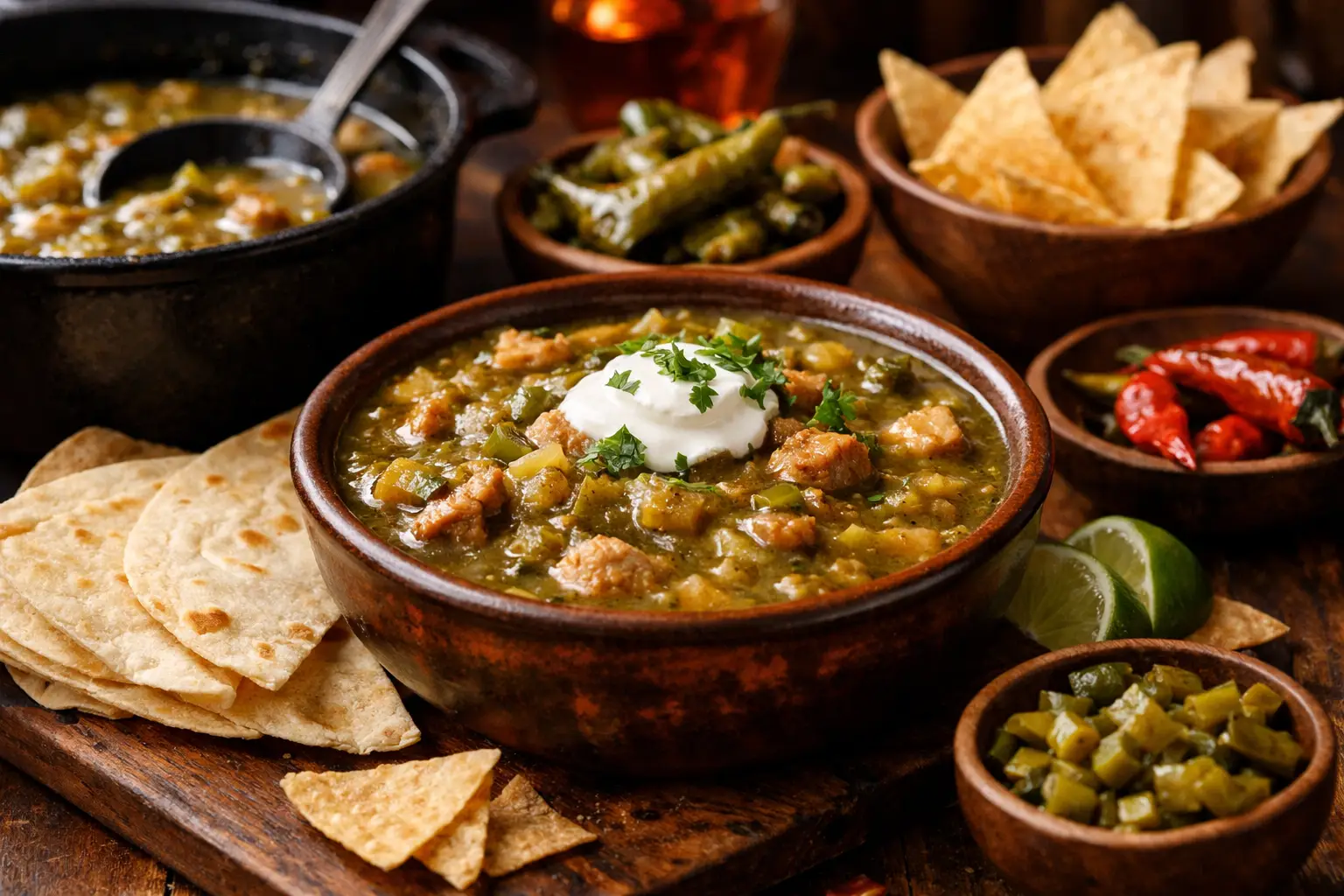
The best colorado green chili recipe does not taste like salsa, and it does not eat like thin soup. It lands in that glorious middle ground Colorado cooks swear by - spoon-coating, pork-rich, deeply roasted, and built around green chiles that bring flavor first and heat second.
That texture is the whole game. Colorado green chili is one of the most identity-packed bowls in the chili universe, somewhere between stew, smother sauce, and weekend comfort ritual. You ladle it into a bowl, pour it over a burrito, drag a tortilla through it, or crown fries and eggs with it. However it shows up, it should taste rounded and savory, with enough chile character to announce itself immediately.
What makes a Colorado green chili recipe distinct
A proper Colorado green chili recipe usually starts with pork, onions, garlic, broth, and roasted green chiles, then thickens into a silky, gravy-like body. That last part matters because Colorado style often leans more cohesive and spoonable than New Mexican green chile, which can be a little looser and more chile-forward. Neither approach is wrong. They are just aiming at different bowl personalities.
Flour is often part of the Colorado move, either cooked with the pork drippings or stirred in later to create that signature body. Tomatoes, if used at all, stay in the background. Beans are uncommon. The spotlight belongs to pork and green chiles, with cumin and oregano playing support.
If you have ever wondered why one version tastes bold but flat while another tastes like the kind served in a no-nonsense diner off the Front Range, the answer is usually layering. Browning the pork, roasting the chiles enough to get a little char, and giving the whole pot time to settle into itself matters more than adding a long list of ingredients.
Ingredients that actually move the bowl
Pork shoulder is the usual winner because it brings fat, collagen, and enough structure to stay tender after simmering. Pork loin can work, but it is easier to overcook and won’t give you the same richness. If you want a cleaner finish, use shoulder and trim it lightly rather than switching cuts entirely.
For the green chiles, Hatch gets the hype, and for good reason, but a great bowl is still possible with Pueblo chiles, Anaheim, or a mix. The main thing is using roasted chiles with some skin removed and some char left behind for flavor. Heat level is personal. Mild chiles can still produce a deeply satisfying pot if the roast is right.
Onion, garlic, chicken stock, cumin, Mexican oregano, salt, and black pepper are the core supporting cast. A little flour helps build that classic texture. Some cooks add a small amount of tomatillo for brightness, while others use a splash of beer. Those are optional moves, not foundation pieces.
How to build the flavor from the bottom up
Start by cutting the pork into bite-size pieces and seasoning it well with salt and pepper. Brown it in a heavy pot with a little neutral oil or rendered pork fat. Do this in batches if needed. Crowding the pan is the fastest route to gray pork and weak flavor.
Once the pork has color, pull it out and cook the onion in the same pot until soft and picking up the browned bits. Add the garlic briefly, then stir in flour and let it cook for a minute or two. You are not making a dark roux. You just want to cook off the raw edge while capturing the drippings.
Now add stock gradually, scraping the pot smooth, then return the pork and stir in the roasted chopped chiles. Add cumin and oregano, bring it to a simmer, and let time do the work. Forty-five minutes gets you respectable chili. Ninety minutes gets you something far closer to the style people remember.
The biggest fork in the road is how chunky or integrated you want the final texture. Some cooks leave the chiles and pork fully distinct. Others mash a portion against the side of the pot or blend a cup of the chili and stir it back in. If you want that classic diner-style body, this second move is often the difference.
Colorado green chili recipe: a reliable base version
Use 2 pounds pork shoulder, cut into small cubes, 1 large onion diced, 4 cloves garlic minced, 2 tablespoons flour, and 4 cups chicken stock. Add about 2 cups roasted chopped green chiles, 1 teaspoon ground cumin, 1 teaspoon Mexican oregano, salt, and black pepper. If your chiles are very mild, a jalapeno or serrano can sharpen the heat without changing the profile too much.
Brown the pork in a Dutch oven, then remove it. Cook the onion until softened, add garlic, then stir in the flour. Slowly add the stock while stirring to keep the base smooth. Return the pork, add the chiles and seasonings, and simmer partially covered for 1 to 1 1/2 hours, until the pork is tender and the chili has thickened.
Taste near the end, not just at the beginning. Green chiles vary wildly. Some batches need more salt to wake up the roast. Some need a touch more cumin. If the pot tastes heavy, a squeeze of lime can brighten it, but use restraint. This is still chili, not a citrus dish.
The trade-offs that change your result
Fresh roasted chiles beat canned for complexity, but canned chiles are better than no green chili at all. If you are using canned, drain lightly and expect to compensate with a little extra seasoning. The roast flavor will be gentler.
A flour-thickened pot gives you that classic Colorado body, but too much flour can mute the chile flavor and leave a pasty finish. If you want a lighter texture, reduce the flour and let the pork collagen do more of the thickening. You will get a looser bowl, but often a brighter chile profile.
Pork shoulder brings the best texture over time, while leaner cuts cook faster but lose some depth. That is the usual compromise in comfort food. Speed and richness rarely peak at the same time.
How to serve it like it belongs on the table
Colorado green chili is famously versatile. It is excellent in a bowl with warm tortillas, but its real star quality shows up as a smother. Spoon it over burritos, huevos rancheros, fries, hash browns, burgers, or scrambled eggs and it suddenly feels like the center of the meal rather than just a side pot.
Toppings should stay simple. Chopped onion, shredded cheese, cilantro, or a dollop of sour cream all work, but piling on too much can blur the chile character you spent time building. The bowl should still read pork and green chile first.
If you are the kind of cook who likes comparing regional styles side by side, this is where Colorado green chili gets especially fun. It can play comfort-food heavyweight one night and breakfast sauce the next. That flexibility is part of why it has such a loyal following.
Common mistakes with a colorado green chili recipe
The most common miss is under-roasted chiles. Without enough char, the pot tastes greener in the raw sense, not greener in the deep, savory sense. A close second is rushing the simmer. Early on, the flavors can feel separate - pork here, chile there, stock in the background. Given time, they knit.
Another mistake is chasing heat instead of flavor. A hotter bowl is not automatically a better one. Colorado green chili shines when the roast, pork richness, and gentle spice all show up together. If every spoonful just burns, you lose the regional character.
Finally, watch the salt late in the cook. As the chili reduces, salt gets louder. Season confidently, but adjust in the final stretch with a spoon and a little patience.
When to tweak the formula
If you want a weeknight version, cut the pork smaller and lean on a slightly higher ratio of chopped chiles so the pot builds flavor faster. If you want the long-game version for a cold weekend, keep larger pork pieces, simmer lower and slower, and let the texture develop naturally.
For a crowd, this chili holds beautifully and often tastes better the next day. The thickened base settles, the pork relaxes, and the chile flavor rounds out. It is one of those rare dishes that rewards leftovers instead of merely tolerating them.
At ChiliStation, we love chili styles that announce where they are from in the first bite, and Colorado green chili absolutely does that. Make it once with intention, pay attention to texture, and you will start noticing the tiny choices that separate a decent pot from one people ask about before the bowl is even empty.
If your finished chili makes you want one more tortilla, one more spoonful over eggs, or one last swipe through the pot, you got it right.