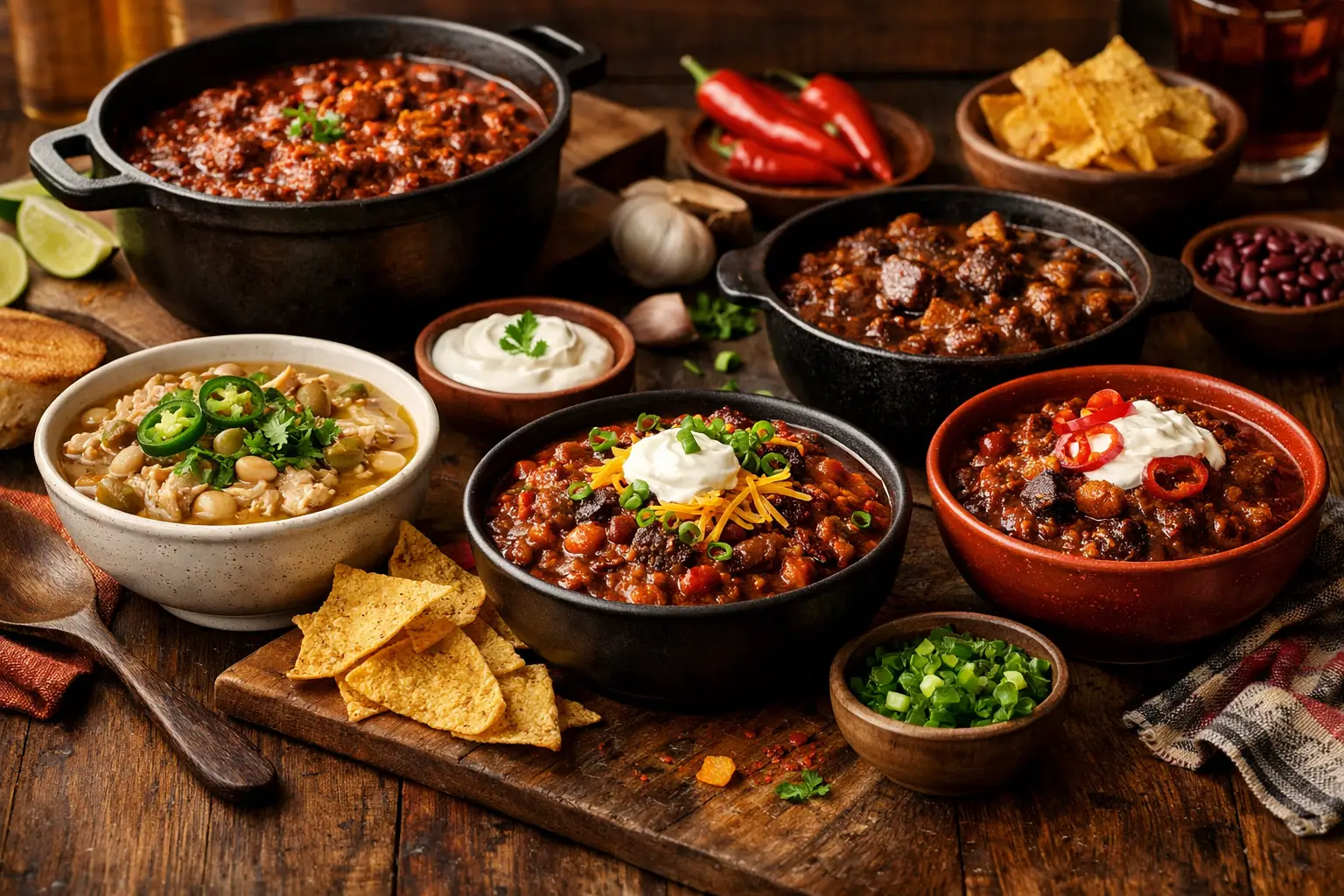
One person’s idea of chili is a smoky, brick-red beef pot with no beans in sight. Another swears by a sweet-spiced Cincinnati plate over spaghetti. That’s the fun of different types of chili - the name stays the same, but the bowl changes completely depending on region, tradition, and mood.
If you’ve ever stared at a recipe list and wondered what actually separates Texas chili from Colorado green chili, or white chicken chili from a game-day bean-heavy classic, this is the map. Every bowl tells a story, and some of the best ones start with knowing what kind of chili you’re really craving.
Different types of chili, at a glance
Chili is less one dish than a category with strong opinions. The base can be beef, pork, chicken, turkey, venison, or just beans. The heat can come from dried chiles, fresh peppers, chipotles, or barely at all. Some versions are thick enough to sit on a spoon, while others feel closer to a stew or sauce.
That variety is exactly why chili inspires so much loyalty. A weeknight cook might want something easy and comforting. A purist may want a regionally specific pot with a clear point of view. Neither is wrong. They’re just choosing from different branches of the same chili family.
Texas Red
If chili had a heavyweight division, Texas Red would be in it. This is the iconic bowl built around beef and dried red chiles, usually with a deep, concentrated flavor and a serious sense of identity. In classic versions, beans are either absent or treated like a distraction.
What makes Texas Red stand out is the chile profile. Instead of leaning on tomato for body, many recipes build flavor from toasted dried peppers like ancho, guajillo, or pasilla, blended into a rich sauce. The result is earthy, slightly smoky, and layered rather than simply hot.
This is a great choice when you want chili that eats like an event. It rewards low-and-slow cooking and doesn’t need much besides maybe onions, cheese, or a square of cornbread on the side.
Classic Ground Beef Chili
This is the bowl many Americans picture first, and for good reason. Ground beef chili is the weeknight workhorse - familiar, hearty, and flexible enough to match whatever is already in the pantry.
Most versions include ground beef, onions, garlic, tomatoes, chili powder, and beans, often kidney or pinto. It tends to be looser and more tomato-forward than Texas Red, with a crowd-pleasing flavor that lands in the comfort zone. If you grew up eating chili at tailgates, school fundraisers, or cold-weather family dinners, this is probably your baseline.
Its biggest strength is accessibility. It comes together faster than chunked beef styles and leaves plenty of room for customization. More heat, less heat, extra beans, no beans, corn, bell peppers, cocoa, beer - this is the chili most likely to welcome improvisation.
Cincinnati Chili
Cincinnati chili lives in its own lane, and that’s exactly why people love it. This style is thinner, silkier, and distinctly spiced, often with cinnamon, allspice, or even a hint of clove in the mix. It’s commonly served over spaghetti and topped with shredded cheddar, onions, and beans in specific combinations known as ways.
For people expecting a chunky Southwestern-style bowl, the first bite can be a surprise. But that surprise is the point. Cincinnati chili behaves almost like a seasoned meat sauce, with a sweet-savory profile that’s less about chile depth and more about aromatic spice.
This is a regional original with a cult following. If you like food traditions that ignore the rulebook and still work beautifully, it deserves a spot on your list.
Colorado Green Chili
Colorado green chili is all about pork, green chiles, and a warming, savory heat that feels completely different from red chili styles. It usually gets its signature flavor from roasted Hatch chiles or similar green peppers, often with tomatillos, garlic, onion, and broth creating a stew-like base.
The texture can vary. Some bowls are thick and gravy-like, built for smothering burritos or fries. Others are looser and more soup-adjacent. Either way, the flavor is bright, peppery, and less smoky than red-chile-heavy versions.
When you want chili with lift rather than weight, green chili is a strong move. It still satisfies, but it hits with freshness and bite instead of dark richness.
White Chicken Chili
White chicken chili is the creamy, cozy outlier that keeps winning people over. Instead of red chiles and beef, it leans on chicken, white beans, green chiles, cumin, garlic, and often some combination of sour cream, cream cheese, or heavy cream for body.
Purists sometimes debate whether it counts as “real” chili. Home cooks usually do not care because it tastes great, comes together fast, and hits that comfort-food sweet spot. The heat is often gentler, which makes it a smart option for households with mixed spice tolerance.
It’s also one of the most adaptable styles. Rotisserie chicken, canned beans, slow cooker versions, and lighter brothy takes all fit naturally here. Think of it as chili for nights when you want warmth without the deep red intensity.
Chili con Carne
Chili con carne is a broad term, but in practice it often refers to meat-forward chili with a strong chile presence and fewer filler ingredients. Depending on the recipe, it may overlap heavily with Texas-style chili or sit somewhere between Texas Red and classic American beef chili.
The key idea is in the name - chili with meat. That emphasis matters because it shifts the bowl away from bean-dominant or tomato-dominant formulas. Chunked beef is common, and the finished dish usually aims for richness and depth rather than maximum volume.
If you see chili con carne on a menu or recipe card, check the details. Sometimes it signals a traditional, chile-driven pot. Sometimes it’s simply a more formal label for familiar beef chili. This is one of those areas where the exact recipe matters more than the name.
Vegetarian Chili
Vegetarian chili is not a compromise bowl anymore, if it ever was. The best versions build complexity with beans, peppers, onions, tomatoes, corn, squash, mushrooms, lentils, or sweet potatoes, then layer in chile powder, cumin, smoked paprika, and other seasonings for depth.
What makes this category interesting is how wide it is. Some vegetarian chilis are bean-first and classic. Others go all in on texture, using mushrooms or lentils to mimic the savoriness of meat. Some are spicy and lean, while others are thick, slightly sweet, and packed with vegetables.
The trade-off is texture. Without meat, the pot can fall flat if it lacks body or umami. But when it’s done well, vegetarian chili tastes intentional, not like a backup plan.
Turkey Chili
Turkey chili sits in the practical sweet spot. It gives you the comfort and spice of a classic red chili, but with a lighter profile than ground beef. For many cooks, that makes it an easy weeknight regular rather than a special-project recipe.
Ground turkey takes seasoning well, but it does need help. Because it’s leaner, recipes usually benefit from extra aromatics, a stronger spice hand, or ingredients that add richness, like fire-roasted tomatoes, chipotles, or a longer simmer. Otherwise, the flavor can feel a little thin.
Done right, turkey chili is balanced, hearty, and extremely meal-prep friendly. It’s proof that lighter does not have to mean bland.
Chili with Beans
This category sounds obvious, but it’s one of the biggest dividing lines in chili culture. Bean chili can refer to classic beef-and-bean versions, bean-heavy vegetarian pots, or regional home-style recipes where the beans are just as important as the meat.
Beans change more than the ingredient list. They shift the texture, mellow the spice, and make chili feel more like a full one-pot meal. Kidney, pinto, black, and cannellini beans all bring something different, from firmness to creaminess.
For feeding a group, bean chili is often the smart play. It stretches well, reheats beautifully, and appeals to more people. If your priority is pure chile intensity, though, beans can soften the edges.
Chili without Beans
Beanless chili tends to be more concentrated, more meat-forward, and more polarizing. Fans love the purity of flavor and the way the chile base gets center stage. Critics sometimes find it too heavy or too narrow.
This style often overlaps with Texas traditions, but not every no-bean chili is strict Texas Red. Some are thick ground beef versions, others are built with beef chunks or short rib. The unifying idea is that beans are out, and the remaining ingredients have to carry the whole pot.
If you want a chili that feels bold and direct, this is the lane. Just know it usually asks more from your seasoning and technique because there’s nowhere to hide.
Regional and modern fusion chili
Some of the most exciting bowls don’t fit neatly into one traditional category. You’ll find smoked brisket chili, chipotle turkey chili, beer chili, venison chili, pumpkin chili, and mashups that borrow from taco soup, queso, or barbecue. These recipes can be brilliant, or they can feel gimmicky. It depends on whether the extra idea actually supports the bowl.
The best modern chili riffs still respect structure. They know what the base is supposed to do, whether that means dried chile depth, creamy comfort, or green-chile brightness. The additions should sharpen the identity, not blur it.
For curious home cooks, this is where discovery gets fun. Once you know the classic different types of chili, it becomes easier to tell whether a new version sounds craveable or just chaotic.
How to choose the right chili for the moment
If you want something classic and broadly crowd-pleasing, start with ground beef chili or turkey chili. If you want regional character, go for Texas Red, Cincinnati chili, or Colorado green chili. If your group includes vegetarians or mixed preferences, a strong bean chili or white chicken chili often plays well.
The biggest factor is not authenticity alone. It’s mood. Some nights call for a slow-simmered bowl with serious depth. Other nights call for a fast, cozy pot that gets dinner on the table without fuss. The right chili is the one that fits both your appetite and your energy.
That’s the beauty of this category. There isn’t one correct bowl - just the next one worth making.