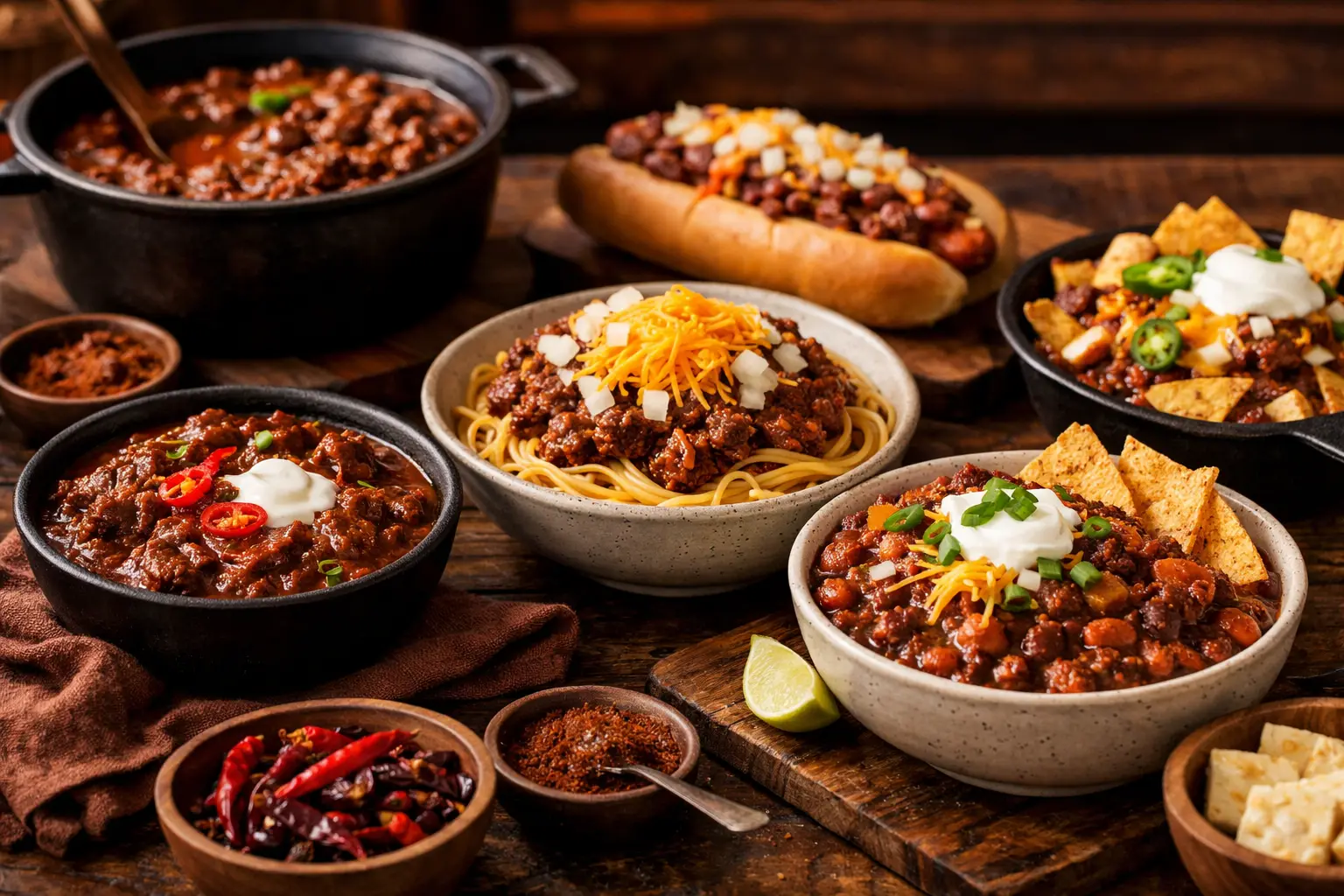
The fastest way to start an argument at a cook-off is to ask one simple question: what counts as real chili? That tension is exactly why a guide to regional chili styles is so useful. Chili is not one fixed dish. It is a family of bowls shaped by migration, local ingredients, working-class kitchens, community traditions, and a lot of strong opinions.
If you are trying to figure out why one recipe is all about beef and dried chiles while another gets topped with cheddar and served over spaghetti, the answer is regional identity. Every bowl tells a story, and once you know the major styles, it gets much easier to pick the right chili for your mood, your crowd, and your stovetop confidence.
Why a guide to regional chili styles matters
A good chili match starts with expectations. If you want deep, smoky, no-shortcuts chili for a cold weekend, Texas Red makes sense. If you need a weeknight pot that feels cozy, crowd-friendly, and loaded with beans, a Midwestern style may hit better. If you want something brighter, porky, and built around roasted peppers, green chili belongs on your radar.
This is also where many cooks get tripped up. They follow a recipe called chili, then wonder why it tastes nothing like the version they grew up with. That is not a failure. It is taxonomy. Chili has branches, not a single rulebook.
Texas Red: the benchmark bowl
Texas Red is the style that looms largest in chili mythology. At its core, it is built around beef, dried chiles, and a thick, concentrated sauce. Beans are the classic flashpoint here, because traditional Texas Red usually leaves them out entirely.
What makes it special is the chile flavor itself. Instead of leaning on tomatoes for body, many Texas-style recipes use a puree or paste made from dried chiles such as ancho, guajillo, or pasilla. That creates a darker, richer profile with more depth than acidity. The heat can range from mellow to serious, but the best versions are not just hot. They are layered, savory, and slightly earthy.
This is the bowl for cooks who want intensity and structure. It rewards a longer simmer and a little patience. The trade-off is that it can feel less forgiving than bean-forward chili. If you oversalt it or underbuild the chile base, there is nowhere to hide.
Who will love Texas Red
If your ideal chili is meaty, spoon-coating, and serious about chile flavor, this is your lane. It is especially good for weekend cooking, game-day bragging rights, or anytime you want a bowl that feels rooted in tradition.
Cincinnati chili: the outsider that earned its place
Cincinnati chili is one of the most distinctive regional styles in America, and it confuses people until they stop expecting Texas Red. This style is thinner, more sauce-like, and famously served over spaghetti or hot dogs, then topped with cheddar, onions, and beans depending on the order.
Its flavor profile is the real curveball. Many recipes include warming spices like cinnamon, clove, or allspice, which gives the chili a subtly sweet, aromatic edge. For some eaters, that first bite is a plot twist. For others, it is instant obsession.
The key to appreciating Cincinnati chili is to treat it as its own category rather than a failed version of something else. It is built for layering, toppings, and comfort-food maximalism. It may not satisfy someone craving a rugged chuck-and-chile stew, but it absolutely delivers if you want a late-night, diner-style bowl with personality.
Colorado green chili: bright, porky, and built on peppers
Colorado green chili shifts the whole conversation. Instead of dried red chiles and beef, this style often features pork and roasted green chiles, especially Hatch-style peppers when available. The result is lighter in color but not lighter in flavor.
Good green chili has a roasted, slightly sharp pepper backbone and a savory richness from pork that feels different from beef-based styles. Texture matters here too. Some versions are stew-like and chunky, while others land somewhere between chili and smothering sauce, perfect for burritos, fries, eggs, or a bowl with tortillas.
This style is ideal if red chili feels too heavy or predictable. It is also one of the best entry points for cooks who love Southwestern flavors but do not want a dark, dense pot. The one variable is pepper quality. Great green chili can taste electric. Average peppers can make the whole thing feel flat.
New Mexico chile stew: close cousin, different identity
New Mexico chile stew often gets lumped in with green chili, but it has its own rhythm. It can feature pork, potatoes, and either green or red chiles, with a clearer emphasis on the flavor of the local chile itself. Where some green chili recipes chase thickness and comfort, New Mexico versions often let the pepper lead.
That makes the bowl feel more direct and less dressed up. It is less about heavy toppings and more about clean, regional flavor. If you care about the distinction between roasted green chile brightness and deeper red chile warmth, this style rewards attention.
Midwestern and everyday bean chili: the weeknight workhorse
For a huge number of home cooks, the default idea of chili is a tomato-based pot with ground beef, beans, onions, chili powder, and maybe bell pepper. It may not get the same mythology as Texas Red, but this is one of the most cooked and most loved chili styles in the country for a reason.
It is accessible, affordable, and flexible. You can make it mild, spicy, chunky, or soupy. You can stretch it with extra beans or vegetables. You can top it with sour cream, cheese, crackers, cornbread, or hot sauce and still feel like you are inside the same broad tradition.
Purists may dismiss it, but that misses the point. This style thrives because it works. It feeds families, handles substitutions well, and suits busy cooks. If your chili goal is dependable comfort rather than regional orthodoxy, this bowl deserves respect.
White chili and modern offshoots
White chicken chili sits a little outside classic regional chili history, but it has become a major modern favorite. Typically made with chicken, white beans, green chiles, broth, and creamy elements like sour cream or cream cheese, it trades dark chile depth for a softer, milder, more crowd-friendly profile.
This is where chili starts to overlap with contemporary home-cooking habits. People want one-pot meals, flexible heat levels, and recipes that feel cozy without requiring a pantry of dried peppers. White chili answers that need.
It is not the bowl to choose if you are chasing historical purity. It is the bowl to choose if you want something easy to love, easy to customize, and very hard to stop eating.
How to choose the right regional chili style
The best guide to regional chili styles is not about ranking bowls from most authentic to least. It is about matching style to appetite.
If you want bold beef and chile complexity, go Texas. If you want layered toppings and diner energy, go Cincinnati. If roasted peppers and pork sound like your kind of comfort, go Colorado green chili. If you need a practical, flexible classic for a busy week, bean chili still owns that lane.
Skill level matters too. Texas Red asks for more technique, especially if you are working from whole dried chiles. Cincinnati chili is less technically fussy, but its flavor profile can be polarizing. Everyday bean chili is the easiest place to improvise. Green chili sits in the middle, simple enough for most cooks but dependent on solid pepper flavor.
The regional details that change the whole bowl
Small choices have outsized effects in chili. Protein changes the personality immediately. Beef feels sturdy and rich, while pork can feel sweeter and more supple. Ground meat creates a different texture than chunks of chuck or shoulder. Then there is the chile question itself. Chili powder blends are convenient, but whole dried chiles bring more nuance if you are willing to do the extra work.
Beans are another line in the sand, but they are also a practical choice. They add body, stretch servings, and make chili more weeknight-friendly. Tomatoes can brighten a pot or flatten it, depending on the style. Toppings do similar work. Raw onion, shredded cheese, crema, crackers, and spaghetti are not just garnish choices. They signal the tradition you are entering.
That is part of what makes a focused platform like ChiliStation useful. When you can compare bowls by region, heat, protein, and style instead of scrolling through generic recipe clutter, the differences become much easier to understand and much more fun to cook.
The best place to start is not with the most famous chili. It is with the bowl that sounds the most like your kind of comfort. Once you find that one, the rest of the map gets a lot more delicious.