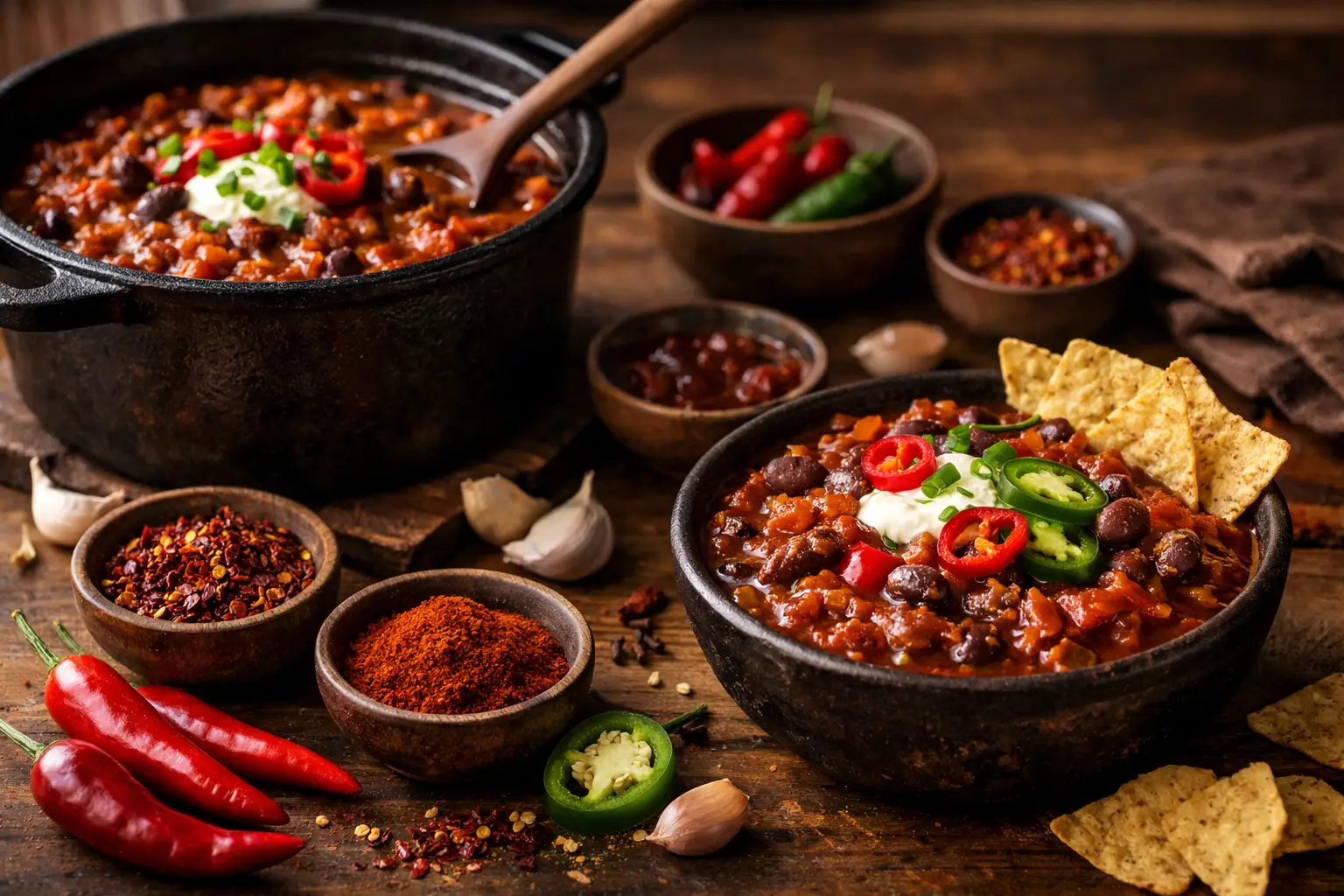
A pot of chili can miss in two very different ways. Sometimes it lands flat and tomato-heavy, and sometimes it gets hot in the wrong direction - sharp, bitter, and one-note. If you're wondering how to make chili spicier, the goal is not just more burn. The goal is heat that belongs in the bowl.
That distinction matters because chili heat is not a single dial. Fresh peppers bring brightness. Dried chiles add depth. Cayenne hits fast. Chipotle carries smoke. Hot sauce can sharpen a finished pot, while chile paste melts into the base and changes the whole personality. The best move depends on what your chili already tastes like.
Quick answer
Build heat in layers during cooking (fresh or dried chiles bloomed in fat), then adjust at the finish with cayenne or hot sauce. That gives depth and lift without bitter overshoot.
How to make chili spicier starts with the right kind of heat
Before you add anything, taste your chili and ask a simple question: what is missing? If the bowl tastes rich but sleepy, you probably need a brighter heat source like fresh jalapeno, serrano, or a vinegar-forward hot sauce. If it tastes thin and acidic, reach for dried chile powders, chipotle in adobo, or a spoonful of chile paste that adds body along with fire.
This is where home cooks often overshoot. They add straight cayenne because it is easy, then wonder why the pot tastes hotter but not better. Cayenne absolutely works, but it is mostly about direct heat. It does not bring much complexity. Think of it as a finishing adjustment, not always the star player.
Fresh chiles for cleaner, brighter heat
Fresh peppers are the fastest way to make a pot feel more alive. Jalapenos add grassy warmth, serranos hit harder with a cleaner edge, and habaneros bring serious heat with a fruity top note. If your chili leans fresh, brothy, or tomato-forward, these peppers can wake it up without muddying the flavor.
Dice them fine and saute them with onions and garlic if you're still early in the cook. If the pot is already simmering, add a small amount and let it cook for at least 10 to 15 minutes so the heat blends in. Habanero deserves extra caution. A little can transform a whole Dutch oven, and too much can hijack everything else.
Dried chiles and powders for deeper heat
If your chili is beefy, earthy, or slow-cooked, dried chile products usually fit better than fresh ones. Ancho, guajillo, pasilla, chipotle, New Mexico chile powder, and even a little cayenne can layer heat into the background instead of dropping it on top.
Powders are convenient, but they vary wildly in strength and freshness. Old chile powder can taste dusty before it tastes spicy. If your pantry jar has been sitting there since football season two years ago, the problem may not be your recipe. It may be your spices.
Chipotle powder or minced chipotle in adobo is especially useful when you want more heat and more personality at the same time. It gives chili a smoky, darker profile that works beautifully in beef chili, turkey chili, and many bean-heavy versions.
The smartest ways to increase spice without breaking the pot
There is a huge difference between building heat during cooking and correcting it at the end. Both work, but they create different results.
Building heat early gives the spice time to bloom in fat, soften in texture, and settle into the base. This is ideal for fresh peppers, chile powders, and pastes. If you add them while sauteing aromatics or browning meat, the flavor integrates better and tastes intentional.
Late-stage heat is more of a tuning tool. A dash of hot sauce, a pinch of cayenne, or a spoonful of adobo can rescue a pot that otherwise tastes finished. The trade-off is that late additions sit closer to the top of the flavor, which can be great if you want punch, but less great if you want a slow-building warmth.
Bloom your spices in fat
One of the easiest upgrades is also one of the most overlooked. If you stir dry spices straight into watery chili, they can taste raw or chalky. Give your chile powders 30 to 60 seconds in the fat with onions, garlic, or meat before adding liquid. That quick bloom makes the chili taste rounder and fuller, not just hotter.
Use chile paste when the chili tastes thin
A spoonful of harissa, chile crisp without too much crunch, gochujang, or a pure chile paste can thicken the flavor as well as intensify it. This is especially helpful in turkey chili, vegetarian chili, or weeknight chilis that came together fast and need more depth.
It does shift style, though. Gochujang will add sweetness and fermentation. Harissa brings herbs and a North African accent. Those flavors can be delicious, but they change the identity of the bowl. If you're making a classic Texas-inspired pot, dried red chiles may be a more natural fit.
Hot sauce works best as a finisher
Hot sauce is great, but it is not a cheat code for every chili. Vinegar-based sauces brighten and spike the finish, which is perfect for rich, heavy chili that needs lift. They are less ideal when your pot is already acidic from tomatoes or beer.
Start small, stir well, and taste after a few minutes. The first hit can seem sharper than it will after it settles in.
Match the heat source to the chili style
Every bowl tells a story, and the right spicy addition depends on which story you're telling.
A Texas Red usually wants dried red chiles, chile powders, and maybe chipotle for a darker, more integrated heat. A white chicken chili often responds better to fresh jalapeno, serrano, or green chiles that keep the profile lighter and brighter. Cincinnati-style chili is its own lane altogether, with warm spices and a gentler chile presence, so adding too much blunt heat can throw off its signature balance.
For bean-forward weeknight chili, chipotle in adobo is a strong all-around move because it adds smoke, depth, and enough punch to carry through tomatoes and beans. For green chili or pork chili, roasted Hatch-style chiles, poblanos, and serranos usually make more sense than red chile powder.
This is one reason chili lovers end up recipe collecting. Heat is not just about tolerance. It is about style alignment.
Common mistakes when making chili spicier
The biggest mistake is chasing heat after the pot is already out of balance. If your chili tastes bland, adding spice alone may not fix it. Salt, acidity, sweetness, and savoriness all affect how heat shows up. A properly salted chili often tastes spicier than an underseasoned one because the flavors are actually awake.
Another common miss is adding too many spicy ingredients at once. Fresh jalapeno, cayenne, chipotle, and hot sauce can pile up fast, especially because each delivers heat differently. Add one category, taste, then decide whether you need another.
Watch bitterness too. Burned garlic, scorched spices, or too much smoked chile can make a chili seem harsher rather than hotter. If your pot tastes bitter, more chile usually makes the problem louder.
And then there is the delayed heat issue. Chili often gets hotter as it sits. What feels perfect at the 30-minute mark may read much spicier after an hour, and even more the next day. If you're serving later, season with some restraint.
A simple formula for how to make chili spicier
If you want a reliable path, use a layered approach instead of one massive addition. Add one fresh or dried chile element during cooking, let it simmer, then adjust at the end with a smaller finishing heat if needed. For example, saute serrano with the onions, bloom your chile powder in the fat, then finish with a tiny pinch of cayenne or a few drops of hot sauce.
That sequence gives you both depth and lift. It also lowers the risk of turning the whole pot into a dare.
If you're nervous, pull out a cup of chili and test your spicy addition in that smaller portion first. Once you know what a half teaspoon of cayenne or a spoonful of adobo does, you can scale up with confidence. It is a very ChiliStation kind of move - compare, taste, and choose the bowl you actually want.
The best spicy chili is not the one that makes people reach for water. It is the one that earns another bite because the heat keeps pulling flavor forward.