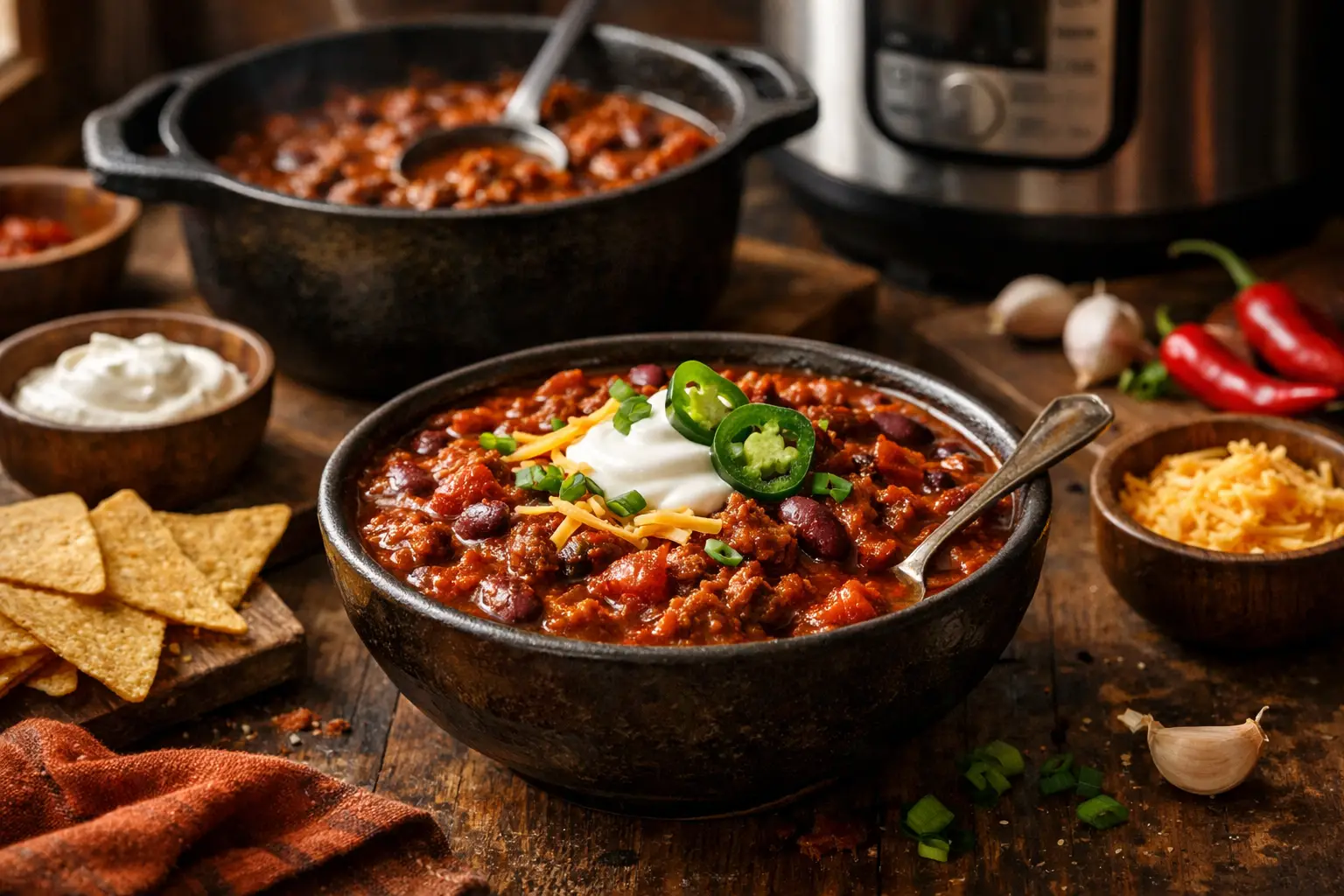
Some chili cravings do not care that it is only Tuesday and you have 40 minutes. That is exactly where a good instant pot chili recipe earns its keep - not as a shortcut that tastes like a compromise, but as a fast path to a bowl with real depth, solid texture, and enough flexibility to match your heat tolerance, protein preference, and pantry situation.
Pressure cooking changes the chili equation in a useful way. You get the speed of a weeknight meal, but you also get the kind of flavor mingling that usually takes a longer simmer. The catch is that Instant Pot chili can go wrong in predictable ways: thin body, washed-out spice, mushy beans, or beef that tastes steamed instead of browned. The best version avoids all of that.
What makes an instant pot chili recipe actually good
A strong chili from the Instant Pot starts before the lid goes on. Browning the meat matters. Cooking the onions until they soften matters. Toasting the spices for even 30 seconds matters. If you skip those moves and rely on pressure alone, the result is often edible but flat.
The other big factor is liquid control. Unlike stovetop chili, the Instant Pot does not let moisture cook off during pressure cooking. That means you need less broth or water than your instincts might suggest. Tomatoes, onions, and meat all release liquid, and beans bring some moisture too if they are not fully drained. Start restrained. You can always loosen the pot after pressure cooking, but rescuing soupiness takes extra time.
Then there is spice structure. Chili powder gives you the familiar backbone, but it should not do all the work. Cumin brings warmth, smoked paprika adds roundness, oregano sharpens the profile, and chipotle in adobo gives heat with a smoky edge. If you want a brighter, redder bowl, a little tomato paste helps build that concentrated base without making the chili taste like pasta sauce.
The core formula for Instant Pot chili
This version lands in the sweet spot for most home cooks: beefy, balanced, bean-friendly, and rich enough to feel like dinner instead of an emergency meal.
Ingredients
Use 1 tablespoon neutral oil, 1 1/2 pounds ground beef, 1 medium yellow onion diced, 1 green bell pepper diced, 3 cloves garlic minced, 2 tablespoons tomato paste, 2 to 3 tablespoons chili powder, 2 teaspoons ground cumin, 1 teaspoon smoked paprika, 1 teaspoon dried oregano, 1/4 to 1 teaspoon cayenne depending on heat preference, 1 teaspoon kosher salt to start, 1/2 teaspoon black pepper, one 28-ounce can crushed tomatoes, one 14-ounce can diced tomatoes, one 15-ounce can kidney beans drained, one 15-ounce can pinto or black beans drained, and 1/2 cup beef broth or water.
If you like a smokier bowl, add 1 chopped chipotle pepper plus 1 teaspoon adobo sauce. If you want a little sweetness to balance the tomatoes and heat, add 1/2 teaspoon brown sugar. Neither is mandatory, but both can be smart depending on your pantry and preference.
Method
Set the Instant Pot to saute and add the oil. Brown the beef, breaking it up as it cooks. Do not rush this stage. You want actual color, not gray crumbles sitting in liquid. If the pot gets crowded, let the meat sit for a minute before stirring.
Add the onion and bell pepper and cook until softened, about 3 to 4 minutes. Stir in the garlic and tomato paste and cook for another 30 seconds. Then add the chili powder, cumin, smoked paprika, oregano, cayenne, salt, and black pepper. Stir until the spices smell toasted and the tomato paste darkens slightly.
Pour in the crushed tomatoes, diced tomatoes, beans, and broth. Stir well, scraping up anything stuck to the bottom. That scraping step matters because it helps prevent the burn warning. Once everything is combined, stop stirring aggressively. Thick tomato-heavy mixtures can settle and scorch if they are not deglazed properly.
Lock the lid, set the valve to sealing, and cook on high pressure for 15 minutes. Let the pressure release naturally for 10 minutes, then quick release the rest.
Open the lid and evaluate the texture. If the chili looks a little loose, turn saute back on and let it bubble for 5 to 10 minutes, stirring occasionally. Taste and adjust. More salt may be the missing piece. A squeeze of lime can sharpen it. A pinch more chili powder can round it out if the tomato flavor is taking over.
Where this style shines - and where it does not
This instant pot chili recipe is excellent for weeknights, meal prep, game day, and feeding mixed-preference households. It gives you a broad, crowd-friendly chili profile that works with classic toppings like cheddar, sour cream, scallions, cilantro, crushed tortilla chips, or diced onion.
It is less ideal if you are chasing a hyper-specific regional style. Texas red, for example, is usually bean-free and built around chile-forward depth rather than the familiar ground beef and tomato format. If that is the bowl you want, the Instant Pot can still help, but the formula changes. Same goes for white chicken chili or green chili. Pressure cooking is a method, not a style.
That is the useful distinction. The appliance handles timing. You still decide the identity of the chili.
How to tailor the flavor without losing the plot
One of the best things about Instant Pot chili is how adaptable it is, but the adjustments work best when they are deliberate.
If you want a meatier, steakhouse-style bowl, swap the ground beef for 1 1/2 to 2 pounds of chuck cut into small cubes. Increase the pressure cook time to about 30 minutes so the beef has time to tenderize. The payoff is bigger texture and a more substantial spoonful, though you lose a little weeknight speed.
If you want a leaner version, ground turkey works, but it needs more help. Turkey does not bring the same richness as beef, so be generous with aromatics and spice. Chipotle, tomato paste, and a little extra salt can keep it from tasting thin.
If beans are central to your idea of chili, use two or even three varieties. Kidney beans bring firmness, pinto beans go creamy, and black beans add earthiness. If beans are negotiable, cut back to one can so the meat and chile flavor stand out more.
Heat is another place where it depends. Cayenne gives direct fire. Chipotle adds smoky depth. Fresh jalapeno tastes greener and brighter. For many cooks, the best move is medium heat in the pot and extra hot sauce at the table. That keeps the base family-friendly without making the spicy-food crowd feel abandoned.
Common mistakes that flatten the bowl
The first is overloading the liquid. Chili should be spoonable, not brothy. Because the Instant Pot traps steam, less is often more.
The second is underseasoning. Pressure cooking can mute edges a bit, especially in tomato-based dishes. If the chili tastes dull, add salt before adding more heat. A lot of so-called bland chili is just under-salted chili.
The third is treating toppings like decoration. They are part of the final balance. Sharp cheddar adds salt and fat. Sour cream softens heat. Raw onion adds bite. Cilantro brightens. Cornbread on the side turns a bowl into a full comfort-food event.
The last mistake is expecting every batch to taste the same. Chili is sensitive to brand differences in canned tomatoes, chili powder blends, broth salt levels, and even bean texture. A recipe gives you a strong lane, but tasting and adjusting is what makes it yours.
Serving ideas that make it feel new again
A classic bowl is always a good answer, but leftover Instant Pot chili is famously versatile. Spoon it over baked potatoes, layer it onto nachos, tuck it into burritos, or serve it over mac and cheese when you want comfort food with zero restraint. It also freezes well, which makes it one of the more practical big-batch meals in the chili universe.
If you are feeding a group, set out toppings and let the table build their own bowl identity. Mild and cheesy, sharp and oniony, extra-hot and cilantro-heavy - every bowl tells a story, and chili is at its best when it lets people choose their own version of comfort.
For home cooks who like to compare styles, this is also a useful baseline recipe. Once you know what a balanced pressure-cooked beef-and-bean chili tastes like, it becomes easier to branch into Texas-inspired, smoky chipotle-heavy, or bean-forward pantry versions with confidence.
A great chili does not have to simmer all afternoon to earn a repeat spot in your kitchen. Sometimes the smartest bowl is the one that meets the night you are having, delivers real flavor anyway, and leaves just enough room for your own signature move.