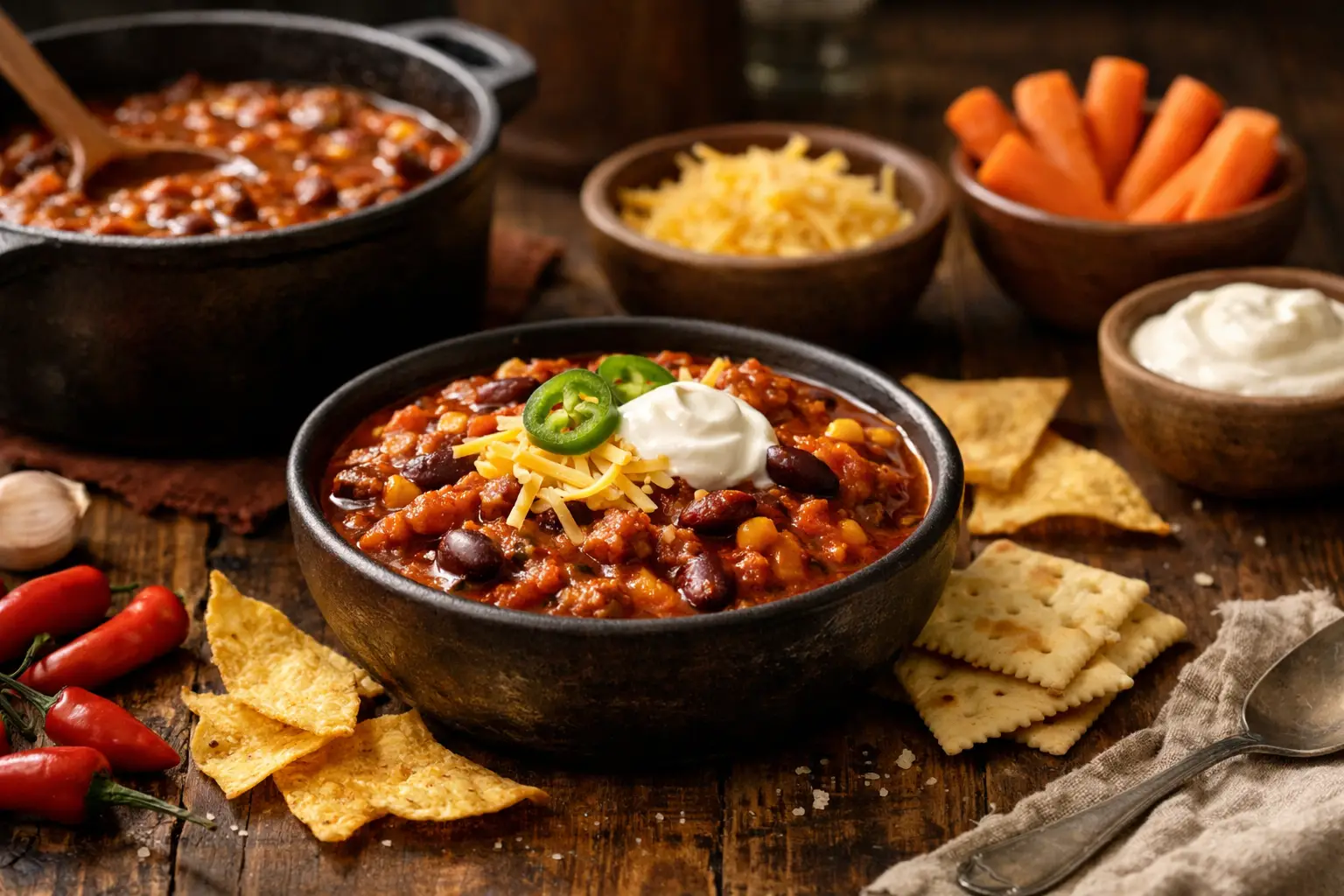
Some chili nights end with one kid pushing beans into a neat little pile and asking for crackers instead. That is exactly why a good mild chili recipe for kids needs more than less spice. It needs balance, a familiar texture, and enough real chili character that the adults do not feel like they are eating watered-down soup.
The sweet spot is a bowl that reads as cozy, savory, and just a little smoky, without crossing into sharp heat. For most families, that means building flavor from onion, garlic, tomato paste, and gentle spices first, then deciding whether to add heat at the table. It is a smarter move than trying to make one pot satisfy everyone with chili powder alone.
What makes a mild chili recipe for kids work
Kid-friendly chili is not just regular chili with the hot stuff removed. If you strip out every strong flavor, the pot can end up flat, acidic, or oddly sweet. The better move is to keep the backbone of chili intact while choosing softer edges.
That usually starts with the protein. Ground turkey makes a lighter bowl, but ground beef often wins with kids because it brings richer flavor and a softer, more familiar texture. If your household already leans toward turkey, use it, but give it extra help from tomato paste and a little broth so the chili does not taste thin.
Beans are another place where it depends on the eater. Some kids like the creamy bite of pinto beans more than the firmer skin of kidney beans. Black beans can work too, though they can make the bowl look darker and more intense, which matters more to some picky eaters than most adults expect. If your child is suspicious of beans in general, use fewer in the base and serve extra on the side for everyone else.
Then there is the spice question. Chili powder is not always fiery, but blends vary. For a true low-heat version, use a small amount and lean on cumin, a pinch of smoked paprika, and oregano for that chili-house aroma. Smoked paprika is especially useful here because it adds depth without adding a burn. Too much, though, and the pot starts tasting like barbecue. A little goes a long way.
The family-friendly formula
This version aims for a classic American weeknight chili profile - tomato-rich, hearty, and spoonable over rice, with enough flexibility to please cautious kids and hungry adults.
Ingredients
Use 1 pound ground beef or ground turkey, 1 small yellow onion diced, 2 cloves garlic minced, 1 tablespoon olive oil if needed, 2 tablespoons tomato paste, 1 can diced tomatoes, 1 can tomato sauce, 1 can pinto beans drained and rinsed, and 1 can kidney beans drained and rinsed. Add 1 cup low-sodium chicken or beef broth, 1 teaspoon ground cumin, 1 teaspoon mild chili powder, 1/2 teaspoon smoked paprika, 1/2 teaspoon dried oregano, 1 teaspoon brown sugar, and salt to taste.
For serving, think shredded cheddar, sour cream, crushed tortilla chips, avocado, or plain rice. Toppings are not extra here. They are part of what makes the bowl feel customizable instead of risky.
Method
Cook the onion in a large pot over medium heat until soft and glossy. Add the garlic and tomato paste and stir for about a minute, until the paste darkens slightly. This is where a lot of the flavor starts. If you rush this step, the chili can taste raw and one-note.
Add the ground meat and cook until browned, breaking it into small pieces. Smaller crumbles tend to work better for kids because every bite feels even. Stir in the cumin, mild chili powder, smoked paprika, and oregano, then add the diced tomatoes, tomato sauce, broth, beans, brown sugar, and a pinch of salt.
Bring the pot to a gentle simmer and cook uncovered for 25 to 30 minutes, stirring now and then. You want it thick enough to scoop but not so dense that it feels heavy. Taste near the end. If the tomatoes still feel a little sharp, let it simmer five more minutes. If it tastes too thick or concentrated, add a splash of broth.
Serve it with toppings that cool, soften, or crunch. A spoonful of sour cream can take the edge off even a mildly seasoned bowl, while cheddar adds comfort-food gravity. Rice is especially helpful for younger kids because it turns the chili into something closer to a familiar beef-and-rice dinner.
How to adjust a mild chili recipe for kids by age and preference
Not every child hears the word mild the same way. For one kid, it means no visible spice at all. For another, it means they can handle a little warmth as long as the flavor is cheesy and tomato-forward.
For toddlers and very cautious eaters, keep the texture soft and the bean count moderate. Mash a small portion of the beans into the pot if needed. That thickens the chili while making the legumes less obvious. You can also spoon the chili over baked potato or rice to spread out the flavor.
For grade-school kids, toppings often do the heavy lifting. Letting them choose cheese, chips, or avocado gives them some ownership, which can matter as much as the recipe itself. If they are spice-curious, offer hot sauce to the adults separately rather than changing the whole pot.
For older kids who are almost ready for standard chili, increase the chili powder a little or add a pinch of ancho chili powder for a fruitier, deeper flavor. Ancho brings a mild dried-pepper note without pushing the heat too far. It is one of the easiest bridges between kid chili and grown-up chili.
Flavor upgrades that keep the heat low
A good kid-friendly chili should still taste like chili, not just seasoned tomato meat. The easiest way to get there is with depth rather than fire.
Tomato paste is one of the biggest upgrades because it gives the base a richer, cooked flavor. Cumin adds earthiness. Smoked paprika brings campfire energy. A small amount of brown sugar rounds out acidity, especially if your canned tomatoes are bright or tangy.
You can also add finely diced bell pepper with the onion for sweetness and body. Red or orange peppers usually play better with kids than green peppers, which can taste slightly bitter. If you want extra nutrition without changing the identity of the bowl, grated carrot disappears nicely into the base and softens the tomato edge.
The trade-off is that every add-in changes the personality of the chili a little. Bell pepper makes it sweeter. Extra tomato sauce makes it smoother but less chunky. More beans stretch the pot but can push it toward a texture some kids reject. This is one of those recipes where your household tells you the right ratio faster than any rule can.
Common mistakes with mild chili for kids
The biggest mistake is assuming mild means bland. Kids may be sensitive to heat, but they still notice when food tastes flat. If a bowl needs half a cup of cheese just to be edible, the base probably needed more cooked onion, more tomato paste, or a longer simmer.
The next mistake is using too much chili powder because the label says mild. Spice blends are inconsistent, and what feels gentle to one adult can still read as spicy to a child. Start smaller than you think, especially the first time.
Another easy miss is making the texture too loose. Soupy chili can feel unfamiliar and messy for younger eaters. Aim for a thick, spoon-coating consistency. If the pot is too thin, let it simmer longer uncovered. If dinner is already late, mash some beans into the liquid to tighten it up fast.
Finally, do not underestimate appearance. A bowl that looks dark red and intense can scare off a cautious eater before the first bite. Serving it with rice, cheese, or chips can make it look friendlier right away.
When this chili fits best
This is a strong weeknight play because it cooks in one pot and reheats well, but it is also useful for family gatherings where heat tolerance varies wildly. One mild base with optional toppings keeps the table happier than trying to negotiate spice levels in a single final pot.
It also works well for meal prep. The flavor settles in overnight, and leftovers can become chili dogs, nachos, or stuffed baked potatoes. That flexibility is part of the appeal. Every bowl tells a story, but the best family recipes earn a second life in the fridge.
If you are building out your go-to chili rotation, this is the kind of recipe worth keeping close. It respects the category, keeps the door open for younger eaters, and still gives adults a bowl that tastes like the real thing. Start mild, stay flavorful, and let the toppings handle the rest.