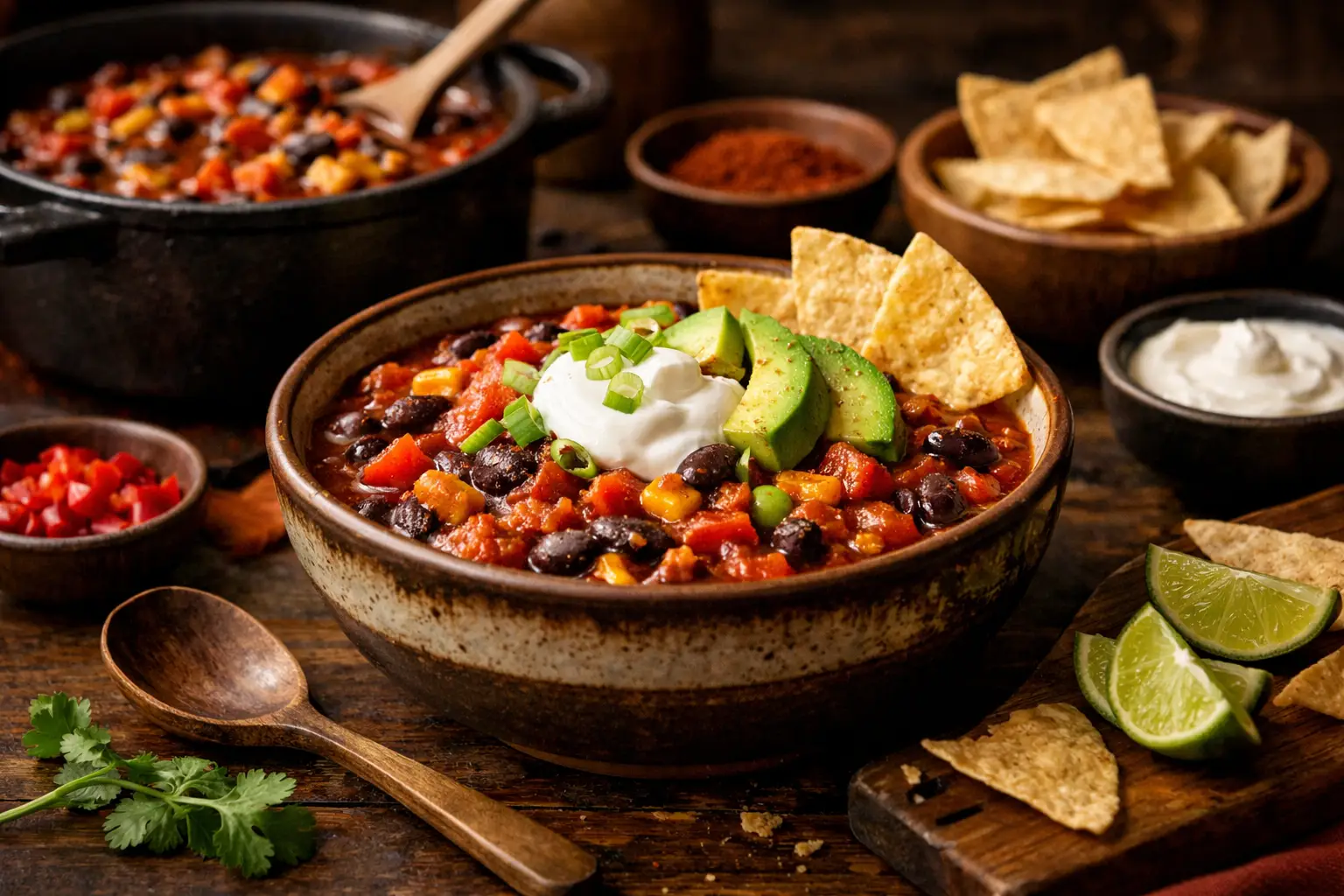
Some nights call for a pot that can do everything - feed a crowd, stretch into leftovers, and still taste like you meant to make it all day. That is where a vegetarian chili recipe easy enough for a Tuesday really earns its keep. Done right, it is not a backup plan or a lighter stand-in. It is a full-flavor, thick-spoon, second-bowl kind of chili.
What makes vegetarian chili work is not just skipping the meat. It is building a pot with real backbone: sautéed aromatics, layered spices, a little tomato depth, enough beans for body, and one or two smart ingredients that make the whole thing taste grounded instead of flat. This is the weeknight lane, but it should still feel like chili.
What makes a vegetarian chili recipe easy
Easy does not mean bland, and it definitely does not mean dumping random pantry cans into a pot and hoping cumin saves the day. The best easy vegetarian chili keeps the ingredient list familiar, the method short, and the flavor curve strong from the start.
You want onions and garlic for the base. Bell pepper adds sweetness and structure. Chili powder, cumin, and smoked paprika do most of the heavy lifting, while tomato paste brings concentrated savoriness in a hurry. Then come the beans, tomatoes, and broth. That combination gives you a chili that cooks fast but still tastes settled.
The real trick is knowing where to spend your effort. Browning vegetables for a few extra minutes matters more than adding ten spice jars. Letting the tomato paste cook until it darkens slightly matters more than chasing complicated techniques. For a dish with humble ingredients, little choices create big payoff.
Vegetarian chili recipe easy enough for any weeknight
This version lands in the sweet spot between pantry meal and true comfort food. It is hearty, flexible, and built for home cooks who want reliable results without babysitting the stove.
Ingredients
You will need 2 tablespoons olive oil, 1 large yellow onion diced, 1 red bell pepper diced, 1 green bell pepper diced, and 4 garlic cloves minced. For the seasoning base, use 3 tablespoons chili powder, 2 teaspoons ground cumin, 1 teaspoon smoked paprika, 1 teaspoon dried oregano, and 1/4 teaspoon cayenne if you want more heat.
For the body of the chili, use 2 tablespoons tomato paste, one 28-ounce can crushed tomatoes, two 15-ounce cans beans drained and rinsed, and one 15-ounce can black beans drained and rinsed. Kidney beans and pinto beans both work well here, so use what you have. Add 2 cups vegetable broth, 1 teaspoon kosher salt, 1/2 teaspoon black pepper, and 1 teaspoon soy sauce or tamari for extra depth. If you like a slightly richer finish, add 1 teaspoon cocoa powder or a small pinch of brown sugar. Neither is required, but both can round out the pot.
How to make it
Heat the olive oil in a large pot or Dutch oven over medium heat. Add the onion and both bell peppers with a pinch of salt. Cook for 7 to 8 minutes, stirring now and then, until the vegetables soften and pick up a little color. Add the garlic and cook for 30 seconds.
Stir in the chili powder, cumin, smoked paprika, oregano, and cayenne. Let the spices bloom for about 30 seconds, then add the tomato paste. Cook that mixture for 1 to 2 minutes, stirring often, until the paste turns darker and smells sweeter and deeper.
Pour in the crushed tomatoes and broth, then add the beans, salt, pepper, and soy sauce or tamari. If you are using cocoa powder or brown sugar, add it now. Stir well, bring everything to a gentle boil, then reduce the heat and simmer uncovered for 25 to 35 minutes.
As it cooks, the chili will thicken and the beans will start to give the broth some body. If it gets thicker than you want, add a splash of broth or water. If it looks a little loose near the end, let it simmer a few extra minutes uncovered.
Taste before serving. This is where easy chili becomes good chili. It may need another pinch of salt, an extra shake of chili powder, or a squeeze of lime to sharpen the whole pot.
The best texture move
If you like a thicker, stew-like bowl, mash some of the beans against the side of the pot with a spoon during the last 10 minutes of cooking. You do not need a blender, and you do not need a special thickener. A partially mashed bean base gives vegetarian chili the kind of body people usually associate with long-simmered meat versions.
How to build bigger flavor without making it complicated
Vegetarian chili has one common problem: it can taste bright and spicy, but not deep. That is why smart flavor stacking matters.
Smoked paprika adds a subtle campfire note without turning the whole pot smoky. Soy sauce or tamari adds umami without making the chili taste like stir-fry. Cocoa powder can deepen the finish in a way that feels warm rather than sweet. A little lime at the end can wake up an overly heavy pot. None of these are mandatory, but one or two can make a solid chili feel more intentional.
It also depends on the tomatoes. Crushed tomatoes usually create a smoother, more unified chili than diced tomatoes, which can leave the pot feeling chunkier and thinner. That is not bad, just a different style. If you want a scoopable bowl for baked potatoes, nachos, or chili dogs, crushed tomatoes are the move.
Easy swaps if your pantry is doing the cooking
One reason this style works so well is how forgiving it is. If you only have black beans, use all black beans. If you have one can of fire-roasted tomatoes instead of crushed, use it. If your vegetable drawer has a zucchini that needs help, dice it small and sauté it with the peppers.
Corn is a popular add-in, though it changes the personality of the chili. It makes the pot sweeter and a little more playful, which some people love and others find distracting. The same goes for sweet potatoes. They can make the chili heartier and more filling, but they also push it in a slightly softer, sweeter direction. Great in the right mood, not always ideal if you want classic red-bowl energy.
Lentils can work too, especially if you want extra protein without adding another bean texture. Red lentils tend to break down and thicken the chili quickly, while brown or green lentils hold their shape more. It really comes down to whether you want a smoother pot or more chew.
Toppings matter more than people admit
A vegetarian chili recipe easy to make should also be easy to finish well. Toppings are not just decoration. They balance heat, add contrast, and give each bowl a little personality.
Shredded cheddar, sour cream, diced avocado, chopped cilantro, sliced jalapeños, crushed tortilla chips, and green onions all work. If the chili is especially thick and spicy, something cool and creamy helps. If it is richer and milder, jalapeños or hot sauce can sharpen the edges.
This is also where you can steer the bowl toward the occasion. Add cheese and chips for game-day comfort. Add avocado and cilantro for a fresher finish. Spoon it over rice if you need it to stretch. Pile it onto a baked potato if you want maximum comfort with minimal extra work.
Make-ahead, leftovers, and freezer reality
Like most strong chili pots, this one improves after a night in the fridge. The spices settle in, the beans absorb more flavor, and the texture usually thickens in a good way. That makes it a strong meal-prep option, especially if you know your future self will be tired and hungry.
If you are freezing it, let it cool fully first. Store it in portions so you can thaw only what you need. The texture holds up well, though bean-heavy chili can get thicker after freezing, so plan on adding a splash of broth when reheating.
For leftovers, think beyond another plain bowl. Spoon it over macaroni, fold it into burritos, top nachos, or use it as the filling for stuffed peppers. At ChiliStation, that kind of range is part of the appeal - every bowl tells a story, but the leftovers can tell three more.
Common mistakes that flatten the pot
The first is underseasoning. Beans absorb a lot, and tomatoes can mute spice if you do not taste and adjust near the end. The second is rushing the base. If the onions and peppers do not soften properly, the chili tastes more raw than rich.
Another common miss is too much liquid. Chili should look like chili, not soup with beans in it. Start with the listed broth amount and only add more if you need it. And finally, watch the sugar. A tiny pinch can help if your tomatoes are harsh, but too much will pull the pot away from savory comfort and into vague sweetness.
The best easy vegetarian chili is not trying to imitate beef chili exactly. It is playing to its own strengths: creamy beans, bright spices, a rich tomato base, and enough flexibility to meet the moment. Keep the method simple, build flavor where it counts, and do not be shy with the final taste test. A great chili bowl does not need meat to feel complete - it just needs intention.