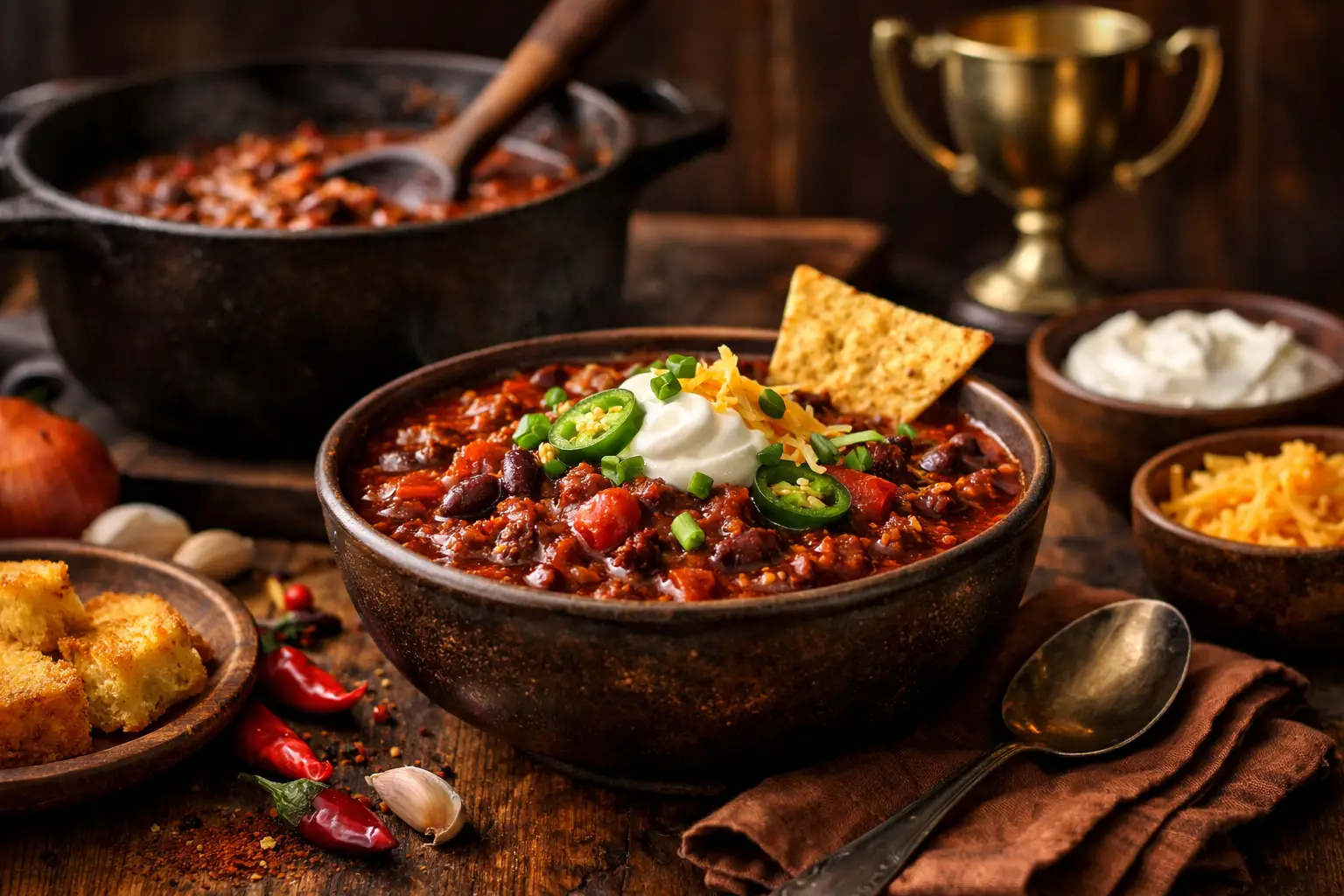
There’s a reason one pot disappears first at a cook-off table. An award winning chili recipe usually is not about throwing in more heat, more meat, or more spices than the next person. It wins because every part of the bowl feels intentional - deep, savory, a little bold, and balanced enough that you want another spoonful before you’ve finished the first.
That balance is what separates a decent weeknight chili from a chili people talk about on the ride home. The best versions layer flavor instead of chasing one-note intensity. They build richness from browned meat, a smart chile blend, measured acidity, and enough simmer time to let everything settle into the same story.
What makes an award winning chili recipe stand out
A great chili hits hard in a few different directions at once. You want richness from the meat, depth from dried and ground chiles, sweetness from onion and tomato, and a little edge from acid. If one piece overpowers the rest, the whole pot feels flatter than it should.
Texture matters too. Award-level chili should look confident in the bowl. Not watery, not pasty, and not so thick it eats like meat paste. The spoon should drag through it with a little resistance, and every bite should carry sauce, meat, and flavor in the same ratio.
Then there’s the finish. Good chili tastes strong right away. Memorable chili keeps changing for a few seconds after you swallow. You get smokiness, then warmth, then a subtle earthy note, maybe even a slight sweetness. That kind of finish comes from layering, not shortcuts.
The award winning chili recipe
This version leans classic and crowd-pleasing. It has enough complexity for chili fans who care about the details, but it stays accessible for home cooks who want a reliable pot that feels special.
Ingredients
2 pounds ground chuck, preferably 80/20 1 tablespoon neutral oil 1 large yellow onion, finely diced 1 green bell pepper, finely diced 4 garlic cloves, minced 3 tablespoons chili powder 1 tablespoon ground ancho chile 2 teaspoons ground cumin 2 teaspoons smoked paprika 1 teaspoon dried oregano 1/2 teaspoon cayenne, or more to taste 2 tablespoons tomato paste 1 28-ounce can crushed tomatoes 1 15-ounce can tomato sauce 1 1/2 cups beef stock 1 tablespoon Worcestershire sauce 1 tablespoon brown sugar 2 teaspoons kosher salt, plus more as needed 1/2 teaspoon black pepper 1 15-ounce can kidney beans, drained and rinsed 1 15-ounce can pinto beans, drained and rinsed 1 tablespoon apple cider vinegar Optional for finishing: shredded cheddar, sour cream, scallions, diced onion, cornbread
How to make it
Heat a heavy Dutch oven or large pot over medium-high heat. Add the oil, then brown the ground chuck in batches so it gets real color instead of steaming. This is one of the biggest flavor checkpoints in the whole recipe. If the meat goes gray, the chili will still be good, but it will not have the same depth.
Transfer the browned beef to a plate, leaving a bit of fat in the pot. Add the onion and bell pepper and cook until softened, about 6 to 8 minutes. Stir in the garlic and cook for 30 seconds, then add the chili powder, ancho, cumin, smoked paprika, oregano, and cayenne. Let the spices toast briefly until fragrant.
Add the tomato paste and stir until it darkens slightly. Return the beef to the pot, then pour in the crushed tomatoes, tomato sauce, beef stock, Worcestershire, brown sugar, salt, and black pepper. Stir well, bring to a gentle bubble, then reduce the heat to low.
Simmer uncovered for 45 minutes, stirring occasionally. Add the kidney beans and pinto beans, then continue simmering for another 30 to 45 minutes. The chili should thicken, darken a bit, and start smelling like it means business.
Finish with the apple cider vinegar. Taste and adjust with more salt if needed. That final hit of acid brightens the whole pot and keeps the richness from feeling heavy.
Let it rest for 10 to 15 minutes before serving. If you have the patience to make it a day ahead, even better. Chili loves an overnight reset.
Why this chili recipe wins on flavor
The meat choice does a lot of heavy lifting here. Ground chuck gives you enough fat for body and flavor without turning greasy. Leaner beef can work, but you lose some of that satisfying richness that makes a bowl feel complete.
The chile profile is broad rather than extreme. Chili powder gives the familiar backbone, ancho brings a mild raisiny depth, cumin adds warmth, and smoked paprika rounds it out with a gentle campfire note. Cayenne is there for lift, not domination. You can push the heat higher, but winning chili usually aims for repeat bites, not shock value.
Beans are the classic flashpoint. Some cooks swear a true competition chili should skip them. Others want the heartier, home-style bowl that beans bring. Here, they work because this recipe is built for real kitchens and real appetites. They also help the chili hold its shape and make the bowl feel generous. If your crowd is firmly no-bean, leave them out and reduce the stock slightly.
Small moves that make a big difference
Most chili misses happen in the margins. The recipe itself can be solid, but the details are where bowls rise or fall.
Brown in batches if your pot is crowded. Meat that sears tastes better than meat that steams. Toast your spices for a moment before adding liquids. That wakes them up and softens any dusty flavor. Don’t rush the simmer, either. Chili needs a little time to knit together.
Salt is another big one. A pot can taste bland even when the spice list looks perfect. Usually it needs more salt, not more chili powder. Add it in measured steps and taste after each adjustment.
And then there’s acid, the move people forget. A splash of cider vinegar at the end sharpens everything without making the chili taste vinegary. It gives the bowl definition.
How to customize an award winning chili recipe
The best thing about a strong chili base is how easily it shifts depending on your style. If you like a Texas-inspired profile, skip the beans and swap some of the ground beef for cubed chuck. Let it simmer longer so the meat gets spoon-tender and the sauce turns darker and tighter.
If you want a bolder, smokier pot, add chipotle powder or a minced chipotle in adobo. Use restraint. Smoke can take over fast and flatten the other chile notes if you go too hard.
For a sweeter, Midwest-friendly edge, increase the brown sugar slightly and top with shredded cheddar and diced onion. If you like a cleaner chile flavor, cut the sugar entirely and let the ancho do the softer work.
Turkey chili fans can use ground turkey, but the trade-off is obvious: lighter feel, less beefy depth. You can close that gap with extra onion, a touch more tomato paste, and a richer stock. It won’t taste identical, but it can still be excellent.
Serving it like it deserves
An award-level bowl should feel complete before the toppings even show up. Toppings are support, not rescue. Shredded cheddar adds richness, sour cream cools the heat, scallions bring freshness, and diced raw onion adds sharp crunch. Pick one or two and let the chili stay the star.
Cornbread is the classic sidekick for a reason. It gives you sweetness against the spice and something sturdy enough to swipe through the bottom of the bowl. Crackers work too, especially if you want a more old-school diner feel.
If you’re feeding a group, keep the toppings simple and let people customize. Chili is one of those dishes that turns dinner into opinion-sharing fast, and that’s part of the fun. Every bowl tells a story, even when everyone started from the same pot.
Make-ahead, leftovers, and next-day magic
This chili gets better overnight. The spices mellow, the meat absorbs more flavor, and the sauce thickens into a more unified bowl. If you’re cooking for game day, a casual get-together, or just want your best shot at maximum flavor, make it the day before.
Store leftovers in the fridge for up to 4 days. Reheat gently on the stove with a splash of stock or water if it’s tightened too much. It also freezes well, which is one reason serious home cooks keep a chili rotation in play all fall and winter.
A good bowl of chili satisfies hunger. A great one earns opinions, requests, and maybe a little table-side boasting. If you want an award winning chili recipe that feels rich, balanced, and built for real repeat cooking, this is the kind of pot worth keeping in your back pocket. Make it once, then make it yours.