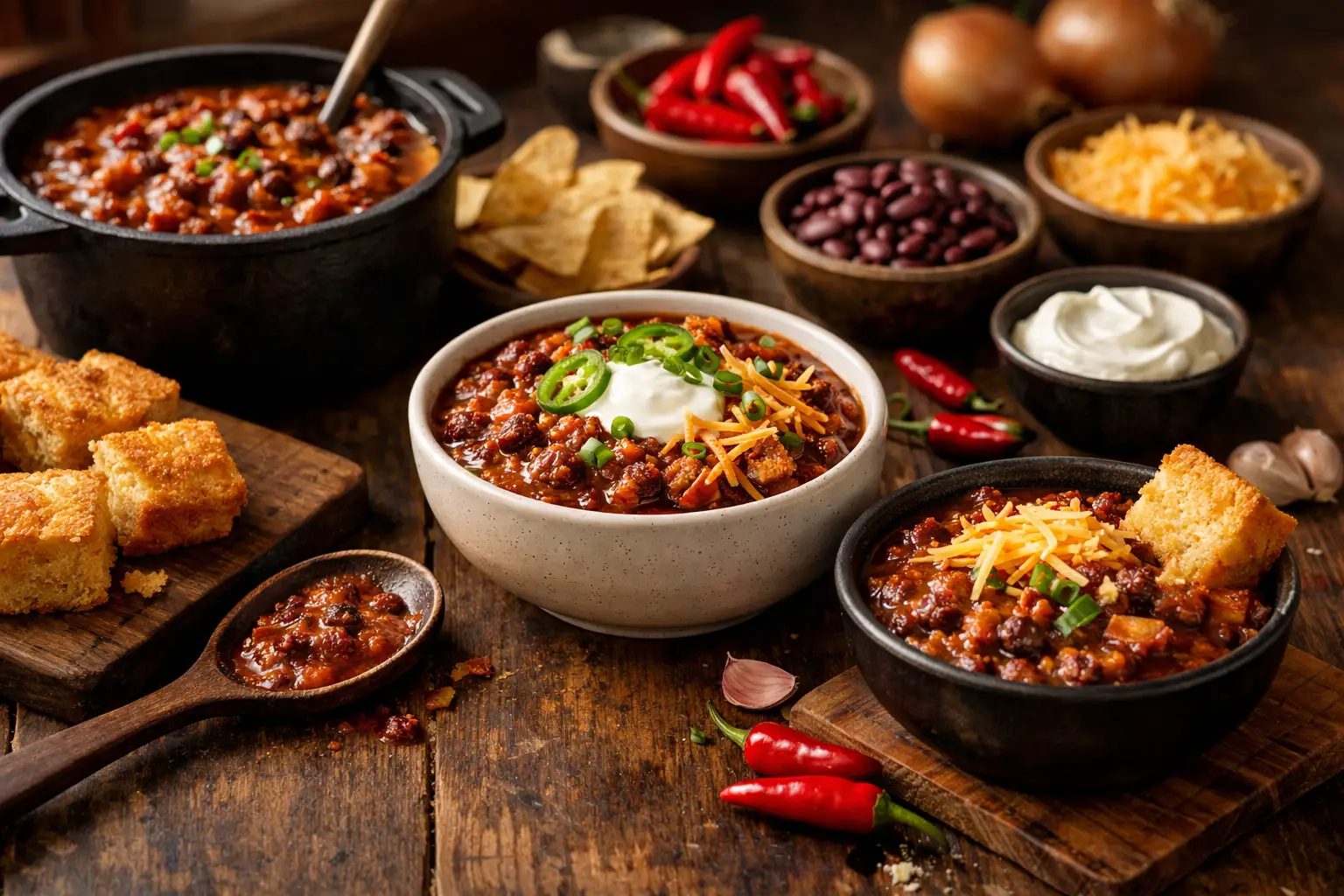
A cook-off bowl has about three bites to make its case. That is what makes chili cook off recipes different from everyday weeknight chili. The goal is not just comfort. It is impact - a spoonful that lands fast with aroma, texture, heat, and a finish people remember when they move down the judging table.
The best competition chili usually starts with a clear point of view. You are not trying to please every possible eater in the room. You are building a bowl with identity. Maybe that means deep, brick-red Texas-style beef with no beans and a slow-building chile backbone. Maybe it means a smoky pork chili with charred peppers and enough acidity to keep the richness in check. Every bowl tells a story, and in a cook-off, the bowls with a strong story tend to linger longest.
What makes chili cook off recipes stand out
A good home chili can be loose, flexible, and forgiving. A cook-off chili needs more precision. Judges and party guests are comparing bowl against bowl, often within minutes, so contrast matters. If your chili tastes flat, thin, muddy, or one-note, there is nowhere to hide.
That usually comes down to five things: depth, balance, texture, aroma, and finish. Depth is the layered flavor that comes from browning meat well, using a mix of chiles instead of relying only on chili powder, and giving the pot enough time to come together. Balance means your heat, salt, acid, sweetness, and bitterness are all pulling in the same direction. Texture matters more than many cooks realize. Even a great flavor profile can lose momentum if the meat is dry, the beans are blown out, or the sauce is watery.
Aroma is the first handshake. Before anyone takes a bite, they smell toasted cumin, garlic, onion, chiles, beef fat, maybe a hint of smoke. Finish is what happens after the swallow. That is where winners often separate themselves. The best bowls do not just hit hard upfront. They evolve.
Start by choosing your chili lane
One of the smartest ways to narrow the field is to decide what kind of bowl you want to be known for. Not every style plays the same in a cook-off, and that is fine. The right choice depends on the crowd, the judging format, and how bold you want to get.
Texas Red for pure chili authority
If you want a classic competition move, Texas Red is still one of the strongest. It is focused, meaty, and all about chile flavor. No beans, usually no tomato-heavy sauce, and no filler. The best versions build their body from dried chile pastes, stock reduction, and collagen-rich cuts that break down without turning stringy.
This style works when you want seriousness and structure. It does require restraint. Too much cumin can make it taste dusty. Too much heat can flatten the palate. But when done right, it feels confident and judge-friendly.
Chuck-and-bean chili for crowd pull
Some cook-offs are scored by everyday eaters, not certified chili purists. In that setting, a rich beef-and-bean chili can absolutely compete. The trick is making it taste intentional rather than generic. Use chunks of chuck plus a little ground beef for texture contrast. Choose one bean, not three. Build a sauce that is glossy and concentrated, not soupy.
This style tends to win people over because it feels familiar but can still carry serious flavor. If your audience wants comfort first and regional rules second, this is a strong lane.
White chicken chili for contrast
Not every winning bowl has to be red. A well-made white chicken chili can be the table disruptor - creamy but not heavy, bright with green chiles, and layered with cumin, garlic, onion, and a little lime. It stands out precisely because it breaks the visual pattern.
There is a trade-off, though. White chicken chili can drift into dip territory if it gets too rich or too thick. For a cook-off, it needs freshness and movement. Think tender shredded chicken, white beans that still hold shape, roasted green chiles, and enough broth to keep it tasting like chili instead of casserole.
Pork and green chile for regional swagger
If you want a bowl with regional personality, pork green chile is a killer choice. It has heat, brightness, and a slightly looser, stew-like feel that can be incredibly appealing in a lineup full of dark red bowls. Roasted Hatch-style chiles, tomatillo, garlic, onion, and pork shoulder give you a flavor profile that feels distinct from the first bite.
This style shines when the crowd is open to variation. It may not satisfy judges expecting a strict red chili framework, but for broader community cook-offs, it brings instant identity.
10 chili cook off recipes worth making
The strongest chili cook off recipes are not random. They usually fall into a few reliable flavor families that give you a built-in advantage. These are the ones most likely to earn repeat bites.
The first is classic Texas Red with chuck roast, ancho and guajillo chiles, beef stock, garlic, onion, cumin, and just enough masa at the end to tighten the sauce. It is the benchmark bowl.
Second is smoked brisket chili, which brings deep beef flavor and a subtle barbecue edge without turning into a gimmick. This one works best if the smoke supports the chiles rather than overpowering them.
Third is steakhouse-style beef chili with short rib and chuck, finished with a small splash of coffee or dark beer. Used carefully, those background notes add bitterness and depth.
Fourth is competition ground beef chili with no beans, built for spoonability and a smooth texture. This style is common in formal cook-offs because every bite tastes consistent.
Fifth is beef-and-bean chili with fire-roasted tomatoes and chipotle. It is crowd-friendly, a little smoky, and easy to like without feeling safe.
Sixth is white chicken chili with roasted poblanos, cannellini beans, cumin, oregano, Monterey Jack, and a squeeze of lime at the end. It wins on freshness if you keep the dairy under control.
Seventh is pork green chile with tomatillo, onion, garlic, and roasted long green chiles. This bowl feels vivid and a little rebellious in the best way.
Eighth is spicy turkey chili with black beans and ancho-chile depth. Turkey can dry out, so this one needs dark meat or a careful simmer, but it can surprise people when seasoned boldly.
Ninth is chorizo-beef chili, where a smaller amount of chorizo acts like a flavor amplifier. Go too far and it gets greasy, but the right ratio gives you smoke, spice, and richness fast.
Tenth is Cincinnati-inspired chili for the right audience - finely textured, aromatic with cinnamon and allspice, and served as a bold regional curveball. It is less universal, but in a casual or themed cook-off, it has undeniable personality.
The flavor moves that separate contenders from winners
Most disappointing competition chili does not fail because the recipe idea was wrong. It fails because the cook stopped at the obvious version. Great chili usually has one or two extra moves built into it.
Dried chiles are one of those moves. A paste made from toasted and rehydrated anchos, guajillos, pasillas, or chipotles gives you a richer and less powdery flavor than relying on spice blends alone. Browning meat in batches is another. Crowding the pan steals the deep savory notes that make chili taste expensive.
Acid is also a huge differentiator. A small hit of cider vinegar, lime, or even a touch of crushed tomato can wake up a pot that tastes sleepy. The key is subtlety. You want lift, not obvious sourness.
Texture is where many recipes quietly lose points. If everything in the bowl is the same size and softness, it eats dull even when the seasoning is right. Chunky beef plus a smoother sauce, or tender beans against shredded chicken, gives the spoon some shape. If your chili is too thin, reduce it uncovered. If it is too thick, loosen with stock, not water, so you do not dilute the work you already did.
How to choose the right recipe for your cook-off
The best choice depends on who is tasting. A neighborhood block party usually rewards familiarity with a twist. A judged chili event may lean toward traditional red chili with tighter rules and expectations. Office cook-offs tend to favor medium heat, hearty texture, and broad appeal because people are taking more than one sample and not everyone wants a spice challenge before a meeting.
It also depends on your cooking style. If you are calm with dried chile pastes and long simmers, lean into a serious Texas-style bowl. If you cook more by instinct and know how to balance creamy, spicy, and bright flavors, white chicken chili may be your lane. Winning is not only about choosing the boldest recipe. It is about choosing the one you can execute cleanly.
One practical rule matters almost more than the recipe itself: make it once before the event. Chili often tastes different after resting overnight, and that can be either magic or a problem. Heat can intensify. Salt can flatten. Beans can absorb more liquid than expected. A trial run tells you what your bowl does after time passes, which is exactly how many cook-offs work in real life.
At ChiliStation, that is the fun of the category. Chili is not one thing. It is a whole map of styles, signals, and loyalties, and the right cook-off recipe is the one that lets your bowl speak clearly from the first spoonful.
If you are chasing a trophy, do not aim for the chili everyone shrugs and calls good. Aim for the one they bring up again while they are still holding the sample cup.