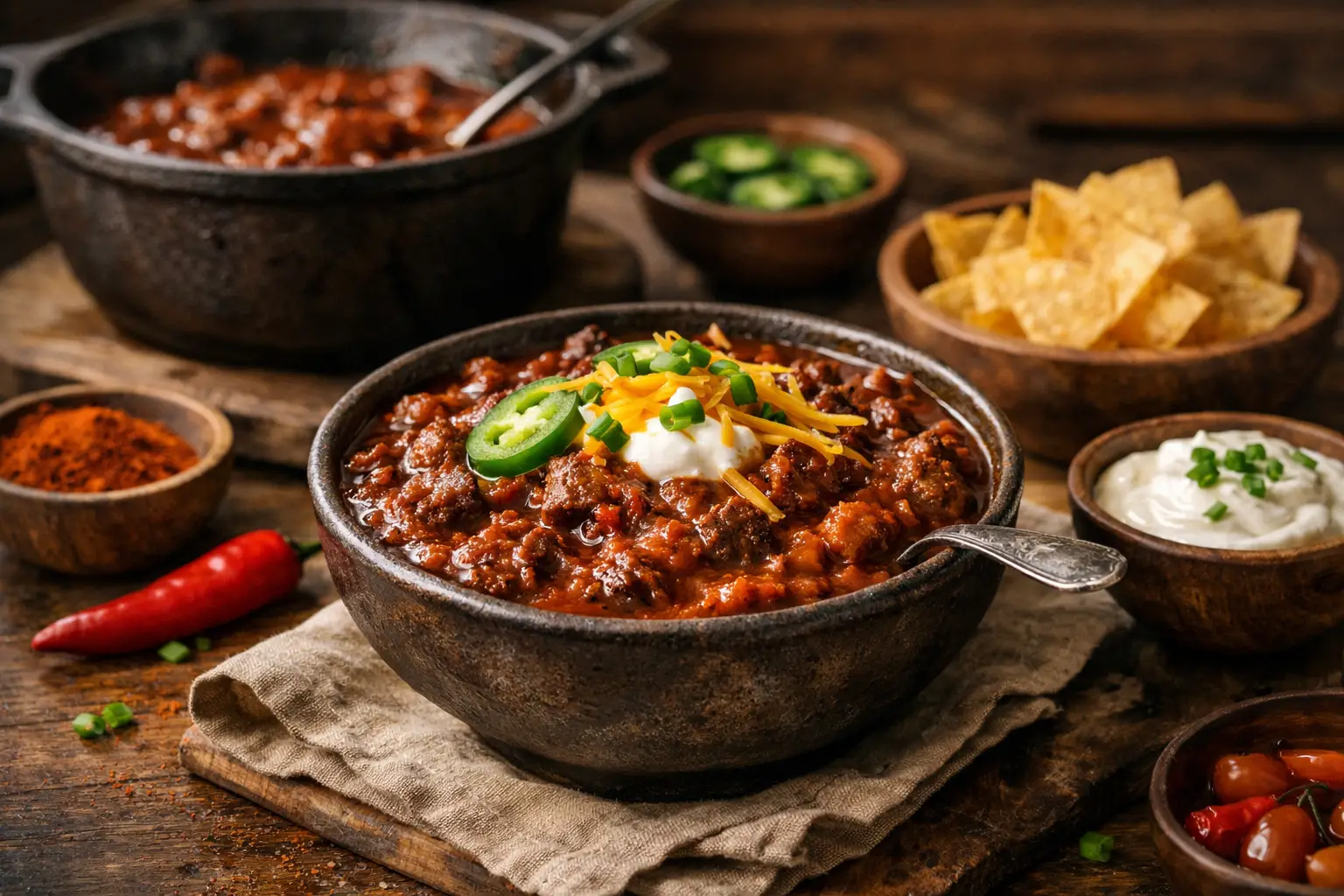
There’s a point in every chili conversation when somebody says, “Real chili doesn’t have beans,” and suddenly dinner sounds like a regional standoff. The truth is simpler and more useful: a great chili recipe no beans can be deeply savory, thick enough to coat a spoon, and every bit as satisfying as a bean-heavy pot. If what you want is a meat-forward bowl with concentrated chile flavor and zero filler, this is the lane.
Beanless chili isn’t a compromise. It’s a style. In Texas red and other meat-centered versions, the absence of beans makes room for something else to take over - richer browning, a more direct hit of dried chile flavor, and a texture that feels closer to a slow-cooked stew than a pantry cleanout. Every bowl tells a story, and this one is all about depth.
What makes a chili recipe no beans work
When beans are out, the chili has nowhere to hide. That sounds dramatic, but it’s why this style can be so good. You notice the quality of the meat, the strength of the chile base, and whether the pot was built with patience or rushed from skillet to table.
A strong no-bean chili usually relies on three things: serious browning, layered chile flavor, and enough simmer time for everything to come together. Ground beef can absolutely work, especially for a weeknight batch, but chuck roast or a mix of ground and cubed beef gives you a fuller texture. Pork shoulder is excellent too if you want a slightly sweeter, richer profile.
Then there’s the chile component. Chili powder alone can make a decent pot, but dried chiles or a blend that includes ancho, guajillo, chipotle, or New Mexico chile adds a more rounded flavor. You get fruitiness, smoke, and heat instead of just generic spice. That matters more in a beanless pot because the chiles are carrying more of the flavor architecture.
The best texture comes from the right build
A lot of disappointing chili turns out watery, greasy, or oddly pasty. With no beans to add body, texture has to be managed on purpose.
Start with onion and maybe a little garlic, but don’t let the aromatics dominate. This is chili, not marinara with cumin. Brown the meat in batches if needed so it actually sears instead of steaming. That browned fond on the bottom of the pot is flavor you paid for, so deglaze it with stock, beer, or even a little tomato puree.
Tomatoes are where things get flexible. Some cooks want a pure chile-and-meat bowl with barely any tomato at all. Others prefer crushed tomatoes or tomato paste for sweetness and body. It depends on the style you’re after. If you want a classic Texas-leaning version, keep the tomato light. If you want a hearty, weeknight-friendly pot that still skips beans, a modest tomato base is completely fair game.
Thickness should come from reduction first. Let the pot simmer uncovered long enough to tighten up. If it still needs help, masa harina is one of the smartest additions because it thickens while adding a subtle corn note that fits the dish. A flour slurry can work, but it can also flatten the flavor if overdone.
Chili recipe no beans: the flavor blueprint
If you want a reliable formula, think in layers instead of ingredients. First comes fat and browning. Then aromatics. Then spices and chiles toasted just long enough to bloom. Then liquid. Then time.
A dependable base for a medium-size pot looks like this in practice: beef or pork, onion, garlic, tomato paste, a chile blend, cumin, oregano, stock, and salt. From there, you choose your style. Add chipotle for smoke, cocoa for a darker edge, beer for bitterness and depth, or a splash of vinegar at the end to sharpen everything up.
That last move is underrated. A beanless chili can get heavy fast, especially if it uses fatty meat or cooks for hours. Acid brings the whole bowl back into focus. Lime works if you want brightness. Cider vinegar or a little red wine vinegar gives a cleaner finish without making the chili taste sour.
Heat level is another place where it depends. Hotter is not always better. A no-bean chili with moderate heat and strong chile flavor usually has more range than one that just aims to blow past your taste buds. If you’re cooking for a mixed crowd, build a warm, flavorful base and let toppings or hot sauce handle the final intensity.
A practical version for home cooks
For most kitchens, the sweet spot is a stovetop pot made with ground beef or a ground-and-chunk mix. That gets you deep flavor without asking for an all-day commitment.
Cook chopped onion in a little oil until softened. Add the meat and brown it hard. Stir in garlic, tomato paste, chili powder or your chile blend, cumin, oregano, and a pinch of smoked paprika if you like that campfire note. Once the spices smell alive, add beef stock and either a small amount of crushed tomatoes or none at all, depending on your preference. Bring it to a simmer, then let it go low and slow until thick.
Taste near the end, not just at the beginning. Chili changes a lot as it cooks. Salt that seemed aggressive early can disappear into the pot later. Heat can mellow. Bitterness from some chile powders can round out with time, or hang around if the blend is harsh. Adjust with salt first, then acid, then heat.
If the finished chili tastes flat, it usually needs one of three things: more salt, more simmer time, or a brighter finishing note. If it tastes muddy, pull back on extra spice blends and let the meat and chiles speak more clearly next time.
Common mistakes with beanless chili
The biggest mistake is treating beans like they were only removed, instead of rebalancing the whole recipe. If you use a standard chili formula and just leave the beans out, the proportions can feel off. Too much liquid, too much tomato, or not enough meat will show up fast.
Another common issue is underseasoning. Since beans often soak up and soften strong flavors, a no-bean version needs a confident hand with salt and chile depth. Not reckless, just intentional.
The third mistake is rushing. Even a quicker pot needs time to settle. Twenty minutes might cook the meat, but it won’t build that unified, spoon-coating flavor people actually want from chili.
How to serve it so nobody misses the beans
Serve beanless chili like it means business. A bowl on its own works, but toppings and sides can turn it from solid to memorable.
Shredded cheddar, diced white onion, sour cream, pickled jalapeños, and crushed tortilla chips all bring contrast. Cornbread is the obvious partner for good reason, but a baked potato is a stealth favorite because the fluffy interior catches all that rich sauce. If you want the old-school diner move, spoon it over hot dogs or fries and let the chili do exactly what it was born to do.
This is also a smart make-ahead dish. A chili recipe no beans often tastes even better the next day because the fat firms up, the flavors settle, and the texture thickens naturally. Reheat it gently and add a splash of stock or water only if it gets too tight.
Choosing the style that fits your table
Not every beanless chili needs to imitate Texas red exactly. Some cooks want that deep brick-red bowl built from dried chiles and chunks of beef. Others want a crowd-friendly game-day version with ground meat, tomato, and enough richness to pile onto nachos. Both belong at the table.
That’s part of what makes chili fun to chase. The category is wide, the loyalties are loud, and small ingredient choices create very different results. A focused platform like ChiliStation exists because one word - chili - can mean a hundred distinct bowls depending on region, protein, and heat level.
If you’re making this style for the first time, keep the first batch simple. Choose one meat, one main chile direction, and one thickening strategy. Once you know how you like the texture and spice profile, then start dialing in smoked chiles, beer, cocoa, or a longer braise.
The best beanless chili doesn’t try to prove a point. It just shows up rich, bold, and unmistakably chili, with enough depth to make the argument feel unnecessary. Make the pot that fits your taste, let it simmer until it tastes like itself, and trust the bowl.