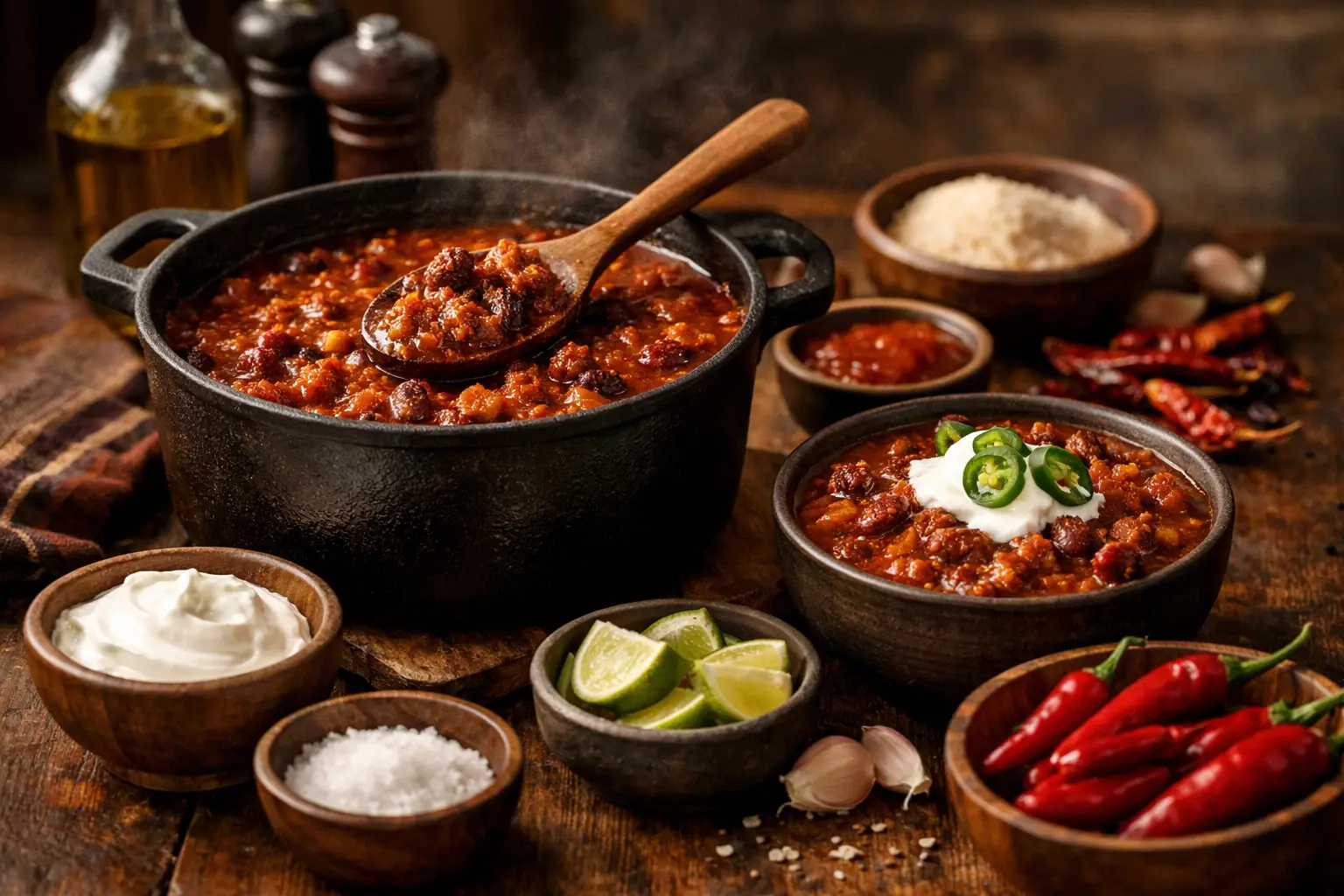
A chili can go wrong fast. One extra spoonful of chipotle, a hotter-than-expected jalapeno, or a cayenne hand that got a little too confident, and suddenly your cozy weeknight pot is all fire, no finesse. If you have ever wondered how to balance chili heat without turning the whole thing bland, the good news is this: you usually do not need to start over. You just need to understand what kind of heat you are dealing with, and what the pot is missing.
Great chili is never just spicy. It is layered. You want warmth, depth, savoriness, a little edge, and enough control that the flavor of the meat, beans, tomatoes, chiles, and spices still gets a turn. Heat should ride with the rest of the bowl, not hijack it.
Quick answer
Match the fix to the burn: dilute with more base for raw capsaicin overload, use fat or dairy at serving for direct heat, and add sweetness or starch only in small stages so you keep the chili's identity.
How to balance chili heat starts with the kind of burn
Not all spicy chili needs the same fix. Sometimes the pot is too hot because there is simply too much capsaicin in the mix. Other times it tastes too hot because the heat is sharp, thin, or sitting on top of underdeveloped flavors.
That distinction matters. If your chili tastes aggressively spicy but also kind of flat, adding sugar alone will not solve it. If it is rich and well-built but painfully hot, adding more cumin will not save you either. The best adjustment depends on whether you need to dilute the heat, soften it, or balance it with other strong flavors.
A quick taste test helps. If the burn hits immediately and lingers on your lips, you are dealing with direct chile heat. If it catches mostly in the back of your throat, acidity or black pepper may be amplifying the sensation. If the chili tastes harsh and hot at the same time, it may need fat, sweetness, or longer cooking to round out rough edges.
The safest fix is dilution, but it has trade-offs
If your chili is truly too spicy to enjoy, dilution is the cleanest move. Add more of the base ingredients already driving the recipe. That usually means more tomatoes, broth, beans, browned meat, or even another onion and pepper mix.
This works because you are not trying to fight the heat head-on. You are spreading it across a larger volume of food. It is especially effective if you overshot with powdered chile, cayenne, crushed red pepper, or hot sauce.
The trade-off is obvious: you get more chili. That is great if you have freezer space or were aiming for leftovers anyway. Less great if your Dutch oven is already crowded. Dilution can also thin the flavor if you add liquid without reinforcing seasoning. After you stretch the batch, simmer long enough to bring the body back together, then retaste for salt and spice.
If you do not want a bigger batch, scoop out a portion and blend in unsalted tomatoes or beans separately before returning it to the pot. That can soften the heat without flooding the whole thing.
Fat helps, but choose the right kind
Capsaicin loves fat, which is why dairy is a classic answer to spicy food. In chili, though, the right fat depends on style.
For a Texas-style red, a little extra beef fat or a richer cut of meat can mellow heat while keeping the profile meaty and focused. For bean-heavy or tomato-forward chili, sour cream, shredded cheese, or a dollop of crema served at the end can soften the burn without changing the base too much. For white chicken chili or green chili, cream cheese, heavy cream, or Monterey Jack can feel more natural.
What usually works less well is pouring milk straight into a red chili and hoping for the best. It can muddy the flavor and color fast. If dairy makes sense, keep it style-aware.
Fat is best when the chili is spicy but otherwise balanced. It will not rescue a pot that is bitter, acidic, or underseasoned. It also mutes heat more at the point of serving than deep in the pot, so toppings are often smarter than large in-pot additions.
Sweetness can smooth heat, but go small
A tiny bit of sweetness can take the edge off an overly fiery chili. The key phrase is tiny bit.
Brown sugar, honey, maple syrup, or even a touch of molasses can soften sharp chile heat and harsh tomato acidity. This is especially useful in chili recipes that already lean slightly sweet, such as some ground beef-and-bean versions, barbecue-adjacent chilis, or modern weeknight pots with tomato sauce.
Still, this is where people overcorrect. Chili should not taste like dessert, and too much sweetness can flatten the bold, savory identity that makes a good bowl worth chasing. Start with a small amount, stir thoroughly, and give it a few minutes before tasting again.
If you are nervous about adding sugar, try naturally sweet ingredients instead. More sauteed onion, roasted red bell pepper, or extra tomato can round things out in a gentler way.
Acid can brighten the pot, or make it feel hotter
Acid is one of the most misunderstood chili tools. A splash of lime juice, vinegar, or extra tomato can wake up a dull pot and balance richness beautifully. But if your chili already feels sharp or aggressive, acid can make the heat seem even more intense.
That is why acid is not a default fix for over-spicing. It is a balancing move for heavy, muddy, or greasy chili that needs definition. Used well, it helps the heat sit inside a fuller flavor picture. Used carelessly, it turns the volume up.
If your chili tastes rich but sleepy, add a very small splash of cider vinegar or fresh lime and taste immediately. If the first thing you notice is more burn, stop there and pivot to fat or dilution instead.
Beans, starch, and bulk can absorb some intensity
If your chili recipe includes beans, adding more can be one of the easiest ways to reduce heat while preserving the spirit of the dish. Pinto, kidney, and black beans all help distribute spice and give your palate more texture to work through.
Starchy additions can help too. Masa harina is especially useful because it thickens while adding a subtle corn note that feels right at home in many chili styles. Crushed tortilla chips or a little cornmeal can have a similar effect, though texture needs watching.
This is not the move for every bowl. A no-bean Texas red should not suddenly become a bean stew just because the cayenne got away from you. But in casual home-style chili, starch and bulk are often the most practical save.
Time matters more than people think
Freshly added spice can taste louder than spice that has had time to cook into the pot. If your chili seems too hot halfway through simmering, wait before panicking. Chiles, aromatics, fat, and liquid often need more time to settle into each other.
This is particularly true when you are using dried chile powders, chili paste, or canned chipotles. Their edges can mellow with a longer simmer. It is less true if you dumped in a lot of hot sauce at the end or used a seriously spicy fresh pepper. Those burns tend to stay more direct.
If you have time, lower the heat and let the chili coast for another 20 to 30 minutes before making big corrections. Then taste again with a clean spoon. Tomorrow's leftovers may taste even more balanced.
How to balance chili heat without losing the chili's identity
This is where a lot of rescue jobs go sideways. A cook tries to reduce heat and accidentally erases the character of the recipe.
A smoky chipotle chili should still taste smoky. A green chile chicken pot should still have that grassy, peppery personality. A Cincinnati-inspired version should still feel warm-spiced and distinct. When you adjust heat, the goal is not neutral. The goal is proportion.
So match the fix to the style. If the chili's signature is roasted chile flavor, add mild roasted peppers before you add sugar. If the backbone is tomato and beef, use more tomato and stock before you reach for cream. If the pot gets its identity from dried chile complexity, consider adding unsalted broth and longer simmer time rather than piling on distracting ingredients.
That mindset keeps the bowl recognizable. Every bowl tells a story, and rescue moves should keep the plot intact.
What not to do when chili is too spicy
Water is the fastest way to weaken flavor while doing only a mediocre job on heat. It thins body, blurs seasoning, and leaves you chasing intensity in all the wrong places.
Too much sugar is another classic mistake. It may reduce perceived burn for a minute, but it can also turn a serious pot of chili into something oddly sweet and one-note.
And resist the urge to add every fix at once. If you throw in dairy, sugar, extra tomatoes, lime, and beans all together, you will have no idea what actually helped. Adjust in stages. Taste. Then decide.
One smart rhythm is this: first decide whether the chili needs dilution, richness, or rounding out. Make one change. Simmer briefly. Taste again. Chili is forgiving, but only if you give it room to respond.
The best chili does not chase heat for bragging rights. It builds a bowl you want another spoonful of. If your pot got a little wild, that does not mean dinner is doomed. It usually means the chili is asking for balance, not surrender. Trust the base, make small moves, and let the flavors come back into focus.