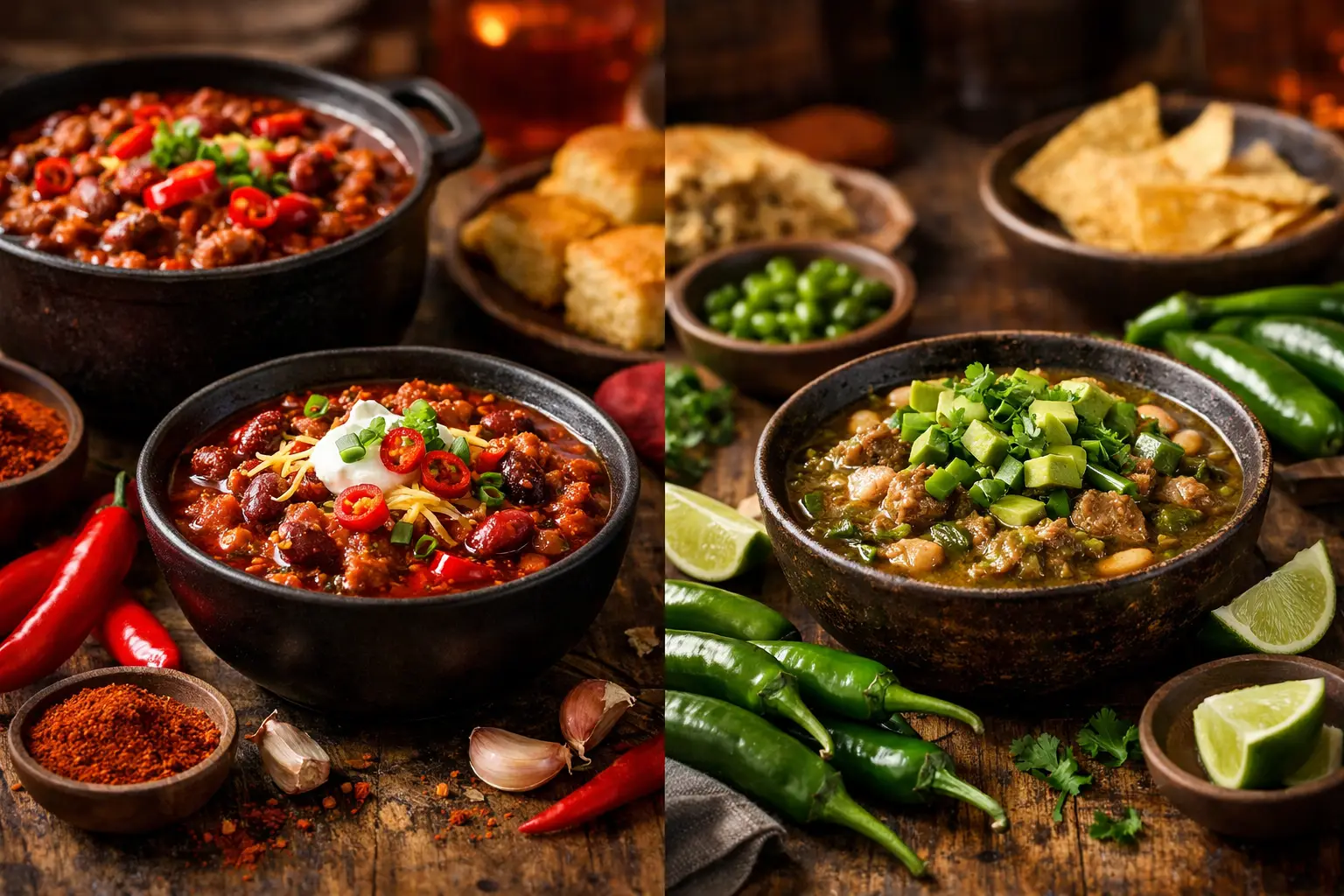
Order a bowl of red in one part of the Southwest and you get deep, earthy chile flavor with a brick-colored broth. Order green somewhere else and you might get pork, roasted Hatch chiles, and a brighter, looser stew that feels almost electric on the spoon. That is the real fun of red chili vs green chili - this is not just a color swap. It is a choice about flavor direction, texture, heat, and the kind of comfort you want in the bowl.
If you love chili as a category, this matchup matters because red and green often signal two distinct cooking traditions. They can overlap, and plenty of cooks blur the line, but each style carries its own personality. One leans rich, dried, and grounded. The other leans fresh, roasted, and lively. Every bowl tells a story, and these two tell very different ones.
Red chili vs green chili at a glance
The simplest distinction is the chile itself. Red chili usually starts with ripened peppers that have turned red and are often dried before cooking. Green chili usually uses peppers harvested while still green, often roasted and peeled. That one ingredient decision changes almost everything that follows.
Red chili tends to taste deeper and rounder. You get notes that can feel earthy, smoky, sweet, or slightly raisiny depending on the chiles in play. Green chili usually tastes sharper and brighter, with more vegetal snap and a roasted edge if the peppers are fire-charred. Neither is better by default. It depends on whether you want slow, dark warmth or fresher, more lifted heat.
Texture often follows flavor. Red chili can be thicker and smoother, especially when built from dried chile puree and reduced broth. Green chili is frequently a little looser and chunkier, with visible pieces of chile, onion, pork, or tomatillo. Again, there are exceptions, but these are the tendencies most home cooks will notice.
What makes red chili red
Red chili gets its identity from mature red peppers, especially dried ones. Think ancho, guajillo, New Mexico red, pasilla, or chile de arbol, depending on the style and heat level. Drying concentrates flavor, and when those chiles are toasted, soaked, and blended, they create a sauce with serious depth.
That depth is why red chili often feels more layered on day two. Dried chiles bring complexity that keeps unfolding as the pot rests. You might catch cocoa-like bitterness from one pepper, berry-like sweetness from another, and a cleaner heat from a hotter supporting chile. It is a broad flavor spectrum, not a one-note burn.
Many red chili styles also welcome beef. Texas red is the headline example, with a focus on beef and chiles rather than beans. But red chili is bigger than Texas. Across the Southwest and beyond, cooks use red chile sauce as the backbone for stews, braises, and chili-adjacent bowls that land somewhere between comfort food and regional identity.
What makes green chili green
Green chili usually starts with fresh green chiles, commonly Hatch, Anaheim, or poblano, though local substitutions happen all the time. Roasting is a big part of the flavor. Once the skins blister and blacken, the peppers pick up a smoky, slightly sweet edge that turns raw grassy heat into something rounder and more savory.
Pork is a frequent partner here, especially in Colorado and New Mexico-inspired versions. The richness of pork shoulder or pork loin gives green chili body without flattening the pepper flavor. You still taste the chile first, but the meat gives the bowl staying power.
Green chili can also feel more flexible at the table. It works as a bowl on its own, but it is equally at home spooned over burritos, eggs, fries, or breakfast potatoes. Red chili can do that too, of course, but green chili has a smothered, all-purpose charisma that makes it especially popular as a topping.
Flavor is the real decider
If you are choosing between the two, flavor is usually the clearest guide. Red chili is the move when you want warmth that feels grounded and savory. It often tastes fuller and more developed right out of the gate, especially if the recipe relies on layered dried chiles and browned meat.
Green chili is the move when you want something more vivid. Even when it is hearty, it usually keeps a fresh pepper character that red chili does not. That makes it feel a little lighter on the palate, though not necessarily lighter in substance.
This is also where people get tripped up on heat. Green is not automatically hotter, and red is not automatically milder. Heat depends on the pepper variety, the seeds and membranes left in, and the overall recipe balance. A mild roasted poblano green chili can be gentle and cozy. A red chili built with chile de arbol can absolutely light things up.
Regional identity shapes the bowl
Talk about red chili vs green chili long enough and you end up talking about geography. Red and green are tied to place as much as ingredients.
Texas red is probably the most famous red-leaning style for American home cooks. It is beef-forward, chile-driven, and famously skeptical of beans. The whole point is concentrated meat-and-chile flavor. That style has a swagger all its own.
Colorado green chili is another major lane. It often features pork, green chiles, and a gravy-like consistency that makes it perfect for smothering burritos and fries. New Mexico brings its own famous red and green traditions, where the question is not which one is correct, but which one you want today. Sometimes the best answer is both.
That regional context matters because expectations shift. In one kitchen, red chili means a thick beef pot with dried chile paste. In another, green chili means a roasted pork stew with visible peppers and onion. If your bowl does not match someone else’s hometown memory, that does not make it wrong. It just means chili remains gloriously local.
Which one is easier for home cooks?
Green chili is often easier for beginners, especially if you are working with roasted fresh chiles or good frozen roasted chiles. The flavor path is straightforward, and you can build a satisfying pot without mastering dried chile prep.
Red chili asks for a little more technique if you are starting from whole dried peppers. Toast too hard and they turn bitter. Skip straining when needed and the sauce can stay gritty. But the payoff is huge. Once you get comfortable with soaking, blending, and balancing dried chiles, red chili opens up a whole range of custom flavor building.
That said, ingredient access can flip the equation. If you live somewhere with easy access to Hatch chiles in season, green chili feels effortless. If your pantry is stocked with dried pods year-round, red might be the more practical weeknight move.
Best uses beyond the bowl
Red chili is a natural fit when you want a bowl that eats like the main event. It also plays beautifully with cornbread, shredded cheese, diced onion, or a stack of crackers. If the meal is about sitting down with a serious, slow-simmered pot, red chili brings that cold-weather authority.
Green chili shines when you want range. Spoon it over enchiladas, burgers, eggs, breakfast burritos, or fries, and it rarely feels out of place. It can still headline dinner, but it also thrives as a smothering sauce with big comfort-food energy.
For meal planning, that matters. A batch of red chili might stay in its lane as lunch and dinner bowls. A batch of green chili can stretch across breakfast, lunch, and late-night leftovers without getting old.
So which one should you make?
Make red chili when you want depth, dried chile complexity, and a bowl that feels rich and centered. Make green chili when you want roasted pepper flavor, brighter heat, and something that can move from spoonable stew to all-purpose topping.
If you are cooking for a crowd, think about your audience. Beef lovers and classic chili people often gravitate toward red. Fans of Southwestern comfort food, pork, and roasted chile flavor often go green. If you are feeding mixed preferences, this is one of those rare food debates where a split decision makes perfect sense.
At ChiliStation, that is part of the obsession: chili is not one dish, but a whole map of styles, signals, and loyalties. Red and green sit at the heart of that map.
The smartest way to think about it is not as a winner-takes-all contest. It is more like choosing a soundtrack for dinner. Some nights call for red chili’s slow, deep bass line. Other nights want the brighter, louder spark of green chili. Pick the bowl that matches your mood, and let the peppers do the talking.